"I simply said: ‘I’m worried about you, about what you’ve been doing in recent years’” – Van der Voort unveils confrontational conversation with Van Gerwen
PDC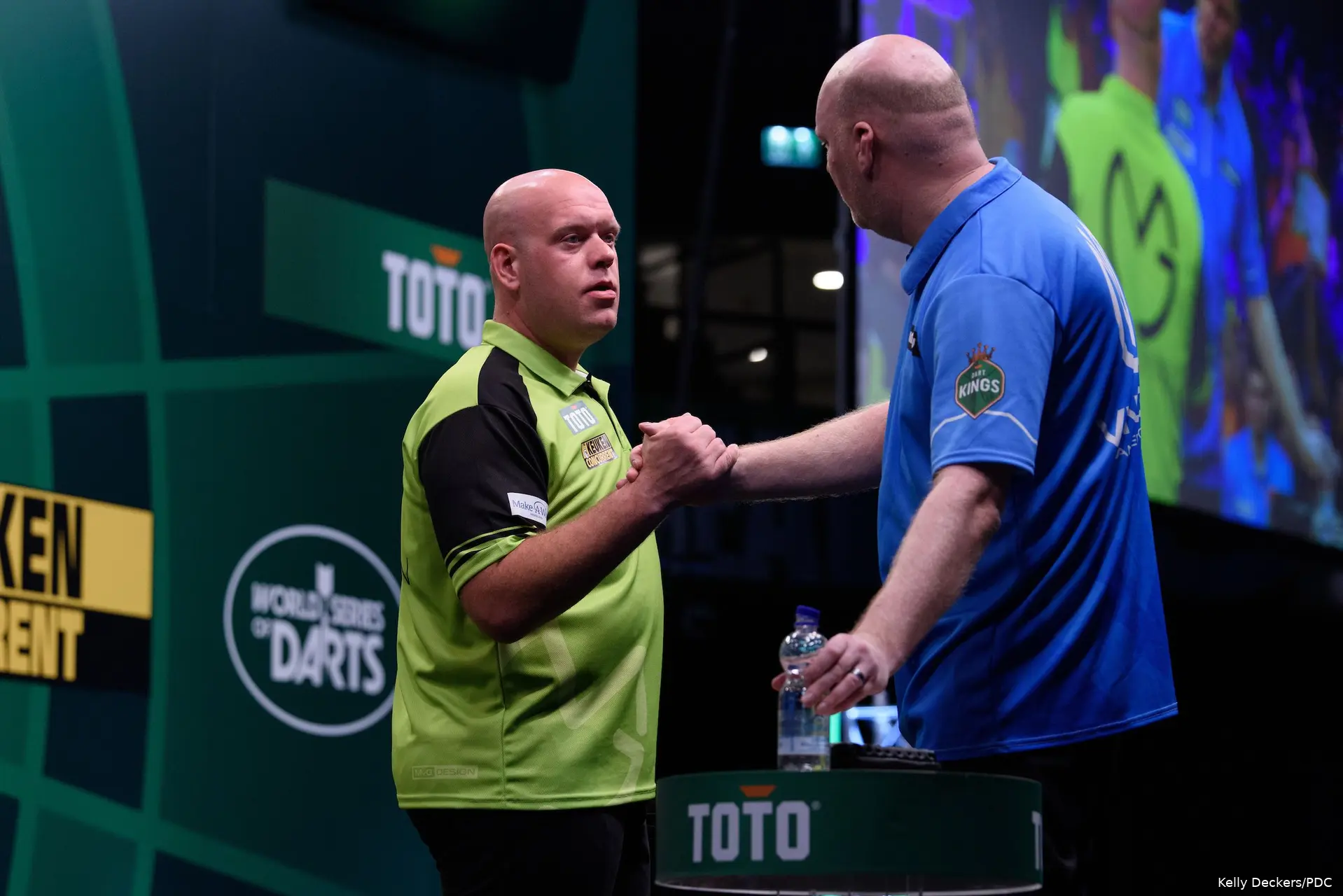
The World Series has kicked off in Bahrain and Saudi Arabia, bringing that annual sense of transition: from the high-stakes World Darts Championship to events where sporting intent can clash with commercial reality. In the latest episode of Darts Draait Door, Damian Vlottes and Vincent van der Voort make no bones about how they view this phase.
ADVERTISEMENT
“You always need a moment to get going again,” says Van der Voort. “The Worlds are so important. The stakes are high, everything revolves around it. And then this follows. That does take some getting used to.”
That observation applies not only to viewers, but is also clearly visible among the players. “You can also tell from the players that it’s not being played with a knife between the teeth," says Van der Voort. "Some do, of course, because they have more to prove. Others you can tell are quite relaxed about it."
The World Series in Bahrain once again handed a stage to local players, but competitively the gap to the world’s elite remained wide. A recurring sight was Abdullah Saeed, drawn against Luke Humphries for the third year running.
“That’s not what you want,” comes the dry verdict. “Facing the same opponent for the third year, and losing 6-0 again. You want someone different at least once. If only so you can say in ten years: I played him.”
That perspective may be the only bright spot. Athletically, the gulf was painfully clear again. “He probably won’t win a leg even over ten tries,” says Van der Voort. “In previous years he hadn’t even had a dart at a double.”
Fellow Bahraini Basem Mahmood also showed the level gap remains significant, though he did at least nick a leg against Danny Noppert. “Slightly better,” Van der Voort calls it. “But not by much.” The conclusion is blunt and clear: “You always hope a new sensation emerges from somewhere, but I don’t get the feeling Bahrain is about to produce another Littler.”
ADVERTISEMENT
Meaningful win for Van Gerwen in Bahrain
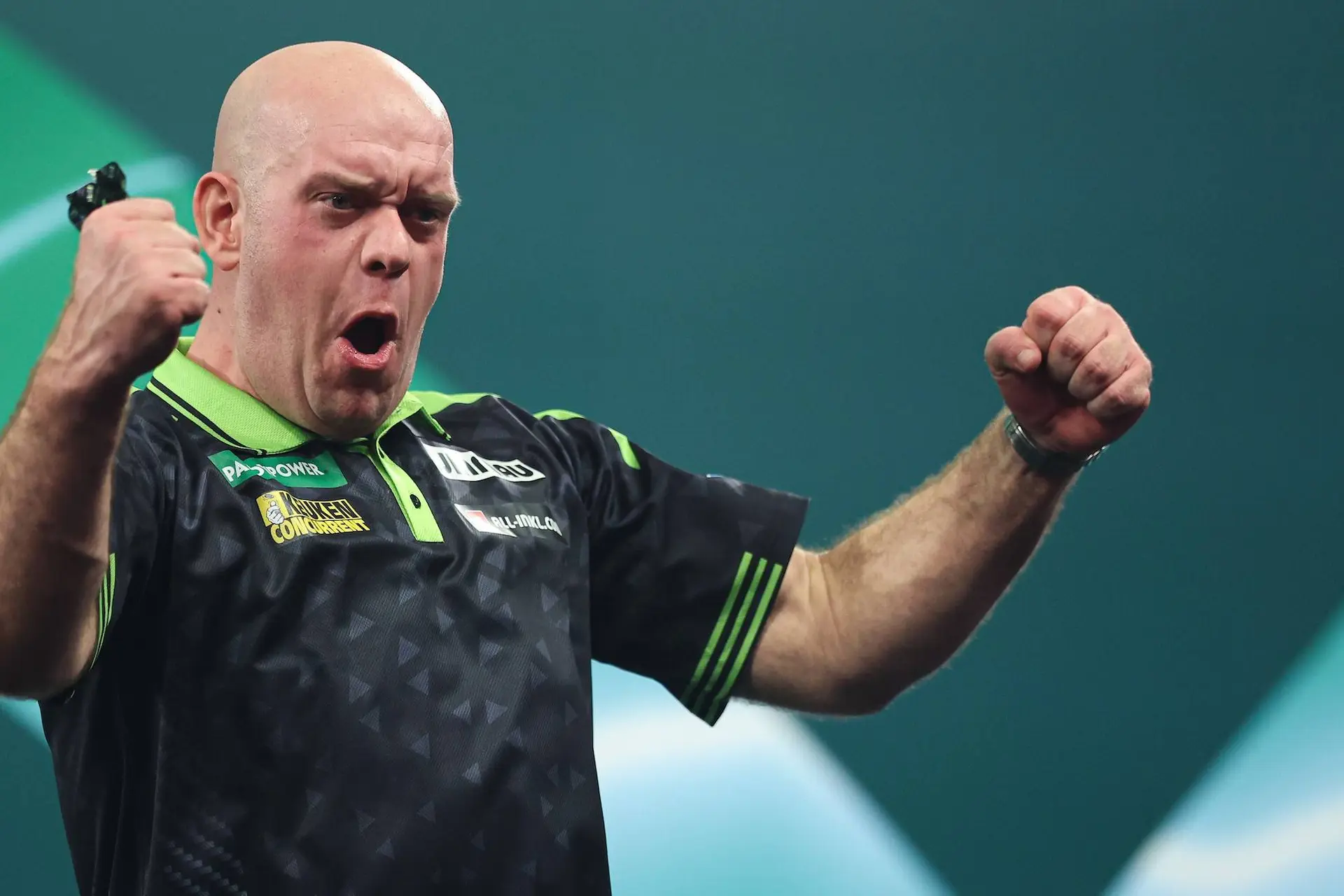
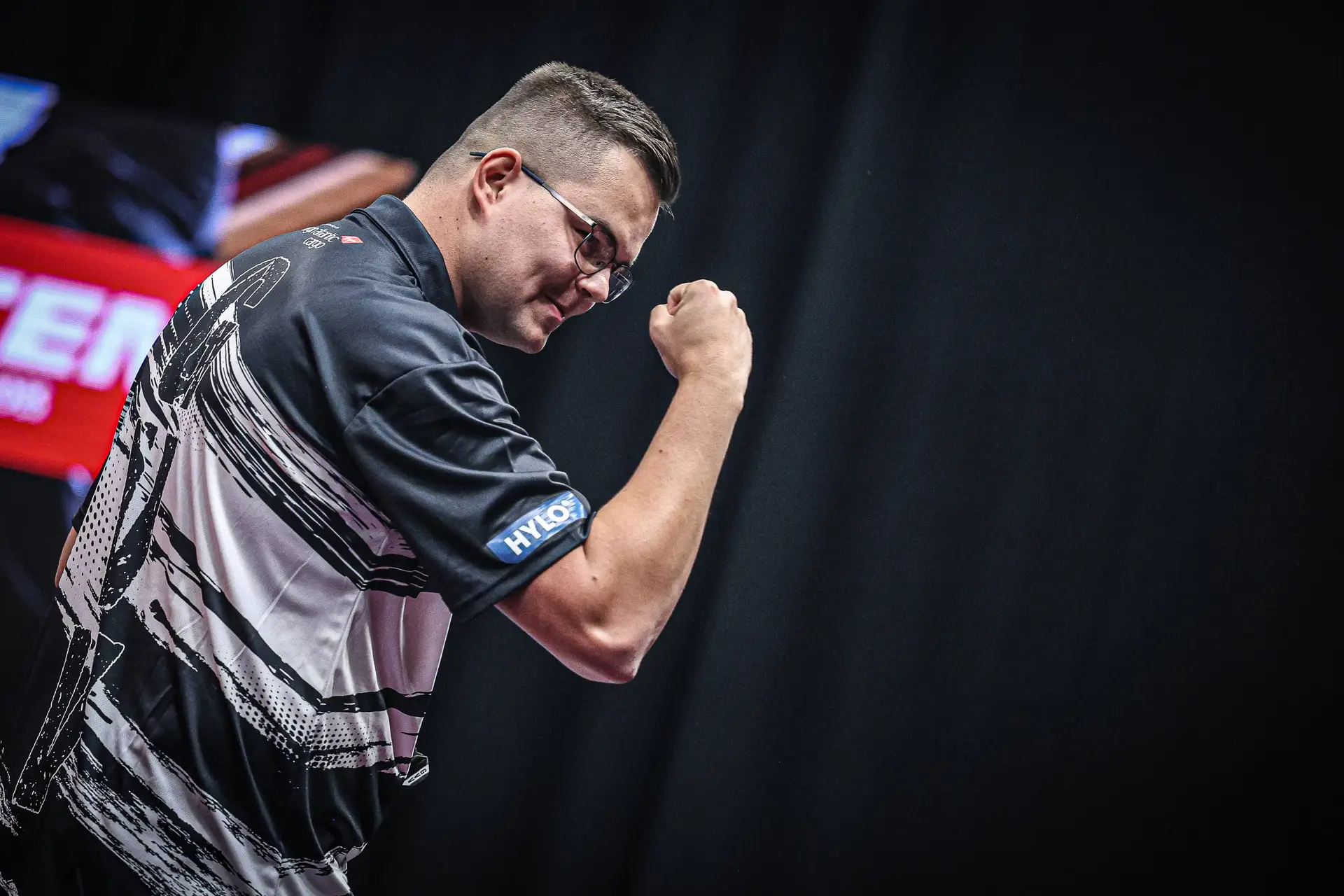
A sporting high point in Bahrain was Michael van Gerwen’s tournament win, as he saw off Gian van Veen in the final. A match-up with more weight than it might seem at first glance.
“Gian was genuinely playing to win,” notes Van der Voort. “it was his first World Series appearance outside the Netherlands. And Van Gerwen has something to prove this year, so he’s clearly working towards top form. Both of them were really there to perform." That dynamic is intriguing, especially now that Van Veen is on paper the Dutch number one. “The media mention that a lot,” says Vlottes. “So it’s important for Michael to just beat him a few times.”
Van Gerwen did that, but not without resistance. Van Veen battled back and even finished the match stronger. “But Michael kept his edge,” analyses Van der Voort. “You saw that go wrong at the European Championship. Not now.”
A crucial 103 checkout helped. “Gian was better at the end,” admits Van der Voort. “But he was already 6-2 down. And Michael didn’t let that momentum flip.”
ADVERTISEMENT
The victory feels like a first step in the right direction, not a finish line. “You can see he’s not there yet,” Van der Voort says candidly. "There’s still a lot of work to do. But this is a great boost heading into the new season."

Van Gerwen started 2026 in style by winning the Bahrain Darts Masters.
“I told him: I’m worried about you”
Perhaps the most telling moment of the podcast is Van der Voort’s candid account of a conversation he had with Van Gerwen, announced during the Worlds. "I clearly explained everything I think is going wrong," he says. “And it wasn’t just between him and me. There were several people there. I simply said: ‘I’m worried about you, about what you’ve been doing in recent years.’”
According to Van der Voort, Van Gerwen had long known himself that things weren’t right. “He said: I knew you had a point, but I wasn’t ready. Because of everything going on privately. Because of everything happening in my life.” Priorities lay elsewhere. “His children, his private life, everything. He used this period to do all sorts of things, but not to put his priorities on darts.”
ADVERTISEMENT
The realization came later. “He said: I knew it was going wrong, but I couldn’t turn it around. And now I know what went wrong. And now we’re heading in the right direction.” According to Van der Voort, they are back on the same page. “It just went wrong in recent years because of his situation at home. He simply couldn’t get it done and then you start pushing back against it. He just couldn’t summon it. That’s not strange either, because he’s been at the top of the world for twenty years. I hope the tide has turned now.”

For Gian van Veen, Bahrain mainly confirmed the strong spell he’s in. “You’re in the final, you show again that you belong,” says Van der Voort. “We already knew that, but this helps.”
That matters, especially with a first Premier League season on the horizon. “Everyone has an opinion. And if you lose early twice, they’ll say: told you so.” Van Veen, however, held firm. “It looks polished, steady, and he’s in form. That’s mentally very important.”
A striking moment came during the quarterfinal between Van Veen and Noppert, when out of nowhere everything went black after a power outage. “All the lights going out… how is that possible?” wondered Vlottes. Van der Voort recalls similar situations. We had it once in Exeter. It was too cold in the practice area and the PDC thought: we’ve only been playing here for the sixth year, let’s do something about it. During warm-up they brought in heaters and then all the fuses blew as well. Everyone was sitting in the dark then too.”
ADVERTISEMENT
Van der Voort found it a remarkable moment anyway. “It took a while as well, because it was pretty dark. You couldn’t see anything,” he said with a laugh. “You also have to watch your step on stage so you don’t trip over anything. That can be tricky in the dark.”
Littler, motivation and the limits of entertainment
The name of Luke Littler also came up, who looked “unmotivated” against Gerwyn Price. Showboating, different darts and unusual checkouts drew frowns from many darts fans. “That’s what a tournament like this lends itself to,” Van der Voort qualified. “The PDC is often about entertainment, and these little events were created to make money. Not for the players… then you get these kinds of things. The calendar is so busy.”
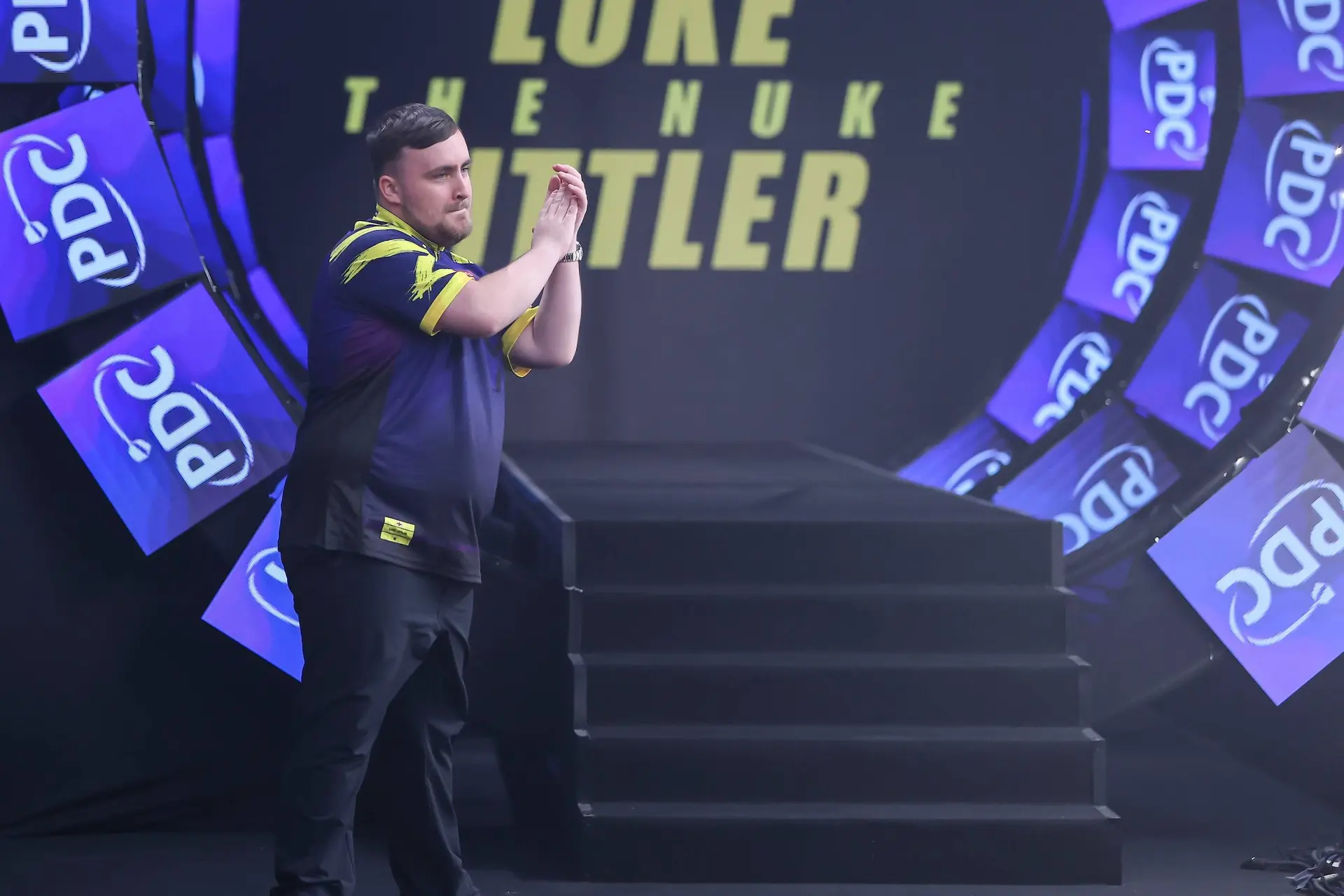
Van der Voort was then told that players can be fined if they take the stage unmotivated. He finds that a difficult line to draw. “That’s very hard to determine,” he believes. “With him it often looks unmotivated and then everything lands in the treble. I do get it, but I’m not much in favor of handing out fines and that sort of thing.”
ADVERTISEMENT
“Bookmakers won’t be too happy about it,” Vlottes noted. But Van der Voort feels that’s the PDC’s own doing. “They’ve brought that on themselves a bit by staging these kinds of tournaments. Then it doesn’t matter all that much.”
Finally, the new Euro Tour rules were discussed, which were changed again right before the start. “They’ve changed it back again,” sighed Van der Voort.
His criticism is structural. “Change it once and do it right. Instead of throwing everything around every year. There are people there who have never played sports themselves. Great businesspeople, but zero understanding of sport. Go talk to former players. John Part, Wayne Mardle, Mark Webster. Ask what’s fair.” The adjustments are, in his view, correct in substance, but not in process. “This should never have been decided like this,” he concluded on a critical note.
Lucas MichaelDarts Journalist
Lucas Michael is a darts journalist and reporter based in Cambridge, UK, and has been part of the DartsNews team since 2025. He covers professional darts through reports, analysis, round-ups, and live coverage, with a focus on clear context and accurate reporting across the PDC calendar.
A key part of his work is liveblogging major tournaments throughout the year, providing real-time updates, match coverage, and contextual reporting across the professional circuit. He also reports regularly from events on site and has covered the PDC World Darts Championship from the venue, delivering first-hand insight throughout the tournament.
Within the newsroom, Lucas works closely with the editorial team and supports coverage alongside Chief Content Officer Samuel Gill and reporter Kieran Wood.
Lucas holds a BA (Hons) in Sports Journalism. In his work, he places strong emphasis on careful sourcing, editorial accuracy, and updating content promptly when new, verified information becomes available.
claps 3visitors 3
Just in

Popular news
Latest comments
- I agree,I can't believe the lack of coverage of this sad loss. Always enjoyed watching him,but I guess now it's all about littler,well it seems that way. Darts has sadly lost a good manrick6717-10-2026
- In the absence of a report regarding the death of Stefan Lord, I'll assist. An excellent player in the late 70s and early 80s, he actually won the now defunct 3rd place match at two World Championships and a couple of the News of the World Championships. A fabulous player and easily the best Swedish player ever. Rest peacefully Stefan.richieburnettrocks16-10-2026
- Joking aside, it is the second most watched sport on sky (more than golf, F1 etc) behind football only, and in participation is second to only football and swimming. It doesn't get the attention or sponsorship of "bigger" sports because it's not as sexy, but it's right up there.BandB13-10-2026
- i love darts but you can't seriously believe it's the second most popular sport in the uk. even top five is pushing it. it may be the fastest growing, though.colt13-10-2026
- I'm a big Clayton fan, but he's got this completely wrong. Qualification criteria exists for a reason - so just as failing to make the top 32/64 for the Euro championships/PT Finals means you miss out, so does not lifting a title for this one.26sForFun12-10-2026
- The players who deliberately slow the game down are usually boring and win very little in the way of silverware. Horrible to watch.MrYnyslas197112-10-2026
- [“The Gentle” then used a sweeping and questionable phrase...] You anglocucks are hilariously finished in every sense of the word.Critical99911-10-2026
- I love Jonny but I disagree. The Grand Slam was always supposed to be "champion of champions" type competition. If the top 16 are guaranteed participation in everything there will be so much less jeopardy involved in qualifying and each major tournament will lose its unique flavour which the PDC has worked hard trying to develop. I enjoy following the qualification races towards the end of the year, and while consistency should have its rewards, the truth is Jonny hasn't reached a major final all year or won a single event on the Pro Tour. Being consistent is one thing, but that alone should have consequences as the sport's elite should not be prepared to accept consistently strong performances, their foremost motivation should be to win and this should be what separates them from the rest, not the consistency of their performances. Jonny is expecting that losing should be enough; it shouldn't be, at least not as far as the Grand Slam is concerned.Deduce635811-10-2026
- Well being honest,it doesn't matter what level you play at, there's always someone who slows it down to suit themselves,and extra swig of water, replacing flights, asking the ref what the score is. It happens wherever. I'm not saying it's professional,but I'm sure we've all seen it beforerick6711-10-2026
- Agree completely. Not sure how a ranking event can have a criteria not based on rankings. And he right on popularity. In the UK second only to football.BandB11-10-2026
Loading