“I walked in there... and it absolutely reeked” - Darren Webster lifts lid on Fartgate chaos and brutal pressure behind darts downfall
PDC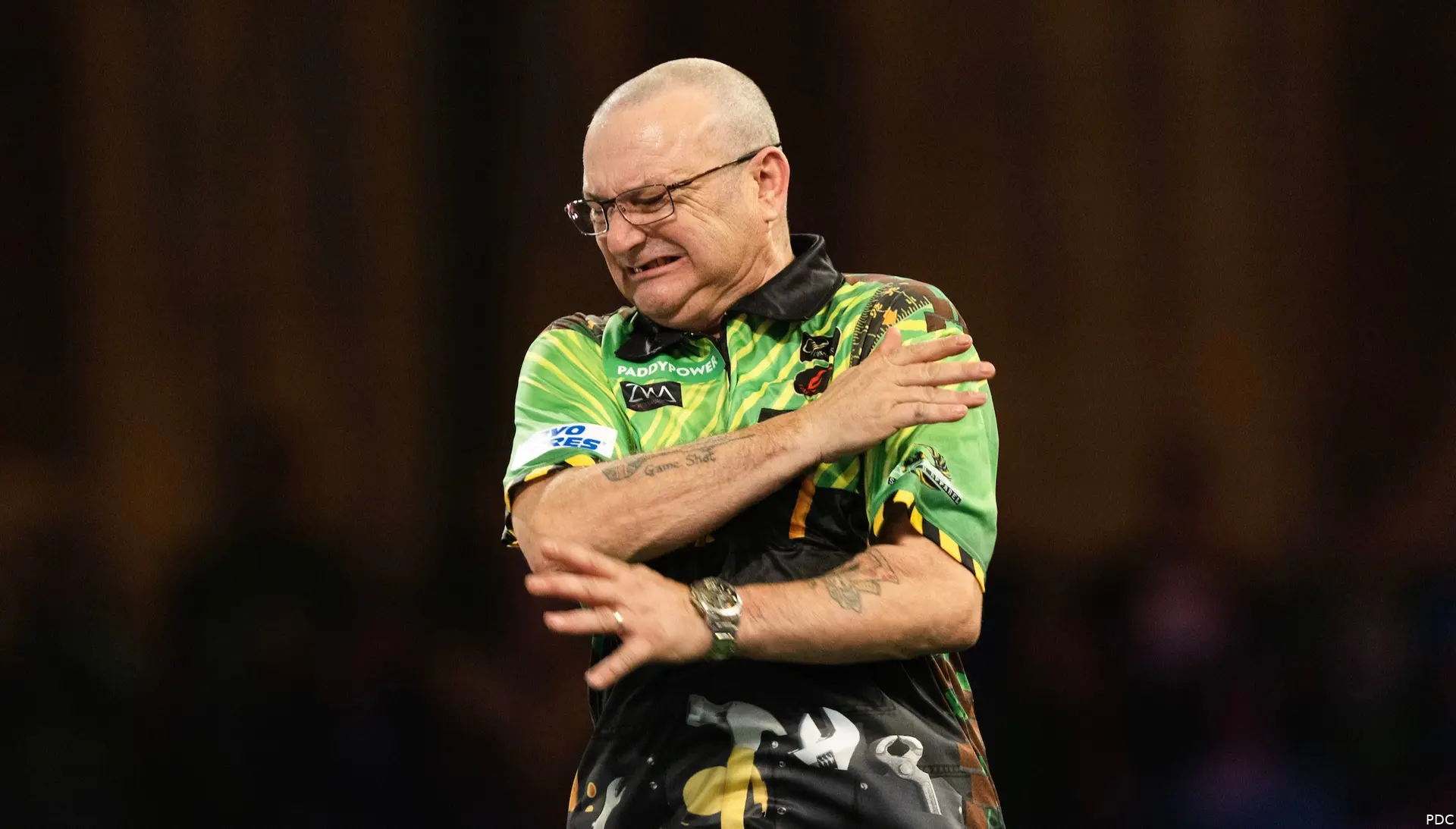
Darren Webster has never needed much encouragement to tell a story, but behind the familiar chaos of ‘The Demolition Man’ is a player whose final years on the PDC Tour became defined by pressure, frustration and the brutal reality of chasing survival.
ADVERTISEMENT
A PDC major semi-finalist, former world number 13 and multiple-time PDC World Darts Championship quarter-finalist, Webster spent more than two decades in the professional game before stepping away. Speaking on MODUS Super Series’ Tungsten Talk, the 57-year-old admitted the end of his regular PDC run became a very different version of darts to the one he had loved for so long.
“At the end of the PDC career there, you start to have to win games of darts,” Webster said. “If you don’t win, you are going to lose your card and you are going to lose money. Everything then is pressure.”
That pressure became impossible to escape. Webster returned to Q-School after losing his Tour Card, only to miss out in brutal fashion. “I went to Q School and missed by one leg,” he recalled, adding that “if I hadn’t turned up early, I would have got in by a leg.” Instead, he said, “because I turned up, I lost the card by one leg.”
For Webster, that was not just another narrow sporting defeat. “The pressure is on then,” he said. “Your head has gone and things go on you. That is darts pressure.”
Webster rediscovers darts after walking away
The end of Webster’s PDC spell did not immediately become a relaxed veteran tour. For a while, he did not want darts at all. After a Challenge Tour appearance and a return to MODUS, Webster felt things “just got on top” of him. His reaction was blunt: “I said to myself: I have done it for 23 years now. I just need a break.”
ADVERTISEMENT
At that stage, even a comeback was not on his mind. Webster said he “wasn’t interested in coming back or doing any more darts” before his son-in-law started playing and gradually pulled him back towards the board.
Now the rhythm looks very different. Webster is practising again, playing three times a week, and recently returned at the Dutch Open. More importantly, the old survival equation has gone. “Now, for me, I don’t have to win anymore,” he said. “I can be happy, come here and want to win a game of darts with no worries.”
That change has altered the whole feel of the game for him. With work matters now settled, Webster said his focus is simply “to enjoy it and still kick a few butts.”
Webster’s slide did not come out of nowhere. He traces the start of the downturn back to the COVID period, when tennis elbow hit him just before the sport was disrupted. At the time, he had ranking money to defend after regular runs to quarter-finals and semi-finals. “For the six months before that, and then when COVID kicked in, I had points to defend,” he said. “I couldn’t defend what I had got. So I went from up there to basically out.”
Away from the oche, the same period brought another blow. Webster’s business suffered during the pandemic and he eventually dissolved it. He stressed that he did not go bankrupt, but said the process “cost me everything.” That left darts carrying even more weight. “After that, it was all pressure,” he said. “It was all, ‘You’ve got to do this, you’ve got to win.’”
ADVERTISEMENT
Webster sees echoes of that battle in Michael Smith’s current position. When he was 13th in the world and playing every TV event, Webster said he could stand on stage “with a smile” because he wanted to win rather than needed to win. Once that security disappears, everything changes. “When you get to that point, your brain goes,” he said. “Tempers flare, everything annoys you, and that is what it did.”

Darren Webster in action at the 2017 World Matchplay
“I had that one in my hand” - Webster’s Van Gerwen regret
For all the late-career frustration, Webster’s peak remains stronger than many newer fans may remember. He reached World Championship quarter-finals at both the Circus Tavern and Alexandra Palace, made back-to-back World Matchplay quarter-finals, won on the ProTour and became a dangerous name in the biggest draws.
His best spell came between 2016 and 2018. Webster called them his “better years”, and there was plenty behind that assessment. He remembered a European Tour quarter-final where he took out 156 at 9-9 against Madars Razma, as well as a 13-11 win over James Wade at the World Matchplay.
ADVERTISEMENT
One match still sits above the rest for regret. At the 2016 Players Championship Finals, Webster led Michael van Gerwen 6-0 in the semi-finals before losing 11-8. “We won’t talk about that one,” he said, before doing exactly that. “I had that one in my hand and blew it.”
Webster believes the door was open for far more than a famous win. Had he beaten Van Gerwen, he would have faced Dave Chisnall in the final, and his confidence was obvious. “I would have been confident then,” he said. The chances were there. Webster said he had “four or five darts at double” during the comeback. “If I hit them, I win. I didn’t.”
His first major televised moment had come much earlier, at the 2005 UK Open against three-time world champion John Lowe. Webster lost 5-4, but the day stayed with him for more than the result. The cameras had gone to interview him at work in Norwich beforehand, while Sid Waddell later described him as “jumping around on the stage on a pogo stick.”
For Webster, sharing a stage with Lowe meant facing someone he had grown up watching. “I used to watch Lowe, Bristow, Deller, all of them,” he said. “To play him, and then I ended up playing regularly with him, that was really enjoyable.”
ADVERTISEMENT
Taylor lessons and Barnsley chaos
Another major strand of Webster’s career came through Phil Taylor. A chance meeting in Blackpool eventually opened the door to practice sessions with the greatest player in the sport’s history.
Webster first met Taylor after staying with a couple recommended by his mother. A link through the hotel led him to Taylor, who later invited him to stay again the following year. The real spark came in practice. “Phil said, ‘Come on, let’s have a game,’” Webster recalled. “He beat me 16-15 and I hit six 10-darters, twice back-to-back. That is where it all started.”
That connection became part of Webster’s education on tour. If Webster was already out of an event and Taylor was still playing, he would practise until Taylor had finished. “He used to win most of them,” Webster said, “so I would be practising with him all day.”
Not every Webster story belongs to the practice board. In 2018, he suffered a broken nose in Barnsley after being attacked by a football supporter while walking with friends.
ADVERTISEMENT
Webster was wearing a red and black shirt and was mistaken for a Sheffield supporter. He tried to explain that he was in town for darts, not football, but was hit as he looked down at his shirt. “As a darts player, you touch a dart on the nose,” he said of the aftermath, with every throw causing pain before his match against Max Hopp the next day. “That was the broken nose incident,” he said.
Fartgate and the pressure behind the punchlines
Webster’s career is dotted with incidents that made him one of darts’ most recognisable characters. His so-called ‘Watergate’ row with William O’Connor began when Webster accidentally spilled water into the Irishman’s case during a match.
Webster said the whole thing was “news to me until I got back to my room.” He had turned over a glass, poured water in and realised too late that another glass was still upside down, causing water to splash into O’Connor’s case. “I just said, ‘Willie, I just spilled a bit of water in your case,’” Webster recalled. “That is all I know about it.”
By the time he returned to his room, the incident had grown into something far bigger. Webster denied any gamesmanship, joking that if he had really meant to cause trouble, “I would have tipped it over his head.”
ADVERTISEMENT
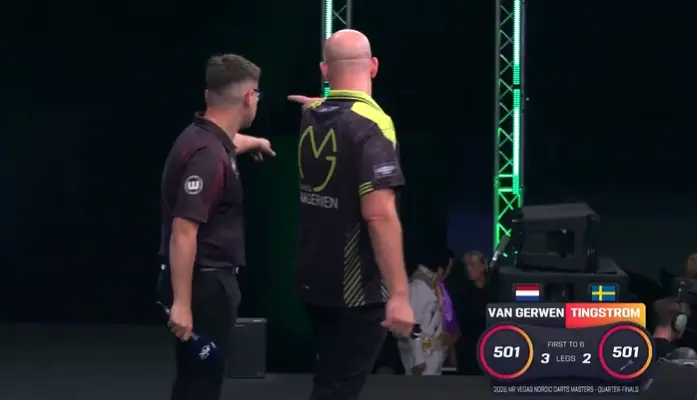
Then came ‘Fartgate’, the MODUS Super Series incident involving Ron Meulenkamp that somehow ended up on newspaper front pages. Webster pushed back on the idea that the accusation came from Meulenkamp, insisting he was the one who first raised the smell on stage. “I walked in there, walked up the corner and it absolutely reeked,” Webster said. “I looked at the ref and went, ‘Are you drunk?’”
When the denial came back, Webster said he knew it was not him and pointed towards Meulenkamp. The row escalated from there, with Webster admitting pressure played its part in his own reaction. “I did say a couple of things I shouldn’t have done,” he said, “but I took it down immediately.”
The next day brought a very Webster-like shock. “Everyone was going, ‘Darren, you’ve done it again,’” he said. “I was like, ‘What? He’s got me in the newspaper? What for? Him trumping?’”
Behind the punchline, Webster again returned to the same theme. At that stage, he was playing under pressure for money, ranking and survival. “Your mind goes to different places,” he said. The same subject led Webster into a wider point about rhythm, gamesmanship and the strain of playing when every match feels like a must-win. He brought up recent debate around Michael Smith and Mickey Mansell, while also making a distinction between naturally slow players and opponents who deliberately disturb the pace.
Webster said he never had a problem with Justin Pipe, despite Pipe’s famously slow throw, because Pipe played his own rhythm without holding opponents up. His frustration was with players who stop, stare at the scoreboard or take extra time over small actions.
ADVERTISEMENT
“When people stop, look at the scoreboard, take ages picking a dart, to me, they are trying to slow you down,” Webster said. “In my eyes, they know they are not good enough to beat you, so they have to try to stop you playing your game.”
That kind of thing, Webster believes, is easier to handle when results are coming. When the pressure builds, it becomes harder to shrug off. “When you are happy and winning, you deal with it,” he said. “When you are under pressure and you have got to win, that is when the gremlins come in your head.”
“That is what darts is all about”
For all the strange stories, Webster’s happiest memories still come from the board. His 2017 Players Championship title, sealed with victory over Daryl Gurney in the final, remains one of the standout days of his career.
Webster was keen to point out it was not his first PDC ranked title. He had previously beaten Co Stompe in Nieuwegein, winning 3-2 in sets in a ranked event in the Netherlands. The Gurney win, though, came during the strongest spell of his later career and with friends there to see it. “I was playing well that day,” he said. “I played really well. My mates were there as well to witness it.”
The next day, Gurney beat him in the quarter-finals, but Webster still looks back on that weekend with obvious warmth. “That was brilliant,” he said. “That is what darts is all about. It is about the good moments.”
Webster knows how many bad days the sport can throw at a player. The missed doubles, missed cards and missed chances have all left their mark. But with the pressure eased, the board has started to feel different again. “There are millions of darts players out there,” Webster said. “You have 50 million bad ones, then you have one good one, and you laugh and think you can do it. That is what we play for. We play for those good moments.”
Webster is no longer carrying darts in quite the same way. The pressure has eased, the stories have not dried up, and the old competitive edge is still there.
Kieran WoodDarts Journalist
Kieran Wood is a sports journalist based in Wales and has been active in journalism since 2022. He contributes to DartsNews.com, where he covers professional darts through news, match reports, analysis, and live coverage across the PDC calendar and major tournaments.
A key part of his work is on-site reporting from leading events. Kieran has covered the PDC World Darts Championship in person, reporting daily from the venue and providing first-hand insight from the tournament. During his coverage, he has conducted interviews with leading players including Luke Littler, Luke Humphries, and Gerwyn Price.
He is also one of the leading voices of the English-language Dartsnews Podcast, contributing regular analysis and discussion on developments across the professional darts circuit.
In his reporting, Kieran places strong emphasis on careful sourcing, editorial accuracy, and updating articles when new, verified information becomes available.
claps 5visitors 5
Just in



Popular news


Latest comments
- The players who deliberately slow the game down are usually boring and win very little in the way of silverware. Horrible to watch.MrYnyslas197112-10-2026
- [“The Gentle” then used a sweeping and questionable phrase...] You anglocucks are hilariously finished in every sense of the word.Critical99911-10-2026
- I love Jonny but I disagree. The Grand Slam was always supposed to be "champion of champions" type competition. If the top 16 are guaranteed participation in everything there will be so much less jeopardy involved in qualifying and each major tournament will lose its unique flavour which the PDC has worked hard trying to develop. I enjoy following the qualification races towards the end of the year, and while consistency should have its rewards, the truth is Jonny hasn't reached a major final all year or won a single event on the Pro Tour. Being consistent is one thing, but that alone should have consequences as the sport's elite should not be prepared to accept consistently strong performances, their foremost motivation should be to win and this should be what separates them from the rest, not the consistency of their performances. Jonny is expecting that losing should be enough; it shouldn't be, at least not as far as the Grand Slam is concerned.Deduce635811-10-2026
- Well being honest,it doesn't matter what level you play at, there's always someone who slows it down to suit themselves,and extra swig of water, replacing flights, asking the ref what the score is. It happens wherever. I'm not saying it's professional,but I'm sure we've all seen it beforerick6711-10-2026
- Agree completely. Not sure how a ranking event can have a criteria not based on rankings. And he right on popularity. In the UK second only to football.BandB11-10-2026
- Doesn't matter who's in it,it's boringrick6710-10-2026
- Assuming you qualify as one of the "muppets" in question. Classist too. And since you're so clearly interested in academia, look up "linguistic descriptivism" while you're at it. Oh, and better stay away from the working class sport of darts and maybe offer your insightful analysis to, let's say, croquet instead?Deduce635806-10-2026
- The consequences of being uneducated and grammatically challenged. "To all THOSE muppets not THEM " Everytime I see Arsepinall, I have an image of him wearing a cap, standing behind the counter of a fast food establishment.richieburnettrocks05-10-2026
- I don't understand Littler's reason for playing this tournament.rick6705-10-2026
- James Wade has become James Wide. He has piled on the tonnage considerably, he barely fits in his shirt.richieburnettrocks03-10-2026
Loading