“If I look at myself in the mirror, I’ve underachieved” - Joe Cullen admits wasted talent but insists there are not 16 better players in the world
PDC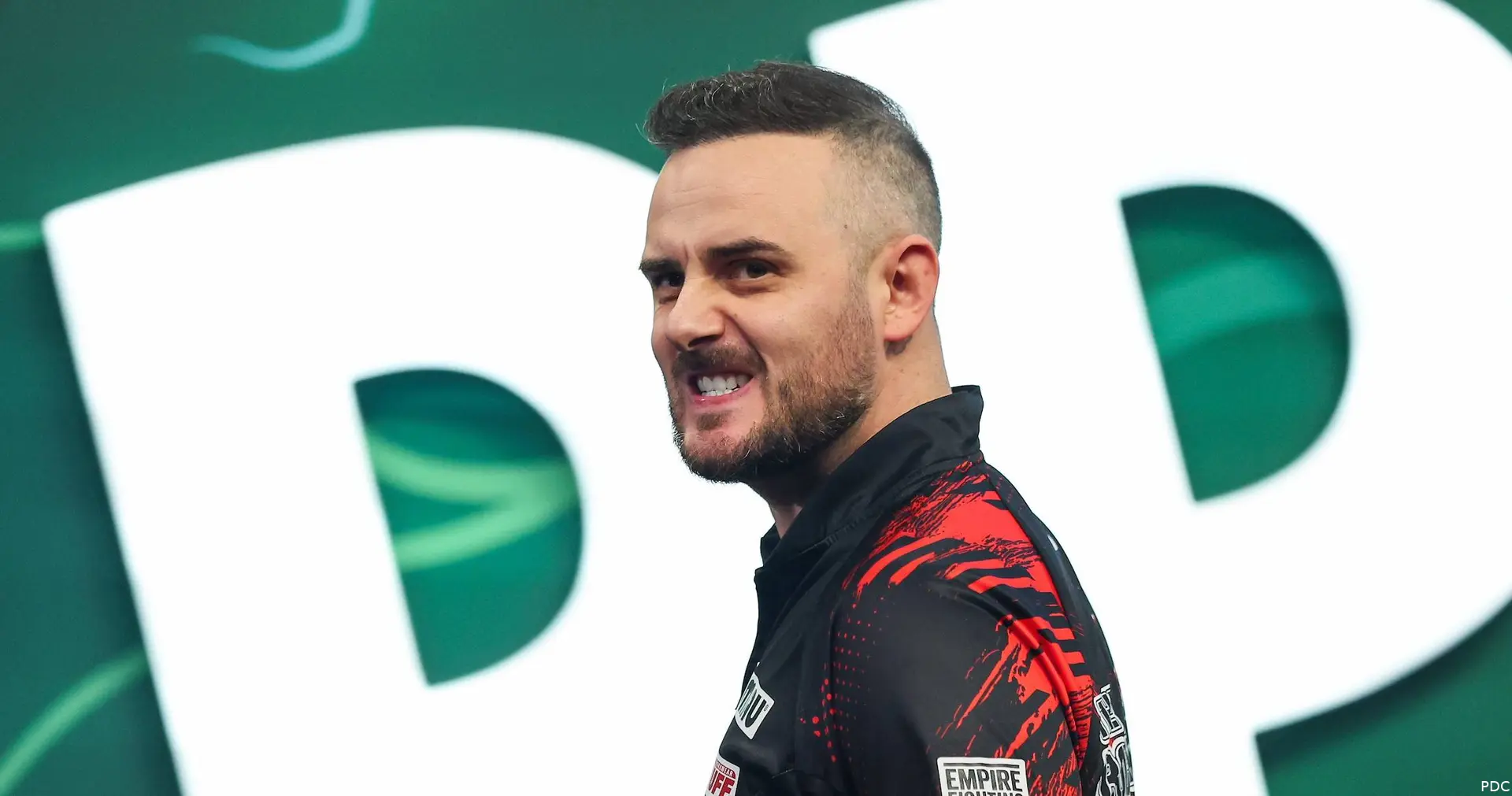
Joe Cullen has spent long enough in professional darts to know exactly how the sport can distort perception. A former Masters champion, a long-time tour card holder and one of the more recognisable names of his generation, Cullen has built the kind of career many players would take without hesitation.
ADVERTISEMENT
Yet in the modern PDC landscape, where rankings move fast, and the elite keeps getting stronger, he now finds himself in an awkward middle ground. He is still respected, still dangerous, still convinced his best level belongs near the top end of the sport. But he is also honest enough to admit that what he has produced over the course of his career has not matched what he feels should have been possible.
That was the tension running through Cullen’s recent appearance on the Winmau Darts YouTube channel.
Across a long and revealing interview, he was self-critical, open about his struggles with the sport, and still stubbornly defiant about where he believes he belongs.

Cullen’s own verdict is brutally clear
For a player with Cullen’s track record, this was not a case of outside criticism being turned into a headline. It was his own assessment, and he did not try to soften it. “If I look at myself honestly in the mirror, I think I’ve underachieved,” Cullen said, before sharpening the point further: “I should have won a TV tournament way before I did.”
That is not the language of somebody who thinks his career has been a failure. It is the language of somebody who believes he had the game to do more, earlier, and more often.
ADVERTISEMENT
Cullen has been around long enough to compare eras. He came onto the tour before Q-School even existed, part of a small group of players still active from that period. That longevity matters because it gives weight to his perspective. He is not a young player frustrated by a difficult season. He is somebody who has seen the game change, has survived in it for the best part of two decades, and can judge his own place in it with some authority.
He did exactly that when he reflected on why others may have moved ahead of him at certain points in his career. “I can only blame myself, that’s really it,” Cullen admitted. “I think coming through, I had more talent than so many players there, but they put far more work in than I did. That’s where they sort of reap the rewards before I did.”
There is no hedging in that. Cullen is not pretending bad luck alone explains the gap between his talent and his trophy haul. He put it more bluntly elsewhere in the interview, describing himself as “self-proclaimed lazy”.
That line matters because it turns his underachievement angle from a vague piece of self-criticism into something more concrete. Cullen is not simply saying he should have done more. He is saying he knows why he did not.

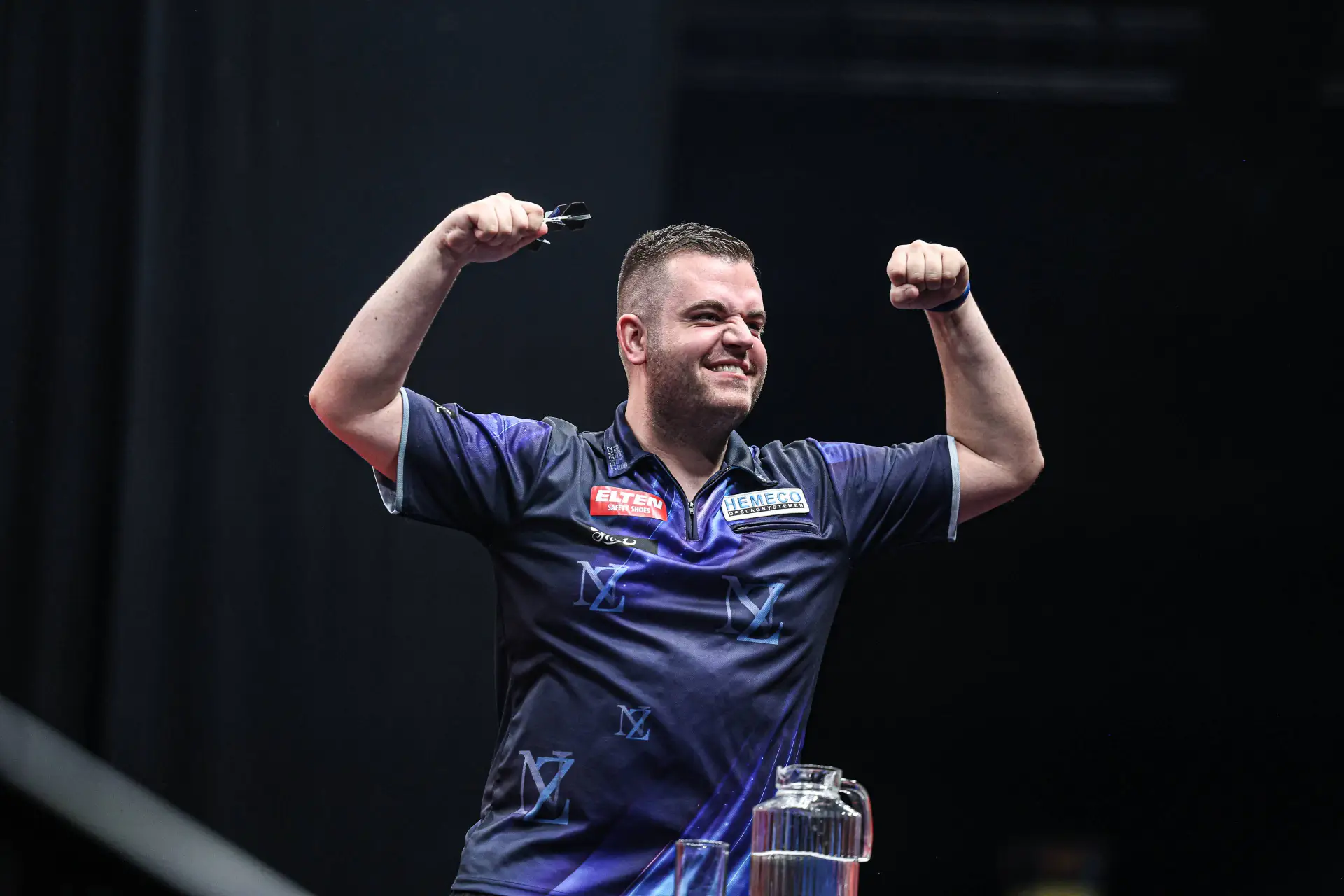
Joe Cullen in action at the 2026 Poland Darts Open
ADVERTISEMENT
Why Cullen feels he has drifted
The second part of the story is what has happened more recently, because Cullen did not speak like a player merely reflecting on long-past opportunities. He also sounded like someone trying to understand his present. “The last three, four years I’ve been a bit of a slog,” he said. “It just takes over your life and it has done for nearly two decades. So I think I’ve fell out of love with it a bit.”
That is one of the most revealing admissions in the interview, and it helps explain why a player with Cullen’s ability has hovered around the edge of the top 32 rather than forcing his way back into the elite positions he still believes suit him.
He did not dress it up. He did not pretend the issue was purely technical, or that a small tweak in form would solve everything. Instead, he spoke about the sport in more personal terms, as something that has occupied almost all of his adult life and gradually worn him down.
There was another line later in the conversation that pushed that idea further. Speaking about practice, Cullen said: “There’ll be times where I’d much rather be in a snooker hall than on a dartboard.” He added: “It’s just about getting that consistency back in practice.”
ADVERTISEMENT
For a player whose best level has always relied on natural rhythm and confidence, that matters. In the current PDC, where the standard on the floor is relentless and the margins are tiny, any drop in hunger is costly.
Cullen also spoke honestly about the wider strain that sits behind life on tour. “The time that I have away from my family, I’ve missed so many birthdays, you know, milestones,” he said. “Not just my kids. My dad had a heart attack, I was in Germany. I had to get back quick.”
Those are not excuses. They are part of the reality he says the public often misses when judging professional players only through ranking tables and prize money lists. Cullen’s point was not that he has suffered more than others, but that the cost of staying in the sport for so long can be easy to overlook.
That is why his ProTour title in 2025 clearly meant so much to him. Reflecting on that win, Cullen admitted: “Sometimes you sort of lose that little bit of belief. You still believe in yourself deep down, but you lose that little bit of belief that you can still win tournaments.” He added: “I didn’t really expect it… but I knew that I could win it. I think that’s why the emotion side of it sort of snuck up on me in the interview. I didn’t expect that. But I suppose it shows that it still means something.”
That sequence says plenty about where Cullen has been mentally over the last couple of years. The belief has never fully gone, but nor has it been as stable as it once was.
ADVERTISEMENT

A reset, not a surrender
For all the honesty about drift, burnout and lost momentum, Cullen did not speak like a man who has accepted decline. Quite the opposite. “The way I’ve started this year, I’ve been putting the work in,” he said. “I realised, obviously signing a massive contract with Winmau, you know, I need to pull my finger out and get back up the rankings.”
That gives the interview an important second layer. This was not only a player looking back at what has gone wrong. It was also a player trying to reassert control over what comes next.
Cullen’s comments on the standard of the sport also matter here. “If you can win any tournament in the PDC, it’s a tough tournament to win,” he said. “Every game is a tough game.” He added further context: “When I first started there was you could sort of hand pick around the room maybe two or three players… but now it’s just everybody can play.”
ADVERTISEMENT
That is crucial context for judging Cullen in March 2026. He is not operating in a diluted field, nor in an era where established names can coast. The depth in the sport has increased, the younger generation has arrived without fear, and players who once might have sat comfortably in the top 16 now find themselves under constant pressure. Cullen knows that. He also knows it does not let him off the hook.
Belief remains, even if the rankings do not yet reflect it
The line that gives the article its headline came late in the interview, but it was the clearest expression of how Cullen still sees himself. “I don’t think there are 16 better players than me in the world.”
It is a big statement from a player currently sitting well below that bracket in the rankings, but it was not delivered as empty bravado. Cullen immediately explained the real issue as he sees it: “I know what I’m capable of, but it’s just getting it out on a consistent basis.”
That distinction is central to the entire piece. Cullen is not claiming he has been one of the 16 best players in the world every week. He is claiming the level is still there, even if he has not accessed it often enough.
ADVERTISEMENT
There were more revealing lines around that theme. “Yeah, 100%, I’m top 16 player,” he said later, before also stressing how much he still feeds off proving people wrong. “I’ve had so many games on TV now where the other guy’s been a massive favourite and I just think, well, I’ll show you.”
He added a key admission that underlines the issue: “It shouldn’t be like that,” he admits. “And more often than not, I seem to win that game because I’m fired up for it.”
That helps explain one of the stranger contradictions in Cullen’s career. At different moments, he has looked more comfortable under the lights than on the floor, despite the modern game demanding strength in both environments. He spoke about that too, noting how difficult it can be to find a balance between stage form and floor form, and stressing that some elements of performance cannot simply be drilled on the practice board. “You can’t practise for experience. You can’t practise for pressure.”
That is the kind of line that fits Cullen well. He remains a player who trusts what he can do in a big moment, even if the week-to-week consistency has not always matched.
ADVERTISEMENT
Still fighting, but with a more complicated relationship to darts
There was another striking stretch in the interview when Cullen was asked how long he wants to continue. “Till I’ve got enough money, if you want the honest answer,” he said. “I play for a good life and to provide a good life for my family.”
Again, it was blunt, but useful. Cullen is not pretending he is driven only by romance or legacy. He still wants to win, but he also spoke like somebody who understands the trade-offs involved in chasing that life for year after year. Later in the interview, when talking about eventually retiring, he suggested he may miss the dressing room and the time with the other players more than the actual act of competing.
That, in itself, tells the story. Cullen has not fallen entirely out of love with darts, but his relationship with it is clearly more complicated now than it was when he first came through. And yet the fight is still there. The self-criticism is there, the regret is there, the frustration is there, but so is the conviction that he remains better than his current position suggests.
Whether that belief can still carry him back towards the elite is the unanswered part. Cullen himself has laid out both sides of the case. He has underachieved, in his own words. He has fallen out of love with the sport at times. He has lost that extra edge of belief before. But he also insists the level is still in there, waiting to be produced often enough to matter again.
For now, that tension is what makes him interesting. Not just what Joe Cullen has been, but whether there is still enough there for him to become more than the current rankings suggest one more time.


Kieran WoodDarts Journalist
Kieran Wood is a sports journalist based in Wales and has been active in journalism since 2022. He contributes to DartsNews.com, where he covers professional darts through news, match reports, analysis, and live coverage across the PDC calendar and major tournaments.
A key part of his work is on-site reporting from leading events. Kieran has covered the PDC World Darts Championship in person, reporting daily from the venue and providing first-hand insight from the tournament. During his coverage, he has conducted interviews with leading players including Luke Littler, Luke Humphries, and Gerwyn Price.
He is also one of the leading voices of the English-language Dartsnews Podcast, contributing regular analysis and discussion on developments across the professional darts circuit.
In his reporting, Kieran places strong emphasis on careful sourcing, editorial accuracy, and updating articles when new, verified information becomes available.
claps 0visitors 0
Just in


Popular news

Latest comments
- I agree,I can't believe the lack of coverage of this sad loss. Always enjoyed watching him,but I guess now it's all about littler,well it seems that way. Darts has sadly lost a good manrick6717-10-2026
- In the absence of a report regarding the death of Stefan Lord, I'll assist. An excellent player in the late 70s and early 80s, he actually won the now defunct 3rd place match at two World Championships and a couple of the News of the World Championships. A fabulous player and easily the best Swedish player ever. Rest peacefully Stefan.richieburnettrocks16-10-2026
- Joking aside, it is the second most watched sport on sky (more than golf, F1 etc) behind football only, and in participation is second to only football and swimming. It doesn't get the attention or sponsorship of "bigger" sports because it's not as sexy, but it's right up there.BandB13-10-2026
- i love darts but you can't seriously believe it's the second most popular sport in the uk. even top five is pushing it. it may be the fastest growing, though.colt13-10-2026
- I'm a big Clayton fan, but he's got this completely wrong. Qualification criteria exists for a reason - so just as failing to make the top 32/64 for the Euro championships/PT Finals means you miss out, so does not lifting a title for this one.26sForFun12-10-2026
- The players who deliberately slow the game down are usually boring and win very little in the way of silverware. Horrible to watch.MrYnyslas197112-10-2026
- [“The Gentle” then used a sweeping and questionable phrase...] You anglocucks are hilariously finished in every sense of the word.Critical99911-10-2026
- I love Jonny but I disagree. The Grand Slam was always supposed to be "champion of champions" type competition. If the top 16 are guaranteed participation in everything there will be so much less jeopardy involved in qualifying and each major tournament will lose its unique flavour which the PDC has worked hard trying to develop. I enjoy following the qualification races towards the end of the year, and while consistency should have its rewards, the truth is Jonny hasn't reached a major final all year or won a single event on the Pro Tour. Being consistent is one thing, but that alone should have consequences as the sport's elite should not be prepared to accept consistently strong performances, their foremost motivation should be to win and this should be what separates them from the rest, not the consistency of their performances. Jonny is expecting that losing should be enough; it shouldn't be, at least not as far as the Grand Slam is concerned.Deduce635811-10-2026
- Well being honest,it doesn't matter what level you play at, there's always someone who slows it down to suit themselves,and extra swig of water, replacing flights, asking the ref what the score is. It happens wherever. I'm not saying it's professional,but I'm sure we've all seen it beforerick6711-10-2026
- Agree completely. Not sure how a ranking event can have a criteria not based on rankings. And he right on popularity. In the UK second only to football.BandB11-10-2026
Loading