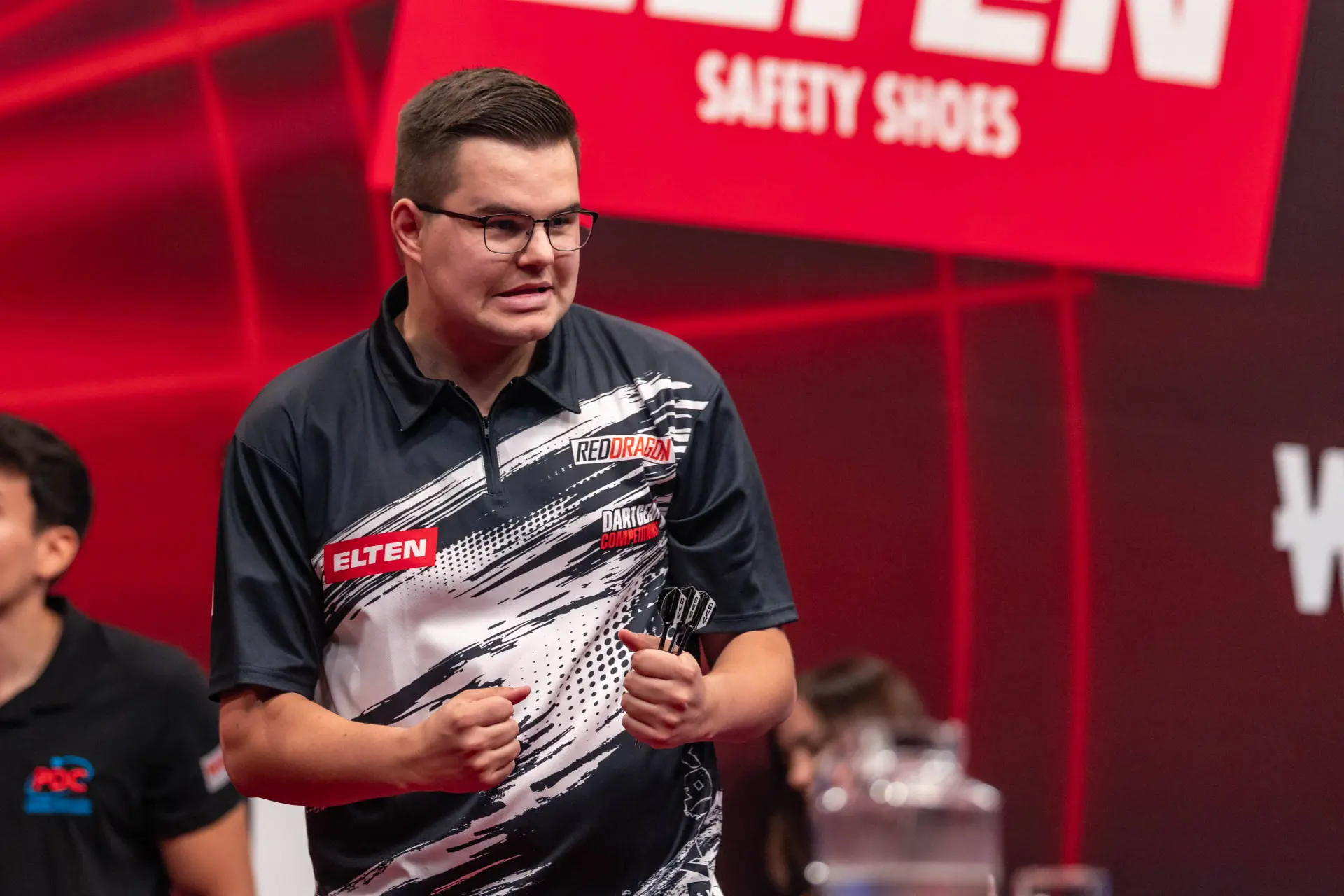
“I'll probably step away from darts for a little while” – Stowe Buntz makes remarkable admission after historic American victory at the World Cup of Darts
PDC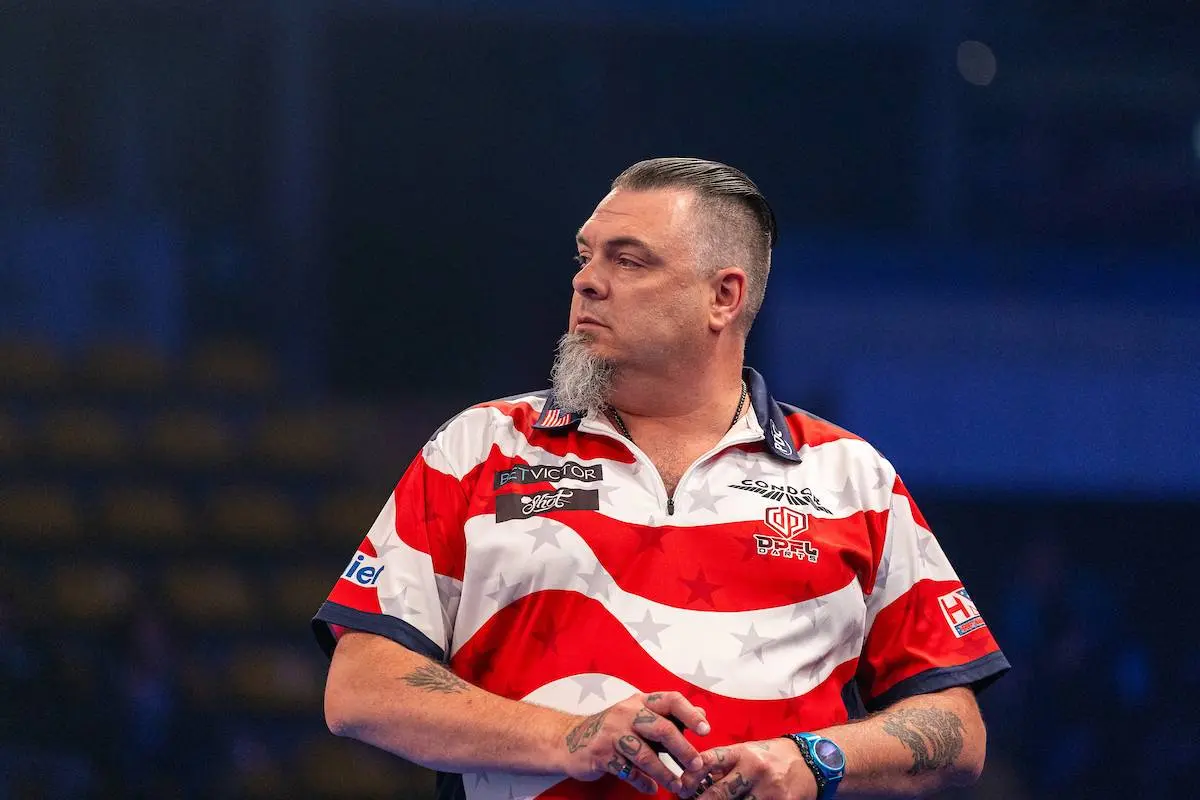
The relief was palpable in Team USA after their hard-fought 4-3 win over Australia during the group stage of the World Cup of Darts in Frankfurt. For Adam Sevada and Stowe Buntz, the victory meant much more than just two points in Group C. It was a win American darters had been waiting for for years.
ADVERTISEMENT
After the match, both players spoke candidly about the importance of the victory, the development of darts in North America, and even about Buntz’s own future, as he made a striking revelation about his plans outside the sport.
Long-awaited win for the United States
In recent years, podium success at the World Cup of Darts has been scarce for the United States. That’s why there was such joy when the Americans finally edged out Australia. “It was fun,” Sevada reflected. “It was stressful, but it was fun. I'm glad to be a part of it.”
According to the American, this victory feels like something that should have arrived much earlier. “With the talent we have in America, this might be a win that should have come a lot sooner.”
That feeling also existed within the team. Sevada had confidence beforehand that the pairing with Buntz would be successful. “I knew we were going to do well.” He says their mutual understanding plays a key role too. “We get on really well off the board. We have a great relationship.”
Although the official confirmation came later, Buntz and Sevada had known for quite some time that they were almost certain to form the American team. “Well, we knew before the confirmation, if I'm going to be honest,” said Sevada. “We probably knew seven or eight months ago.”
Read also

ADVERTISEMENT
Laughing, Buntz added that the math had long been done. “Nobody could physically catch us. Even if we had only shown up to our tournaments, we would have made it,” Sevada continued. “But we still showed up and put our best foot forward.”
In the draw, the United States landed in a group with Canada and Australia. That made it immediately clear that a North American clash would take place. The Americans would have preferred to avoid that meeting. “We don't really want to go against what you might call our teammates,” Sevada said.
Still, both players realised such matches are inevitable. “But it is what it is. It's not going to change the draw. It's just another team you've got to get through. It's darts, and it is what it is.”
Striking admission from Stowe Buntz
One of the most notable moments of the press conference came when Buntz was asked about his own form. The American made a big impression on TV in 2023, including at the Grand Slam of Darts. On the CDC Tour he also regularly posted high averages. This season, however, those results have been less frequent.
ADVERTISEMENT
The question, then, was whether this win would give him fresh motivation to return to the level that launched him internationally as ‘The Neon Nightmare.’
The answer surprised many. “If I'm honest and transparent, no. I'm going to make some decisions. I'll probably step away from darts for a little while.” Yet he acknowledged the victory had still given him something. “But this has put me back where I need to be.”
When he was then asked whether the adrenaline of such a win might change his plans, he remained resolute. “No.”
A significant part of the press conference focused on the future of American darts. Both players were asked what is needed to get more North American players on the PDC Tour and to raise the standard further. For Sevada, the answer is clear. “I think what the CDC has provided for American players is a platform to better ourselves as players. I think we've taken that next step..”
The CDC (Championship Darts Corporation) runs the leading professional darts circuit in North America and is the main pathway to international tournaments for many players. “Huge thanks to the CDC. Because of the CDC, more Americans have been able to play PDC tournaments. As long as American players continue to support the CDC platform, I think that's the way forward."
ADVERTISEMENT
Strikingly, he refused to label himself the best player in the country. “I may be the best player on paper, but I don't think I'm the best player in America, and I'll never say I am.”
According to Sevada, it ultimately comes down to participation and support for the existing infrastructure. “If people continue to support the CDC and more people come out to play, that's how the game grows..”

America pulled off a shock yesterday by beating Australia 4-3 in their first group match at the World Cup of Darts.
“If America is such an important market, then invest”
While Sevada emphasised the role of the CDC, Buntz went a step further. According to him, a major problem lies in the vast travel distances within North America. “One of the biggest hurdles we have is that it costs us almost as much to travel around North America as it does to travel to Europe.”
ADVERTISEMENT
Buntz said the enormous potential of the American market is often discussed, but concrete investment is still too often lacking. “If you want to tap into the market and unlock the potential of the players, contribute. Bring more money.”
He praised the efforts of the CDC but stated that the organisation cannot do everything on its own. “The CDC has done everything they can. They provide us with as much support as possible whenever they can.” He then issued a clear call to investors and sponsors. “If it’s really that simple to unlock that market, bring sponsors. Bring connections. Bring investment.”
Read also
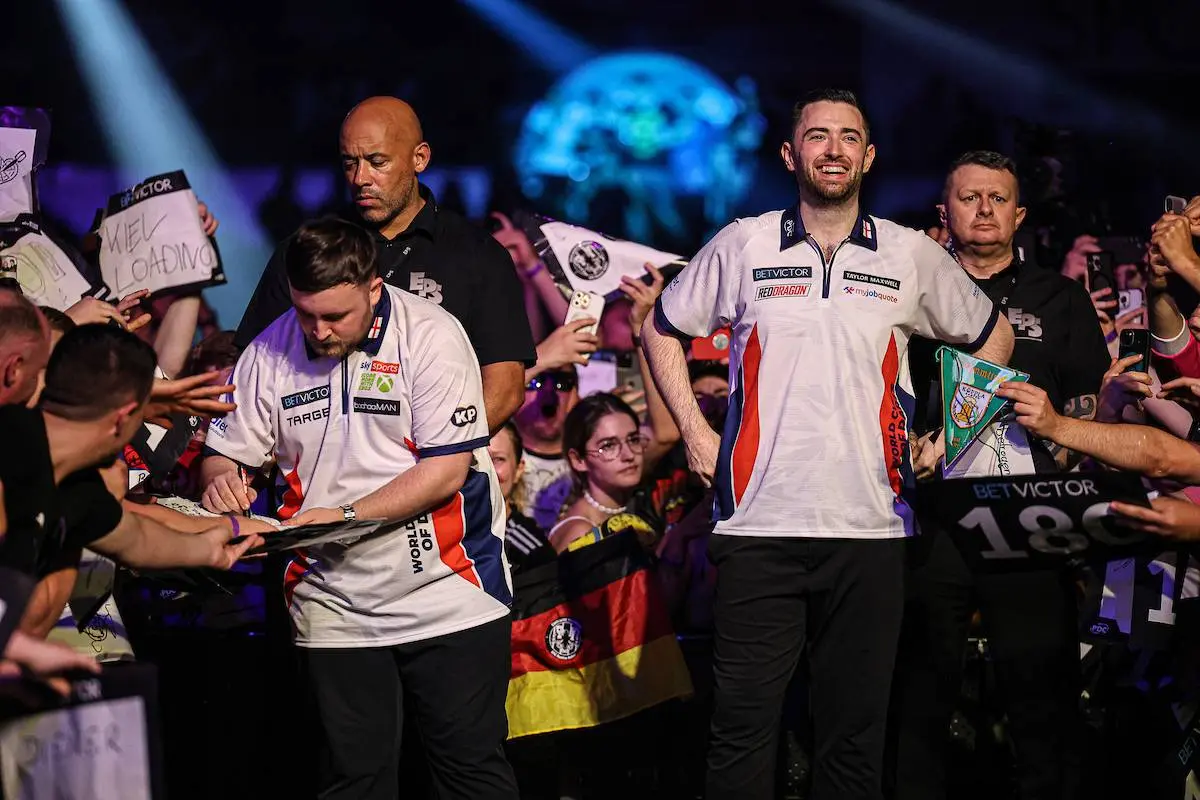
According to Buntz, that would make it significantly easier for top players like Sevada, Leonard Gates, and other North American standouts to fully focus on their careers. “If it's so easy to tap into the market, bring your sponsors, bring your connections, bring everything. Come tap into the North American market.”
International appearances also come with a certain responsibility, the Americans say. When players like Buntz and Sevada take to the stage at the World Darts Championship, the Grand Slam of Darts, or the World Cup, they are not only representing themselves. “Yes, we definitely feel that responsibility,” said Buntz.
ADVERTISEMENT
“We’re there to showcase ourselves, but also to represent North American darts and to show what opportunities the CDC has created.”
Still, he stressed again that the road to that level is anything but easy. “We're willing to do it, but it's painful and it's costly.” Sevada fully agreed with that assessment. “Everything he said, I absolutely agree with. One hundred percent.”

Lucas MichaelDarts Journalist
Lucas Michael is a darts journalist and reporter based in Cambridge, UK, and has been part of the DartsNews team since 2025. He covers professional darts through reports, analysis, round-ups, and live coverage, with a focus on clear context and accurate reporting across the PDC calendar.
A key part of his work is liveblogging major tournaments throughout the year, providing real-time updates, match coverage, and contextual reporting across the professional circuit. He also reports regularly from events on site and has covered the PDC World Darts Championship from the venue, delivering first-hand insight throughout the tournament.
Within the newsroom, Lucas works closely with the editorial team and supports coverage alongside Chief Content Officer Samuel Gill and reporter Kieran Wood.
Lucas holds a BA (Hons) in Sports Journalism. In his work, he places strong emphasis on careful sourcing, editorial accuracy, and updating content promptly when new, verified information becomes available.
claps 0visitors 0
Just in


Popular news
Latest comments
- I agree,I can't believe the lack of coverage of this sad loss. Always enjoyed watching him,but I guess now it's all about littler,well it seems that way. Darts has sadly lost a good manrick6717-10-2026
- In the absence of a report regarding the death of Stefan Lord, I'll assist. An excellent player in the late 70s and early 80s, he actually won the now defunct 3rd place match at two World Championships and a couple of the News of the World Championships. A fabulous player and easily the best Swedish player ever. Rest peacefully Stefan.richieburnettrocks16-10-2026
- Joking aside, it is the second most watched sport on sky (more than golf, F1 etc) behind football only, and in participation is second to only football and swimming. It doesn't get the attention or sponsorship of "bigger" sports because it's not as sexy, but it's right up there.BandB13-10-2026
- i love darts but you can't seriously believe it's the second most popular sport in the uk. even top five is pushing it. it may be the fastest growing, though.colt13-10-2026
- I'm a big Clayton fan, but he's got this completely wrong. Qualification criteria exists for a reason - so just as failing to make the top 32/64 for the Euro championships/PT Finals means you miss out, so does not lifting a title for this one.26sForFun12-10-2026
- The players who deliberately slow the game down are usually boring and win very little in the way of silverware. Horrible to watch.MrYnyslas197112-10-2026
- [“The Gentle” then used a sweeping and questionable phrase...] You anglocucks are hilariously finished in every sense of the word.Critical99911-10-2026
- I love Jonny but I disagree. The Grand Slam was always supposed to be "champion of champions" type competition. If the top 16 are guaranteed participation in everything there will be so much less jeopardy involved in qualifying and each major tournament will lose its unique flavour which the PDC has worked hard trying to develop. I enjoy following the qualification races towards the end of the year, and while consistency should have its rewards, the truth is Jonny hasn't reached a major final all year or won a single event on the Pro Tour. Being consistent is one thing, but that alone should have consequences as the sport's elite should not be prepared to accept consistently strong performances, their foremost motivation should be to win and this should be what separates them from the rest, not the consistency of their performances. Jonny is expecting that losing should be enough; it shouldn't be, at least not as far as the Grand Slam is concerned.Deduce635811-10-2026
- Well being honest,it doesn't matter what level you play at, there's always someone who slows it down to suit themselves,and extra swig of water, replacing flights, asking the ref what the score is. It happens wherever. I'm not saying it's professional,but I'm sure we've all seen it beforerick6711-10-2026
- Agree completely. Not sure how a ranking event can have a criteria not based on rankings. And he right on popularity. In the UK second only to football.BandB11-10-2026
Loading