"I’m a human being with feelings, not an object. I’m just Noa and I’m someone who can play darts well" – Noa-Lynn van Leuven makes Ally Pally return after year of 'misery'
PDC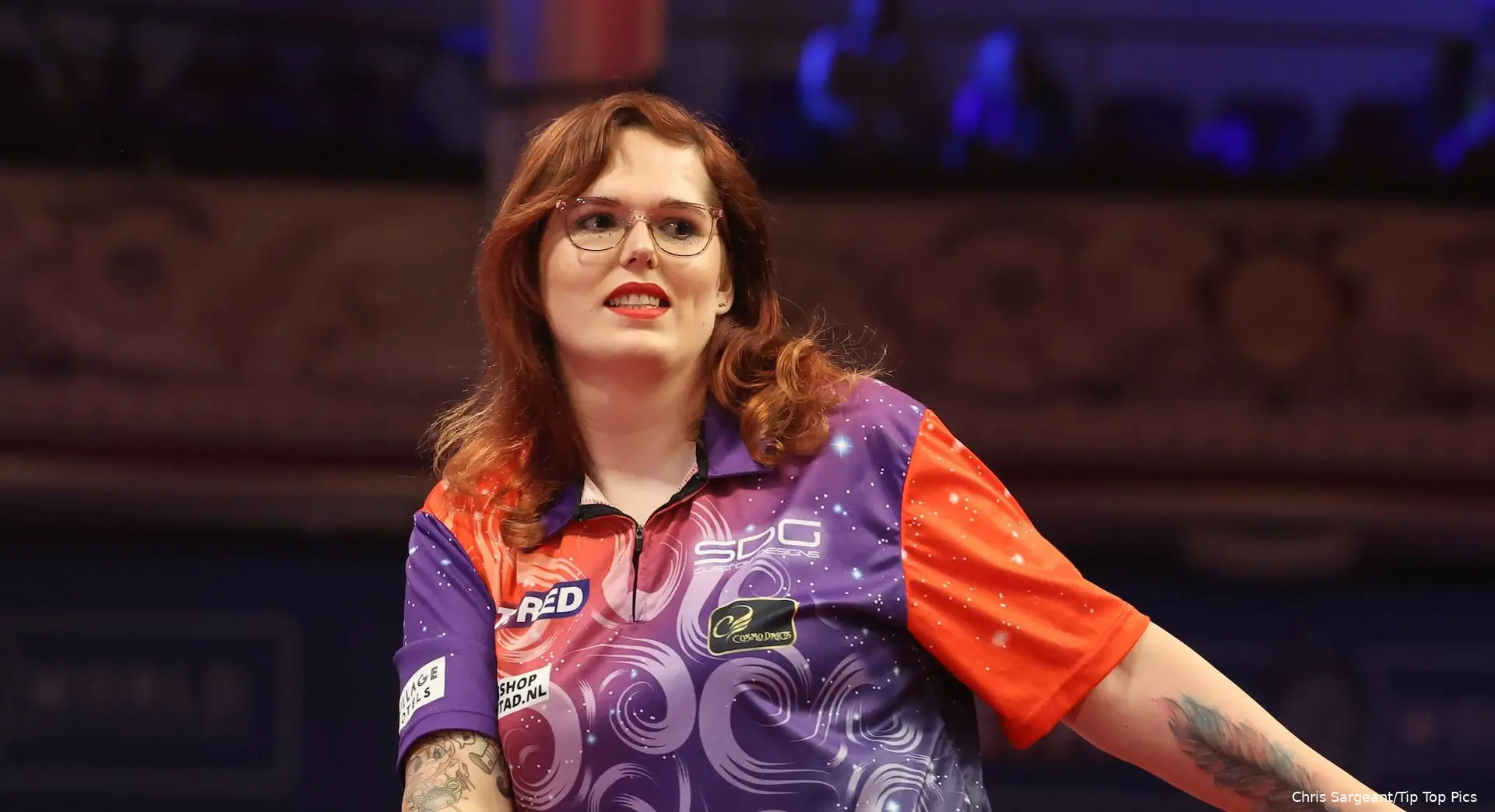
That Noa-Lynn van Leuven is back at the World Darts Championship this year can rightly be called a small miracle. Not because of her talent – that has long been beyond doubt – but because of the heavy mental battle she had to fight in recent months. For weeks she was almost exclusively in bed, searching for reasons to get up. That she now, on the eve of her second Worlds appearance, is back at the oche is the result of intensive support, resilience, and a slowly returning belief in herself.
ADVERTISEMENT
Van Leuven has long had issues including with being interviewed due to the social media comments that follow her but she is ready for her PDC World Darts Championship return hoping to inspire others. “Ah, that’s that man,” or one of the many other insults she now knows all too well/ Helping others matters more to me than thinking about myself,” she tells AD.nl. “If there’s even one person who thinks: I’m not crazy, I’m allowed to be myself, then all the misery is worth it.”
Turbulent months
Outside, heavy showers and bright sunshine alternate. The autumn weather seems symbolic of the period Van Leuven has just been through. Last year she made history as the first Dutch woman to appear at the World Darts Championship. A milestone, not only in sporting terms, but also personally. Yet she could not hold on to that positive feeling.
In fact, after the Worlds she put down her darts, called in sick from her job as a sous-chef, and fell into a deep mental slump. “I basically only got out of bed when I was hungry,” she says candidly. “Then I’d grab a bag of chips, lie back down, and Netflix all day.”
Van Leuven had known for some time that she wasn’t feeling right. “But as long as you just keep going and don’t think too much, you get by. Last year I had so many darts tournaments that I didn’t have time to dwell on how I was really doing. First this tournament, then that Worlds. But when all that is over, the crash comes.”
And that crash hit hard. “It felt like I ran into a massive concrete wall.”
ADVERTISEMENT
Hate, exclusion, and old trauma
A key factor in that mental breakdown was the storm of reactions around her and her participation in women’s darts. Van Leuven calls the period when Anca Zijlstra and Aileen de Graaf left the Dutch team because they did not want to play with “a biological man” “incredibly painful.”
The WDF’s decision to bar trans women from women’s competitions also left deep scars. “I haven’t experienced reactions as intense as back then,” she says. “Everything I’d been through before suddenly resurfaced.”
Van Leuven grew up in Heemskerk and was bullied and excluded in her youth. “Back then you can still say: they were kids. Now it’s adults who know exactly what they’re doing.” The constant stream of hateful reactions meant she no longer dared to go outside. She suffered panic and anxiety attacks. “At a certain point I was convinced that all people were scary and s****y”
The result: total exhaustion, both mentally and physically. Darts, her great love, faded into the background. “I just had nothing left to fall back on.”
ADVERTISEMENT

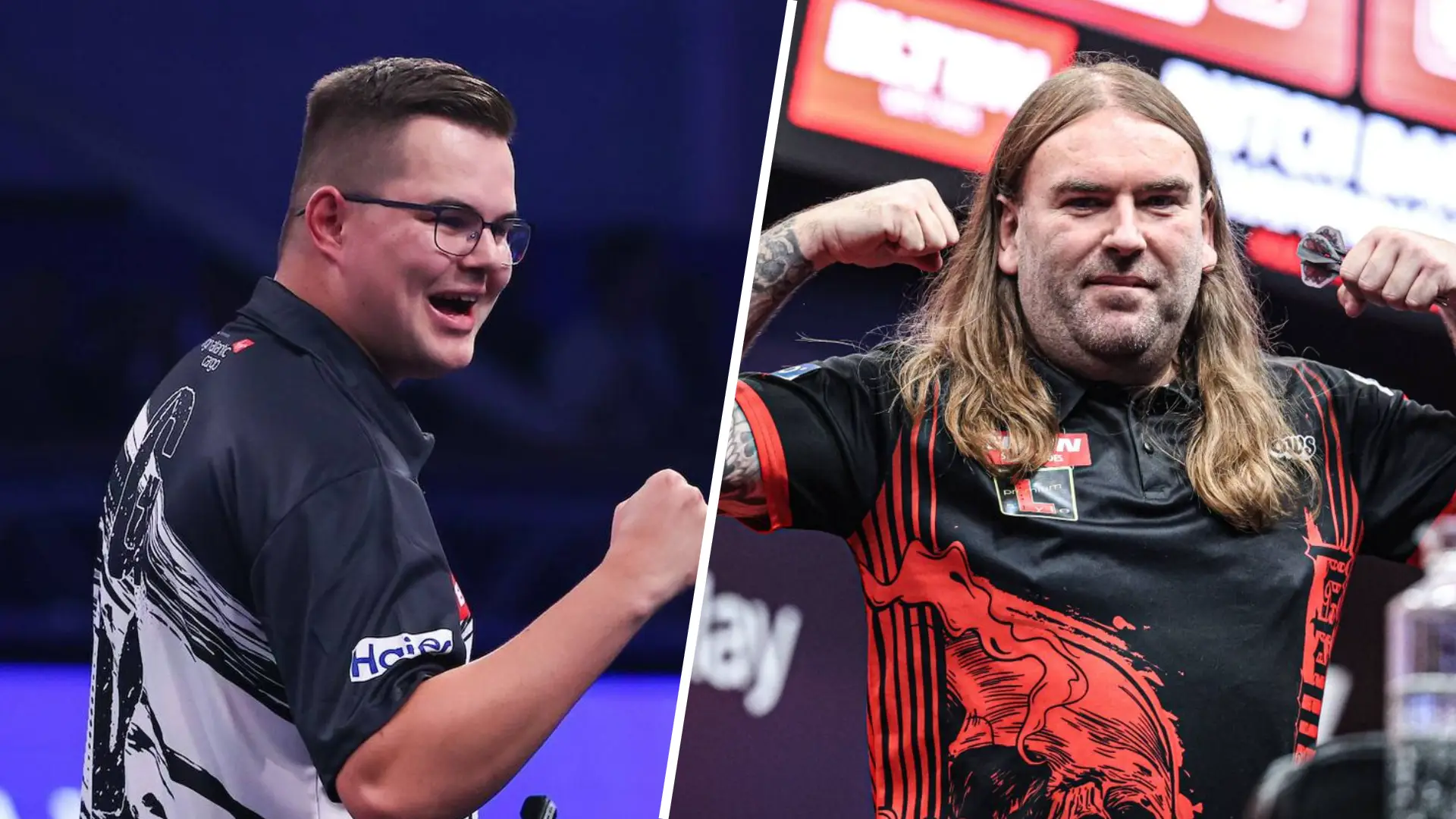
Noa-Lynn van Leuven faces Peter Wright in the opening round of the 2026 World Darts Championship
Intensive in-home support
That Van Leuven is back again this year is thanks in part to intensive professional help. For fourteen weeks she received support from an IBT team (Intensive Treatment at Home). “They literally showed up at my door three times a week,” she says.
“They helped me with small things: what can I do today? Shall we go for a walk? Sometimes they just took me outside. Then I had to get out of bed.” It sounds simple, but for someone deep in depression, it is anything but.
Slowly but surely, structure returned to her days. She started setting small goals, learned to better understand her trauma, and got tools to cope with anxiety and stress. “It didn’t go up in a straight line,” she emphasizes. “But there were more and more moments when it felt a little better.”
ADVERTISEMENT
Pride as a turning point
An important turning point came on Saturday, 08/02, during Pride Amsterdam. Van Leuven was invited onto the boat of the podcast Lesbische Liga and decided to go despite her insecurity.
“It was so much fun,” she says with a smile. “For the first time in a long while, I felt recognition. That I’m allowed to be as I am. That I can be silly, wave a flag, and just party.”
Since that day, her outlook on the world slowly changed. “I suddenly thought: maybe not everyone is s***y after all.” It sounds simple, but for Van Leuven it was a huge step. She rebuilt a social network, gained more friends around her, and felt supported.
Back to the kitchen and back to the oche
ADVERTISEMENT
She also picked up her professional life again. Van Leuven returned to her job as a sous-chef, a trade she is visibly passionate about. “I really love patisserie,” she says enthusiastically. “Making panna cotta, creating desserts, I think that’s super cool.”
She took that renewed energy into darts as well. She started training again, cautiously at first, later more intensely. The love for the game had never disappeared. “Darts is my thing. That feeling when everything clicks, you don’t lose that.”
And so she qualified again for the World Darts Championship. This time a brutal first-round opponent awaits: two-time world champion Peter Wright.
Read also

“I’m here because I can play darts”
ADVERTISEMENT
Van Leuven is realistic but combative. “I’m not necessarily happy yet, but I’m happier than before,” she says. “And I notice that many people think it’s brave that I don’t shy away from anything.”
She also appreciates that big names in the darts world have publicly stood up for her. Players like Michael van Gerwen and Luke Humphries have previously spoken out against hate and for inclusivity. “That really means a lot to me,” she acknowledges.
At the same time, Van Leuven wants to emphasize that she is not at the Worlds just because of who she is, but above all because of what she can do. “I’m here for a reason: because I can play darts. That I’m one of the fifteen Dutch players at this Worlds is bizarre, but I’m also here to win.”
More than one label
Finally, she has a message for media and darts fans. Too often she sees headlines where her name is missing and only words like ‘trans woman’ or ‘trans darts player’ are used. “Then I think: well, great. So that’s apparently who I am. My entire identity captured in one word.”
ADVERTISEMENT
She doesn’t want to avoid the topic – on the contrary. “Talking about it is fine. But I’m a human being with feelings, not an object. I’m just Noa. And I’m someone who can play darts well.”

Samuel GillChief Content Officer
Samuel Gill is the Chief Content Officer (CCO) of DartsNews.com, a role he has held since 2020. He is responsible for editorial governance across the platform, including setting content standards, overseeing accuracy and consistency, and guiding long-term editorial strategy across professional darts coverage. Since joining, he has contributed more than 10,000 articles and editorial pieces, playing a central role in the development and daily operation of the site.
Based in Leicester, Samuel has extensive experience in darts media and has been closely involved in coverage of the professional darts circuit for several years. Within the UK darts community, he is a recognised figure known for his consistent editorial output and ongoing reporting on major tournaments and developments across the PDC calendar.
In his current role, Samuel works closely with editors and writers to ensure content meets clear journalistic standards, with a focus on source verification, editorial consistency, and timely updates when new, confirmed information becomes available.
claps 1visitors 1
Just in
Popular news
Latest comments
- I agree,I can't believe the lack of coverage of this sad loss. Always enjoyed watching him,but I guess now it's all about littler,well it seems that way. Darts has sadly lost a good manrick6717-10-2026
- In the absence of a report regarding the death of Stefan Lord, I'll assist. An excellent player in the late 70s and early 80s, he actually won the now defunct 3rd place match at two World Championships and a couple of the News of the World Championships. A fabulous player and easily the best Swedish player ever. Rest peacefully Stefan.richieburnettrocks16-10-2026
- Joking aside, it is the second most watched sport on sky (more than golf, F1 etc) behind football only, and in participation is second to only football and swimming. It doesn't get the attention or sponsorship of "bigger" sports because it's not as sexy, but it's right up there.BandB13-10-2026
- i love darts but you can't seriously believe it's the second most popular sport in the uk. even top five is pushing it. it may be the fastest growing, though.colt13-10-2026
- I'm a big Clayton fan, but he's got this completely wrong. Qualification criteria exists for a reason - so just as failing to make the top 32/64 for the Euro championships/PT Finals means you miss out, so does not lifting a title for this one.26sForFun12-10-2026
- The players who deliberately slow the game down are usually boring and win very little in the way of silverware. Horrible to watch.MrYnyslas197112-10-2026
- [“The Gentle” then used a sweeping and questionable phrase...] You anglocucks are hilariously finished in every sense of the word.Critical99911-10-2026
- I love Jonny but I disagree. The Grand Slam was always supposed to be "champion of champions" type competition. If the top 16 are guaranteed participation in everything there will be so much less jeopardy involved in qualifying and each major tournament will lose its unique flavour which the PDC has worked hard trying to develop. I enjoy following the qualification races towards the end of the year, and while consistency should have its rewards, the truth is Jonny hasn't reached a major final all year or won a single event on the Pro Tour. Being consistent is one thing, but that alone should have consequences as the sport's elite should not be prepared to accept consistently strong performances, their foremost motivation should be to win and this should be what separates them from the rest, not the consistency of their performances. Jonny is expecting that losing should be enough; it shouldn't be, at least not as far as the Grand Slam is concerned.Deduce635811-10-2026
- Well being honest,it doesn't matter what level you play at, there's always someone who slows it down to suit themselves,and extra swig of water, replacing flights, asking the ref what the score is. It happens wherever. I'm not saying it's professional,but I'm sure we've all seen it beforerick6711-10-2026
- Agree completely. Not sure how a ranking event can have a criteria not based on rankings. And he right on popularity. In the UK second only to football.BandB11-10-2026
Loading