"He’s like, ‘Have you packed your darts this weekend?": Nathan Aspinall hilariously ribbed by Jonny Clayton for dartitis struggles
PDC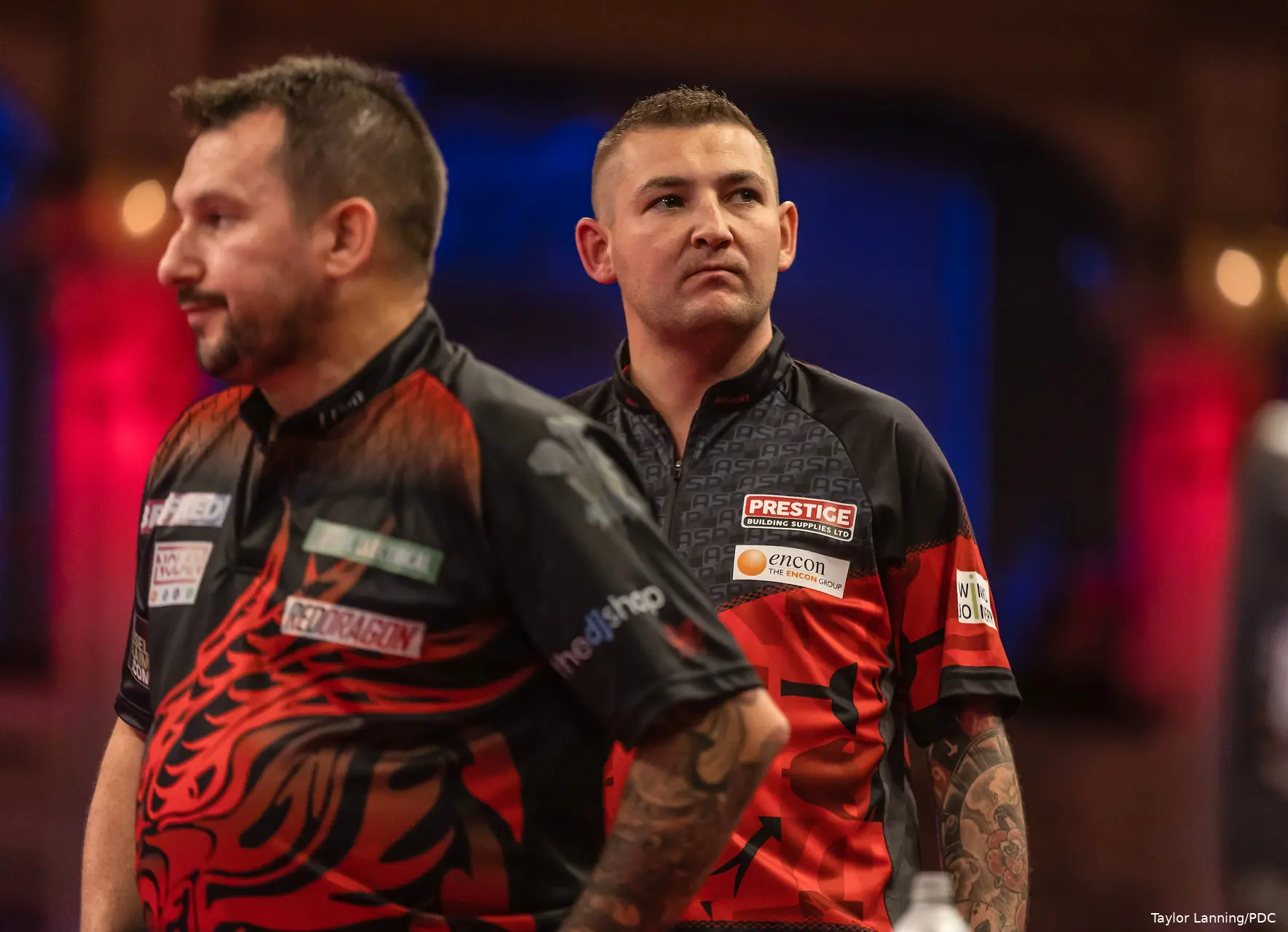
Nathan Aspinall has revealed dartitis still has not fully left his game, despite the former UK Open and World Matchplay champion undergoing intensive hypnotherapy and sports psychology work to battle one of darts’ most feared mental blocks.
ADVERTISEMENT
Aspinall has spoken before about the issue, but his latest appearance on the Happy Hour Podcast with Jaackmaate offered one of his clearest explanations yet of how it affected him, why he believes it took hold, and why he is now hearing more young players ask for help with the same problem.
For Aspinall, the block was centred on the first dart. Once that left his hand, the rest of the visit usually followed. “Mine was different,” he said. “I couldn’t throw it, but as soon as the first one went, the next two would follow. It was that first dart.”
Asked what was going through his mind on a pressure dart, Aspinall initially joked: “Don’t miss.” But the answer quickly returned to the problem that has shadowed his career. “I was overthinking it, which is what causes dartitis,” he said. “I put so much pressure on myself.”
“It’s the fear of missing”
Aspinall did not dress up the reality of dealing with dartitis at the top level. He described it as a mental battle rooted in fear, pressure and anxiety. “It’s the fear of missing,” he said. “Some people call it the yips, like in golf. You over-putt. I had that as well. It’s horrible. I’m not going to lie.”
The 32-year-old also stressed that dartitis does not hit every player in the same way. He pointed to former Lakeside world champion Mark Webster as an example of a more severe version, where the release itself becomes visibly disrupted.
ADVERTISEMENT
“There are different forms of dartitis,” Aspinall said. “There are ones where you physically just can’t let the dart go and you’re moving with it. That’s what Webby had. That’s the worst one.”
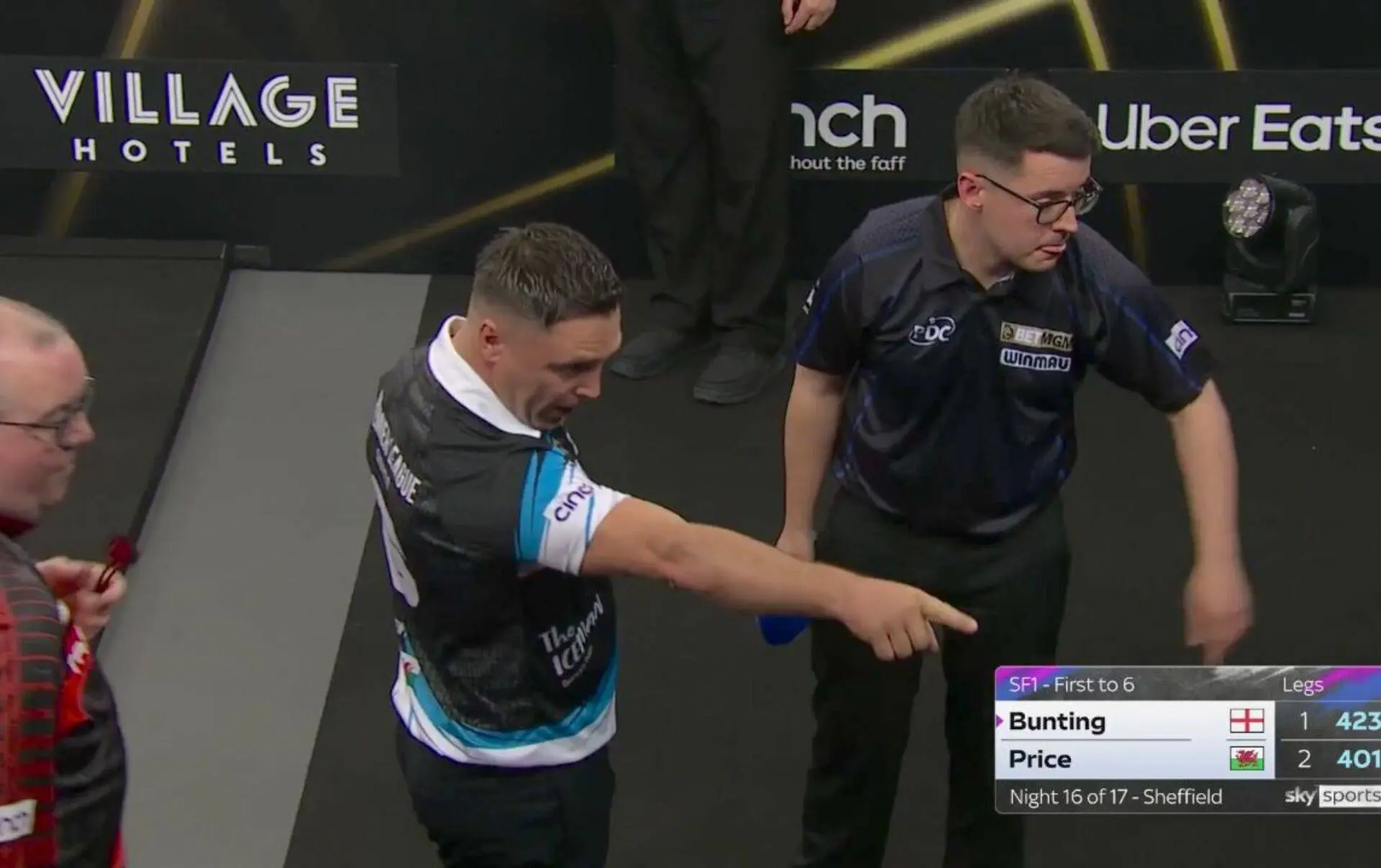
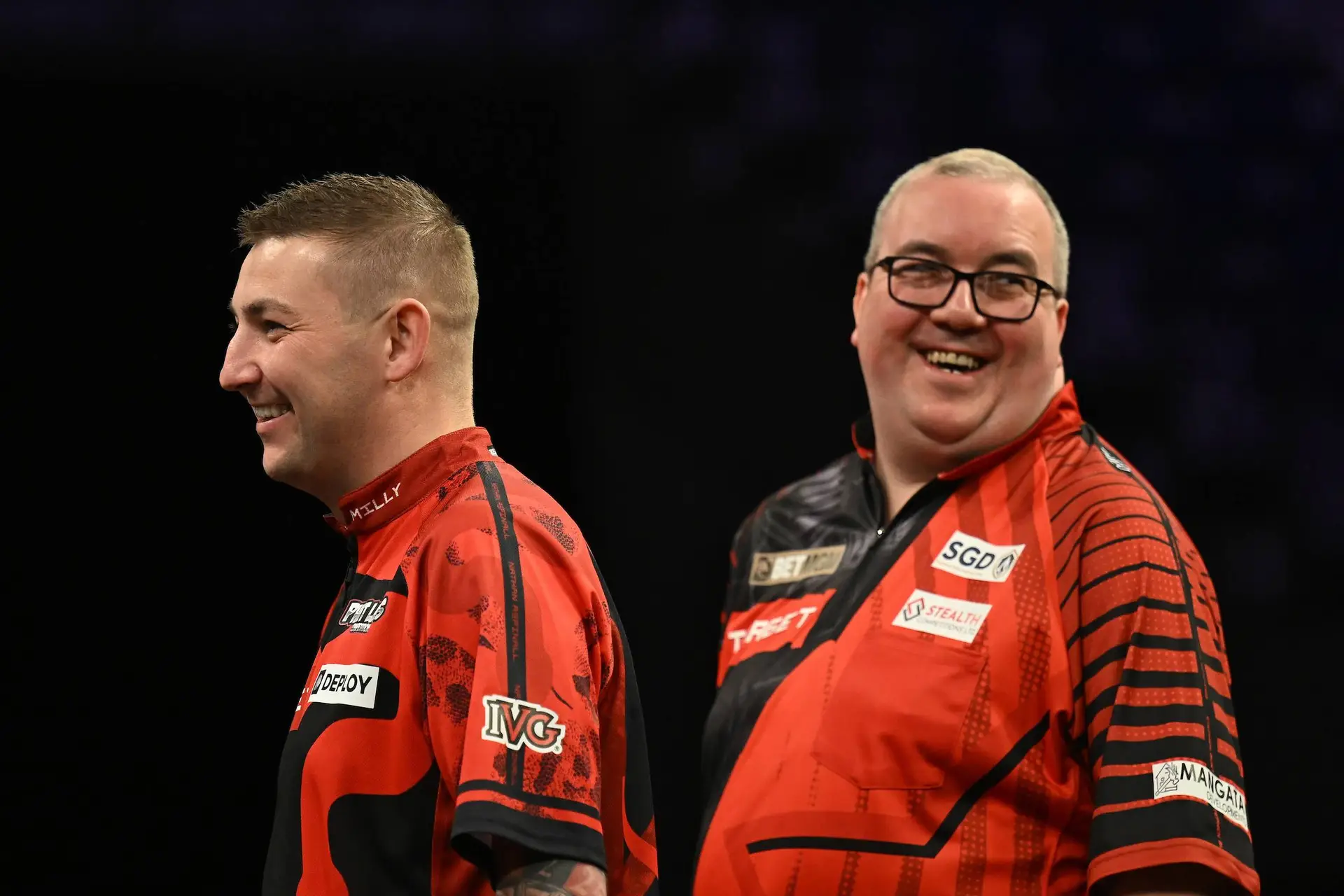
Aspinall can now laugh about the jokes from fellow professionals, including Jonny Clayton, but he made clear the problem has not vanished completely. “Clayton always gives me stick,” he said. “He’s like, ‘Have you packed your darts this weekend?’ That kind of thing. I can laugh about it now, because I’ve still got a bit of it. It’s not completely gone from my game.”
Hypnotherapy changed more than his throw
Aspinall worked with sports psychologist Shawn and hypnotherapist Chris O’Connell to get the issue under control. The work was regular and demanding. “I worked bloody hard,” he said. “I had Shawn, my sports psychologist, and Chris O’Connell, doing hypnotherapy. I was doing hypnotherapy twice a week and seeing a sports psychologist once a week.”
ADVERTISEMENT
For Aspinall, the key was understanding the stress response behind the block. He described dartitis as something that made his brain react as though he was having a panic attack when he could not release the dart properly. “Basically, when you have dartitis, you have a panic attack,” he explained. “Every time you can’t throw that dart effectively, your brain thinks you’re having a panic attack. Why do you have a panic attack? Because you’re anxious, stressed, this, that and the other. That was why I had it.”
That process meant clearing his head before matches, rather than carrying the chaos of life onto the oche. Aspinall said his own personality played into the problem, with his mind rarely slowing down.
“We had to work out a way to make me unstressed and clear,” he said. “I am always busy. I do everything at 100 miles an hour. I’ve got this going on, that going on, everything. The hypnotherapy was basically trying to clear my head, so I was going into darts not worrying about this at home or that at home. I was going in with a clear head to play darts.”
Aspinall admitted he was sceptical at first. That changed once he felt the impact. “I was dead sceptical at first,” Aspinall said. “I didn’t believe in it. But for me, he’s amazing. He changed my life.”
The benefits extended beyond darts. Aspinall said the work changed how he handled setbacks, family life and pressure away from the stage. “It changed my darts, and it also changed me as a person,” he said. “The way I am at home, the way I process stuff, the way I deal with defeat, or an argument with the missus, or the way I deal with my kids. I’m more relaxed and chilled.”
ADVERTISEMENT
Aspinall remains grateful for the help he received, even if the issue still lingers. “Chris is working with a lot of people on the tour now,” he said. “He got me through my darts. As I say, it’s still there in bits and bobs, but I owe him a lot.”
Young players now asking Aspinall for help
Aspinall’s own experience has made him a sounding board for others. He revealed that dartitis has become one of the most common topics raised with him at exhibitions. “I speak to a lot of them,” he said. “It’s probably the most common question I get asked at an exhibition: ‘Can you help me? I’ve got dartitis.’”
That is where Aspinall sees a worrying trend. He believes the pressure on young players has intensified as the sport’s academy system grows and the Luke Littler effect reshapes expectations. “The reason the kids have got it is simple,” said Aspinall. “They want to be a professional dart player like Luke Littler so quickly. That’s it. They’re putting that much pressure on themselves to be good quickly. That’s why they’re getting it, in my opinion.”
Aspinall sees the upside of the academy boom, but the new landscape also brings sharper stakes. Teenage players are no longer just learning quietly in the background. “The problem now is that, as good as darts is with all these academies, there are 13 and 14-year-old kids playing darts for two or three grand,” he said. “That’s mad.”
ADVERTISEMENT
His advice to young players is not complicated. Slow down, enjoy the game and stop trying to force the timeline. “I keep saying to kids: stop worrying,” he said. “If it’s meant to be, it’s meant to be. Bide your time. Enjoy it. Stop putting pressure on yourself.”
For anyone already dealing with dartitis, Aspinall’s message is equally blunt. “If you’ve got it, just don’t give in,” he said. “I always say to people: don’t give in. You can beat it.”

Aspinall is a two-time major champion
Pressure remains darts’ great divider
Aspinall’s comments on dartitis came as part of a wider discussion about the mental side of the sport. For him, that remains the difference between throwing elite darts once and doing it week after week. Asked how much of darts is mental, Aspinall gave a clear answer. “All of it,” he said. “Honestly, all of it.”
ADVERTISEMENT
That view also shapes how he sees the current standard of the sport. Aspinall accepts the highest peaks are now spectacular, but he is not convinced the level across the full Tour Card field has simply gone up.
“I actually don’t think the standard is getting better,” Aspinall said. “In my opinion, if you look at the numbers now compared to three or four years ago, I don’t think they’re any better. I think the peaks are higher, so now you’re seeing a lot of 115 averages randomly. But if you looked at the seasonal average for the 128 Tour Card holders compared to five years ago, I reckon it’s down."
“I might be completely wrong. That’s just my feeling," he adds. "I don’t think the standard has got any better over the last few years. I just think when people play really well, it’s really, really good.”
The difference, Aspinall argued, is consistency. A lower-ranked player can produce a huge match, but backing it up remains the challenge. “Anyone can beat anyone,” he said. “World number 128 can beat Littler. Simple as that. He has done. World number 128 can hit a 120 average over best of 11, but he can also hit an 85 the game after.”
That, for Aspinall, is why the top players stay there. “The guys at the top are at the top for a reason, because they’re more consistent,” he explained. “Why are they more consistent? Because they’ve been through so many situations. They know how to deal with situations better.”
ADVERTISEMENT
Aspinall has lived that battle from both sides. The major titles show the level he has reached. The dartitis battle shows the cost of staying there.
Kieran WoodDarts Journalist
Kieran Wood is a sports journalist based in Wales and has been active in journalism since 2022. He contributes to DartsNews.com, where he covers professional darts through news, match reports, analysis, and live coverage across the PDC calendar and major tournaments.
A key part of his work is on-site reporting from leading events. Kieran has covered the PDC World Darts Championship in person, reporting daily from the venue and providing first-hand insight from the tournament. During his coverage, he has conducted interviews with leading players including Luke Littler, Luke Humphries, and Gerwyn Price.
He is also one of the leading voices of the English-language Dartsnews Podcast, contributing regular analysis and discussion on developments across the professional darts circuit.
In his reporting, Kieran places strong emphasis on careful sourcing, editorial accuracy, and updating articles when new, verified information becomes available.
claps 0visitors 0
Just in


Popular news
Latest comments
- I agree,I can't believe the lack of coverage of this sad loss. Always enjoyed watching him,but I guess now it's all about littler,well it seems that way. Darts has sadly lost a good manrick6717-10-2026
- In the absence of a report regarding the death of Stefan Lord, I'll assist. An excellent player in the late 70s and early 80s, he actually won the now defunct 3rd place match at two World Championships and a couple of the News of the World Championships. A fabulous player and easily the best Swedish player ever. Rest peacefully Stefan.richieburnettrocks16-10-2026
- Joking aside, it is the second most watched sport on sky (more than golf, F1 etc) behind football only, and in participation is second to only football and swimming. It doesn't get the attention or sponsorship of "bigger" sports because it's not as sexy, but it's right up there.BandB13-10-2026
- i love darts but you can't seriously believe it's the second most popular sport in the uk. even top five is pushing it. it may be the fastest growing, though.colt13-10-2026
- I'm a big Clayton fan, but he's got this completely wrong. Qualification criteria exists for a reason - so just as failing to make the top 32/64 for the Euro championships/PT Finals means you miss out, so does not lifting a title for this one.26sForFun12-10-2026
- The players who deliberately slow the game down are usually boring and win very little in the way of silverware. Horrible to watch.MrYnyslas197112-10-2026
- [“The Gentle” then used a sweeping and questionable phrase...] You anglocucks are hilariously finished in every sense of the word.Critical99911-10-2026
- I love Jonny but I disagree. The Grand Slam was always supposed to be "champion of champions" type competition. If the top 16 are guaranteed participation in everything there will be so much less jeopardy involved in qualifying and each major tournament will lose its unique flavour which the PDC has worked hard trying to develop. I enjoy following the qualification races towards the end of the year, and while consistency should have its rewards, the truth is Jonny hasn't reached a major final all year or won a single event on the Pro Tour. Being consistent is one thing, but that alone should have consequences as the sport's elite should not be prepared to accept consistently strong performances, their foremost motivation should be to win and this should be what separates them from the rest, not the consistency of their performances. Jonny is expecting that losing should be enough; it shouldn't be, at least not as far as the Grand Slam is concerned.Deduce635811-10-2026
- Well being honest,it doesn't matter what level you play at, there's always someone who slows it down to suit themselves,and extra swig of water, replacing flights, asking the ref what the score is. It happens wherever. I'm not saying it's professional,but I'm sure we've all seen it beforerick6711-10-2026
- Agree completely. Not sure how a ranking event can have a criteria not based on rankings. And he right on popularity. In the UK second only to football.BandB11-10-2026
Loading