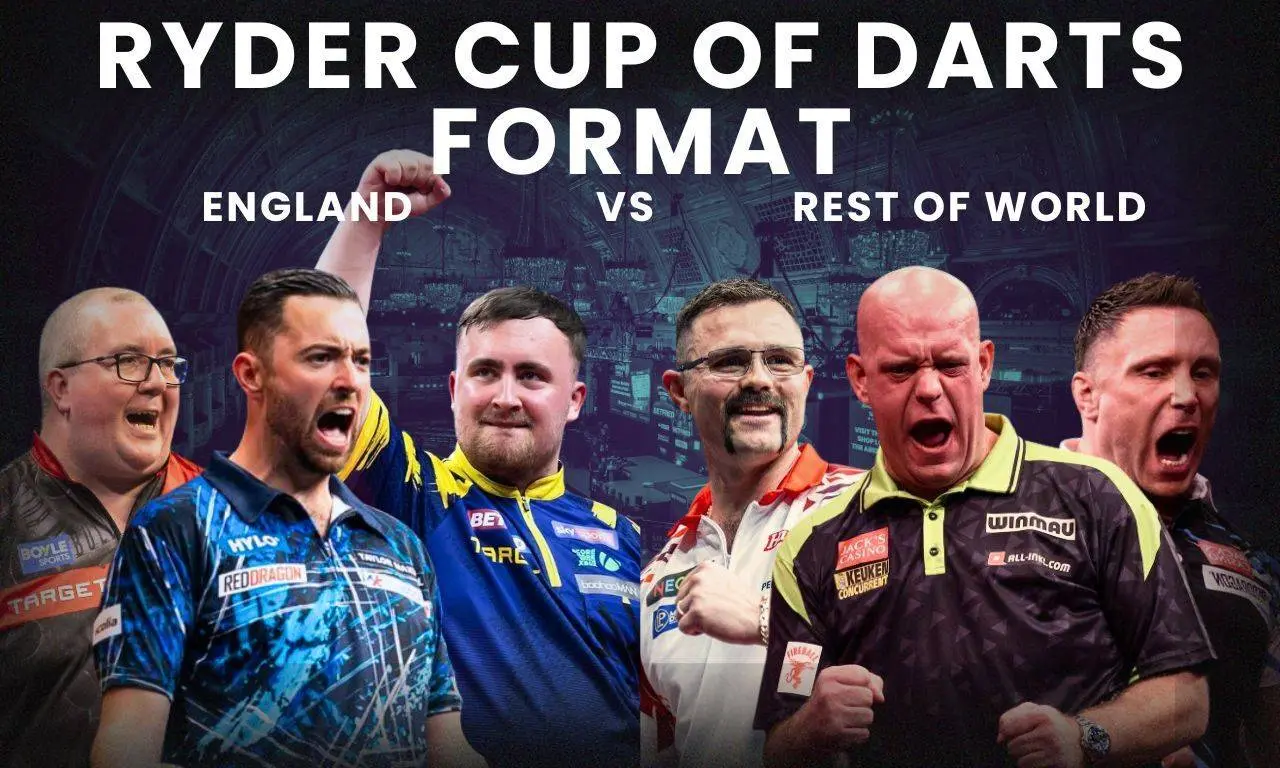
Recently, sports fans could once again enjoy the Ryder Cup in golf, the biennial battle between Europe and the USA. This year's win went somewhat surprisingly to Europe, who went on to win 13-15 in the USA. Once again, the event guaranteed a spectacle and a crowd of spectators in front of the TV. It made us wonder if such a tournament could also be held in darts and what exactly it would look like?
ADVERTISEMENT
The Ryder Cup was first played in 1927 between the United States and the United Kingdom. Traditionally, the most successful golfers came from these two countries. Only in 1979 did this change, from then on the United States took on Europe every two years.
The tournament has only gained prestige and popularity over the years. Golf is an individual sport and it is the team aspect that provides the extra motivation. That Americans are proud to play for their country is logical, being from there, but is it special for Europeans to play for their continent? For their country, ok, but for a continent instead of their respective nations?
The answer is a resounding yes! And especially because of the team dynamic in such an event. Twelve players who, while otherwise playing individually all year round, give the best of themselves as a team. A missed turn or a missed putt not only disappoints you, but it also affects the whole team. But the reverse is also true: a successful tee or putt gives you the appreciation of your entire team. For many golfers, it is the highlight of the year to experience that team atmosphere and sense of camaraderie - familiar from sports like football, basketball, volleyball, etc. - something they otherwise miss. It is not about representing your continent, but having a team that counts on you and supports you through thick and thin.
The fans also enjoys this tournament. Tickets are sold out months in advance and the stands are packed. The atmosphere is great - although this year there were some Americans who got a little too rowdy - and the players enjoy interacting with the public. This tournament is also one of the highlights of the calendar.

Ryder Cup 2025
Calls for Ryder Cup of Darts sound louder and louder
ADVERTISEMENT
A dream that could come true? More and more the call for an international team tournament in the style of the RyderCup is being heard in the dart world. An event where not individuals, but teams face each other. The idea has been around for years among players and fans, but is now taking more and more shape. What would happen if the PDC had the guts to organize a real "Ryder Cup of Darts"?
Where in golf the USA was a dominant force from the beginning, in darts it is of course quite different. Traditionally the sport was especially popular in England where it was practiced busily in many local pubs. Not until 1994 did we get a first non-British world champion with the Canadian John Part.
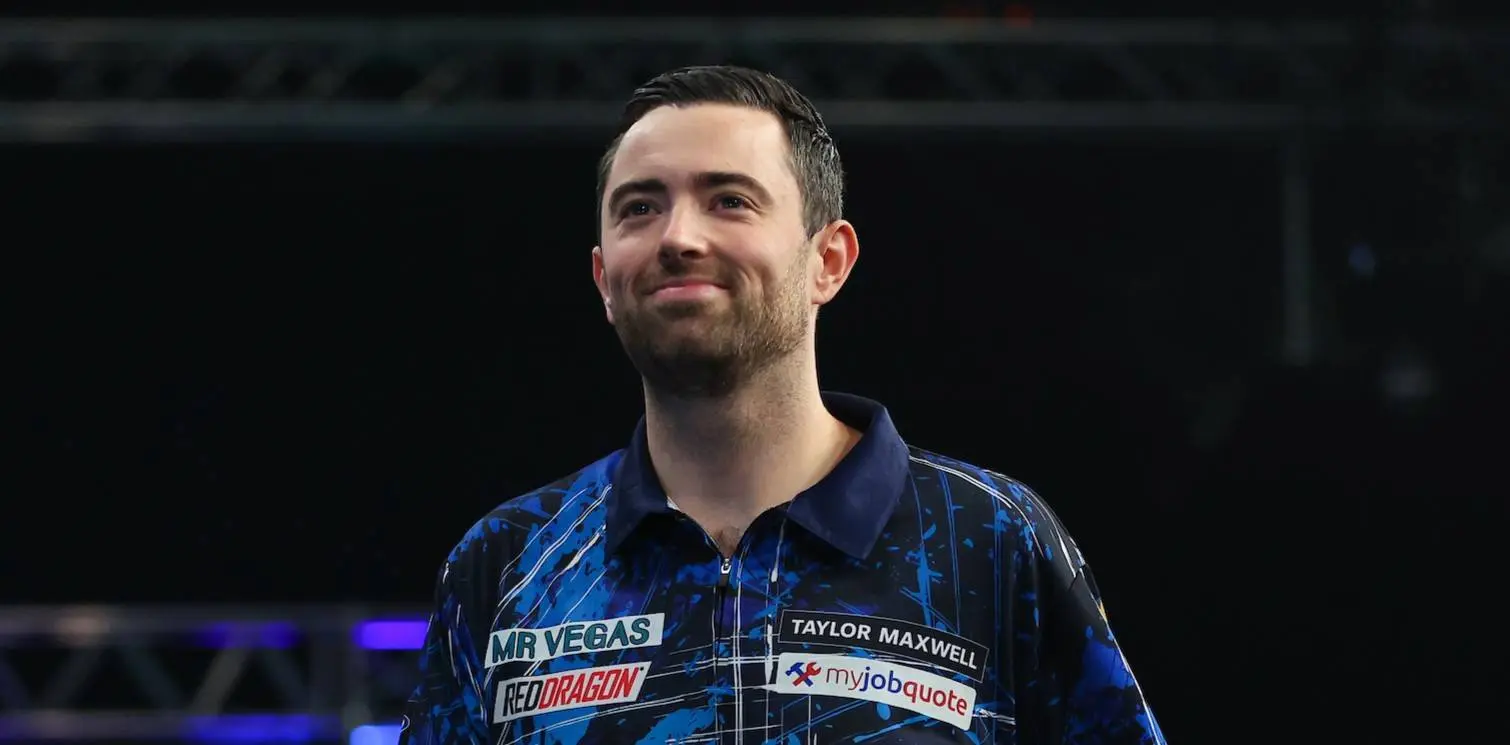
A year later Raymond van Barneveld made history by becoming the first Dutchman to reach the final of a World Championship. 'Barney' lost that final, but four years later he became world champion. His first of a total of five world titles. It was the beginning of the enormous popularity that darts gained in the Netherlands and that later spread to other European countries. We can safely say that Van Barneveld played a pioneering role in this.

Raymond van Barneveld was the first world champion from continental Europe
ADVERTISEMENT
For the time being, however, England remains the leading nation in darts and has the most players at the top of the PDC Order of Merit. Therefore, we think it would be a good idea to make one team with players from England at such a Ryder Cup of Darts. And then a team with players from other countries, called 'Rest of the World', to compete against them.
Why the darts world needs this
The current tournaments - Premier League Darts, World Series of Darts, World Cup of Darts - are all successful,but all individually or country-oriented. What is missing is a continental rivalry with prestige, honor and emotion.
Players such as Gerwyn Price and Michael Smith have already expressed a desire to experience more "team spirit" outside of the World Cup of Darts. Price for instance has a great connection with Jonny Clayton as they are friends off the oche as well as teammates and England were the centre of attention for in his mind being anything but this year and it is something they crave. "I think you need to have a connection. You need to have that camaraderie off the stage and connection because when we all turned on the first day - and I'm not just saying this because they lost - but the only two players that didn't turn up together, didn't sit together, didn't play as a team," he said at the time.
Moreover, it would be a great promotion for the sport outside of Europe. The Rest of the World players would get a platform that feels equal, something that is currently too rare.
ADVERTISEMENT
The trophy
Obviously, this tournament needs a specific name. The Ryder Cup of Darts is a good summary of what the tournament should represent, but obviously the darts world deserves a unique name for such an event. Some big names from the past have already been adorned with a trophy, e.g. the winner of the World Darts Championship gets the Sid Waddell Trophy, the winner of the World Matchplay gets the Phil Taylor Trophy. For the winner of the Grand Slam of Darts, the Eric Bristow Trophy awaits.
As we wrote above, Raymond van Barneveld was a pioneer for darts in Europe. Van Barneveld also became world champion five times, something that besides him only Phil Taylor and Eric Bristow managed to do. So wouldn't it be entirely appropriate to name this tournament after the iconic Dutchman? So the "Barney Cup" would be an appropriate name.
There are, of course, other candidates to name the cup after. Think international darts legends like John Part and Paul Lim, or perhaps popular British darters of yesteryear like Dennis Priestley and Jocky Wilson. And maybe Barry Hearn will be vain enough to put his own name on the cup.
ADVERTISEMENT
The concept
Let's take a look at a possible concept for the so called Barney Cup.
- Two teams
- Team England
- Team Rest of the World
- Team captains: legendary (inactive) players who serve as coaches. Think Phil Taylor, Dennis Priestley, Steve Beaton or Wayne Mardle for England, and John Part or Simon Whitlock for the Rest of the World.
- Playing time: three days (Friday to Sunday) Each day has its own format and scoring, similar to golf.

Living legend Phil Taylor: possible team captain in the future?
Selection criteria and composition
ADVERTISEMENT
One of the challenges, of course, is: who gets to participate? As in golf, twelve players are selected. Nine players through the rankings and three "captain'spicks," i.e., players the captains get to choose themselves. According to the current world rankings, this would give the following.
| Nr. | Team England | Team Rest of the World |
|---|---|---|
| 1 | Luke Humphries | Michael van Gerwen |
| 2 | Luke Littler | Jonny Clayton |
| 3 | Stephen Bunting | Josh Rock |
| 4 | James Wade | Damon Heta |
| 5 | Rob Cross | Gerwyn Price |
| 6 | Chris Dobey | Danny Noppert |
| 7 | Ross Smith | Gary Anderson |
| 8 | Dave Chisnall | Gian van Veen |
| 9 | Ryan Searle | Martin Schindler |
| 10 | Captain’s pick | Captain’s pick |
| 11 | Captain’s pick | Captain’s pick |
| 12 | Captain’s pick | Captain’s pick |
Format
During this three-day darts tournament, two teams compete against each other in a series of tense sessions spread over three days. A total of 29 points can be earned,and the team that achieves at least 15 points crowns itself the winner of the Barney Cup.
Day 1 - Quick Fire Friday
ADVERTISEMENT
*Noon session:
The tournament kicks off with team matches(4 against 4).Three matches are played, with two teams competing against each other each time on two dartboards standing side by side.
The rules are simple:
- Each match is played from 501.
- The team that completes its leg the fastest wins that leg. In the event of an even number of throws,the points are shared
- There will be played to best-of-21 legs
- In case of a win in a match to best-of-21 legs, that team gets 1 point, in case of a draw a 0.5 point
- Total points to be earned in the afternoon session: 3
*Evening session:
In the evening, the focus shifts to pairs(2 vs. 2). Four matches are played, again on two boards. Only eight players per team compete - the coach decides who.
ADVERTISEMENT
The games will be played in a best-of-21 format, with the same scoring as in the afternoon: the fastest team takes the win.
Total points to be earned in the evening session: 4
Day 2 - Pairs Saturday
*Noon session:
- Six pairs compete against each other. Each player plays a singles match first. The duo that wins two matches first gets a point. In case of a tie, a decisive pairing match follows.
- Format: best-of-9 legs per match
- A match won as a pair (2-0 or 2-1) earns 1 point.
Example:
Luke Littler - Mike De Decker 5-4
Gerwyn Price -Michael van Gerwen 3-5
Suppose the score is 1-1, then a deciding pairing match must provide the point
Total points to be earned in the afternoon session: 6
*Evening session:
- 4 pair matches
- Starts from 1001 and therefore not from 501
- Best-of 9 legs
- Each match is worth 1 point
Total points to be earned in the evening session: 4
Day 3 - Singles Sunday
Defining day is pure excitement
- 12 singles matches (501)
- Best-of-13 legs
- Each duel is worth 1 point
- Total points to be gained in the tournament: 7 (Friday) + 10 (Saturday) + 12 (Sunday) = 29 points
The team that achieves 15 points or more is the winner of the Barney Cup. The defending champion suffices with 14.5 points the following edition to retain the Barney Cup.
Similar events
We have already made the comparison with the Ryder Cup in golf. In pool, there has been the Mosconi Cup (Europe vs USA) for many years and recently the Reyes Cup (Europe vs Asia). In tennis, under the influence of Roger Federer, the Laver Cup was created. In recent years, these events, just like the Ryder Cup, have guaranteed an exciting spectacle where the passion of the players drips off the tongue. It is also a very popular event with the fans.
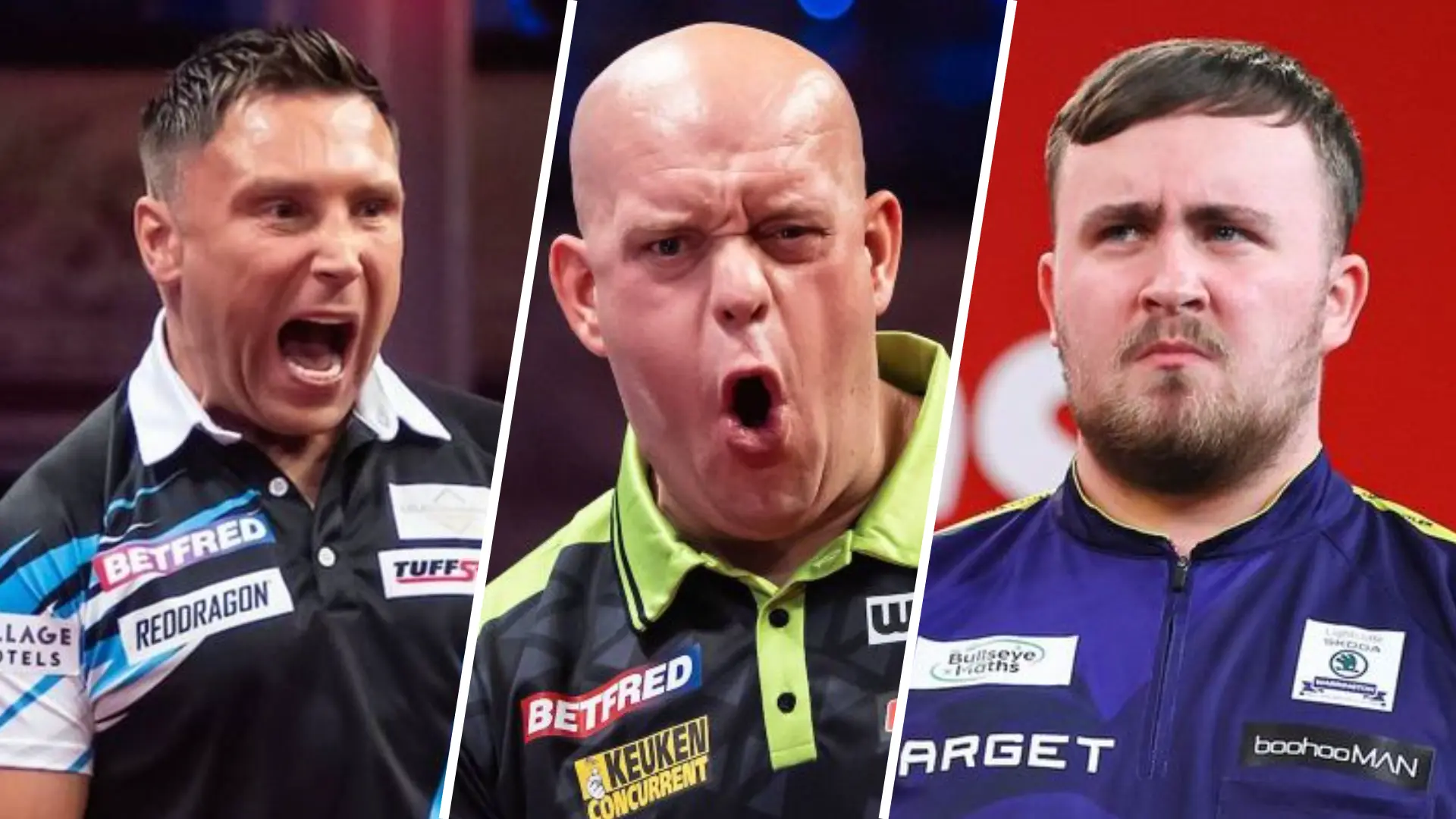
Television and commercial potential
The commercial value is enormous. A three-day tournament with a unique team format would be ideal for television. Sky Sports, DAZN, Viaplay and VTM would feast on the stories, interviews and team dynamics.
Sponsors would also line up. In addition, the tournament can be perfectly combined with a fan festival: demonstrations, youth games and possibly meet& greets with the captains and players.
What makes the Ryder Cup in golf so special is the rivalry between them, respectful, but intense. Darts has the personalities for that. Just think of the riveting duels between Van Gerwen versus Littler.
In such a team format, unexpected duos can also emerge. How about Luke Littler and James Wade as a pair? Or Van Gerwen and De Decker stirring up the stories? Such combinations create stories that fans talk about for weeks.

Luke 'The Nuke' Littler would be a regular in the England squad anyway
Who would be favorites?
A brief look at this potential field of participants tells us that England would currently be favorites given the world rankings. However, due to the increasing popularity of darts around the world and the change in the darts landscape, we think this difference will disappear in the future.
Moreover, this event involves more than ranking. It's about who can perform best as a team and who can possibly rise above themselves. In the last Ryder Cup, the USA was a huge favorite in terms of rankings, but things turned out differently. That is what makes these events so special and fascinating.
Location: symbolic and spectacular
An event of this caliber deserves an iconic venue.
The opening edition would ideally take place in London, the birthplace of modern darts. Think of the O2 Arena or Alexandra Palace. Subsequent editions could then possibly move to the Netherlands. Subsequent years could see countries such as the USA, Canada and Australia. But also it will be a commercial decision and like the World Series would depend on where the money is best.
That would also underscore the globalization of darts. The PDC has been expanding tournaments to Asia and North America for years. A "Barney Cup" would accelerate that process.
Conclusion: the time is now
The PDC has already proven with the World Cup of Darts that team tournaments catch on. But a Ryder Cup format would take the sport to the next level: emotion, honor, rivalry and worldwide involvement.
Whether it ever really gets off the ground depends on guts, vision and timing. But one thing is certain: the darting world is ready for a tournament in which players not only throw for themselves, but as a team.
As Raymond van Barneveld would put it, "Darts has always been a game of heart and soul. Imagine what happens if you can share that feeling with teammates behind you. That would be the ultimate dream." Luke Humphries has also sounded a resounding alarm for this to be created. He spoke recently about this to talkSPORT about wanting an event of this ilk.
To further highlight the passion and excitement involved in such a team event, we have posted another video below with highlights from the past Ryder Cup!

Samuel GillChief Content Officer
Samuel Gill is the Chief Content Officer (CCO) of DartsNews.com, a role he has held since 2020. He is responsible for editorial governance across the platform, including setting content standards, overseeing accuracy and consistency, and guiding long-term editorial strategy across professional darts coverage. Since joining, he has contributed more than 10,000 articles and editorial pieces, playing a central role in the development and daily operation of the site.
Based in Leicester, Samuel has extensive experience in darts media and has been closely involved in coverage of the professional darts circuit for several years. Within the UK darts community, he is a recognised figure known for his consistent editorial output and ongoing reporting on major tournaments and developments across the PDC calendar.
In his current role, Samuel works closely with editors and writers to ensure content meets clear journalistic standards, with a focus on source verification, editorial consistency, and timely updates when new, confirmed information becomes available.
claps 2visitors 2
Just in


Popular news

Latest comments
- In the absence of a report regarding the death of Stefan Lord, I'll assist. An excellent player in the late 70s and early 80s, he actually won the now defunct 3rd place match at two World Championships and a couple of the News of the World Championships. A fabulous player and easily the best Swedish player ever. Rest peacefully Stefan.richieburnettrocks16-10-2026
- Joking aside, it is the second most watched sport on sky (more than golf, F1 etc) behind football only, and in participation is second to only football and swimming. It doesn't get the attention or sponsorship of "bigger" sports because it's not as sexy, but it's right up there.BandB13-10-2026
- i love darts but you can't seriously believe it's the second most popular sport in the uk. even top five is pushing it. it may be the fastest growing, though.colt13-10-2026
- I'm a big Clayton fan, but he's got this completely wrong. Qualification criteria exists for a reason - so just as failing to make the top 32/64 for the Euro championships/PT Finals means you miss out, so does not lifting a title for this one.26sForFun12-10-2026
- The players who deliberately slow the game down are usually boring and win very little in the way of silverware. Horrible to watch.MrYnyslas197112-10-2026
- [“The Gentle” then used a sweeping and questionable phrase...] You anglocucks are hilariously finished in every sense of the word.Critical99911-10-2026
- I love Jonny but I disagree. The Grand Slam was always supposed to be "champion of champions" type competition. If the top 16 are guaranteed participation in everything there will be so much less jeopardy involved in qualifying and each major tournament will lose its unique flavour which the PDC has worked hard trying to develop. I enjoy following the qualification races towards the end of the year, and while consistency should have its rewards, the truth is Jonny hasn't reached a major final all year or won a single event on the Pro Tour. Being consistent is one thing, but that alone should have consequences as the sport's elite should not be prepared to accept consistently strong performances, their foremost motivation should be to win and this should be what separates them from the rest, not the consistency of their performances. Jonny is expecting that losing should be enough; it shouldn't be, at least not as far as the Grand Slam is concerned.Deduce635811-10-2026
- Well being honest,it doesn't matter what level you play at, there's always someone who slows it down to suit themselves,and extra swig of water, replacing flights, asking the ref what the score is. It happens wherever. I'm not saying it's professional,but I'm sure we've all seen it beforerick6711-10-2026
- Agree completely. Not sure how a ranking event can have a criteria not based on rankings. And he right on popularity. In the UK second only to football.BandB11-10-2026
- Doesn't matter who's in it,it's boringrick6710-10-2026
Loading