World Cup of Darts 2026 nations confirmed: English dream team Littler & Humphries headline with point to prove on return
PDC
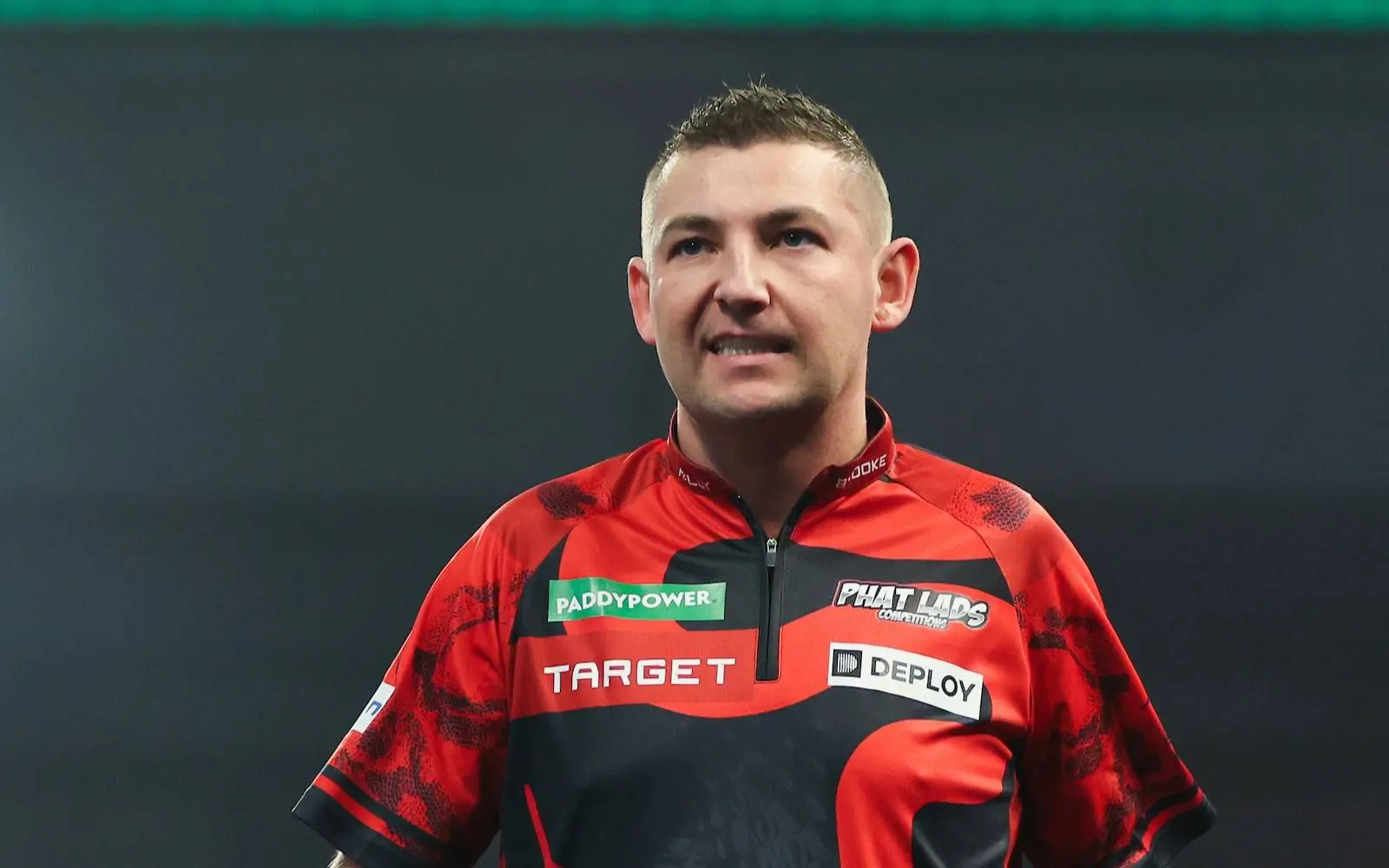
The nations competing at the World Cup of Darts 2026 have been officially confirmed, with England once again represented by Luke Littler and Luke Humphries, the world numbers one and two.
ADVERTISEMENT
Despite arriving as the sport’s dominant individual forces, the pair head into this year’s event with unfinished business after a turbulent debut together twelve months ago.
The tournament will take place from 11 to 14 June at the Eissporthalle in Frankfurt. Forty nations will compete, each represented by two players, with a total prize fund of £500,000. The winning team will share £100,000, an increase on previous editions.
Last year’s event served as a reminder of how unforgiving the doubles format can be. England were eliminated in their opening match by host nation Germany, with Littler and Humphries struggling to find rhythm or cohesion under pressure. That early exit came despite their status at the time as the sport’s clear leading figures, and it remains one of the more striking results in recent World Cup history.
Returning champions and familiar faces
Defending champions Northern Ireland will return to defend their title, while Slovenia are back on the world stage for the first time in more than a decade. Benjamin Pratnemer will lead the Slovenian team after earning his PDC Tour Card earlier this year at European Q-School.
Spain will also welcome back Cristo Reyes following the recovery of his Tour Card, while Jose de Sousa remains part of the Portuguese pairing. Australia, meanwhile, arrive with a notable change, as Damon Heta is joined by new Tour Card holder Adam Leek. Simon Whitlock will miss the tournament for the first time since its inception.
ADVERTISEMENT
Dutch interest as heavyweight nations take shape
Among the other leading nations, the Netherlands could again play a central role. While not yet formally confirmed, Michael van Gerwen and Gian van Veen have both indicated they would be open to competing together, which would give the Dutch a pairing ranked third and fourth in the world as they look to reclaim the title for the first time since 2018.
With several nations fielding established partnerships rather than star pairings, the World Cup’s unique format continues to challenge assumptions built on individual rankings alone.

Last year’s Dutch team at the World Cup of Darts consisted of Danny Noppert and Gian van Veen
How teams are selected worldwide
ADVERTISEMENT
Player selection varies by country. Some nations select their pairings based on the PDC Order of Merit, while others use the Winmau Challenge Tour or affiliate tour rankings.
Asian teams such as Hong Kong, Japan and the Philippines qualify through the PDC Asian Tour, while the United States and Canada select players via the CDC rankings. New Zealand uses the DPNZ rankings, with two further nations qualifying through the PDCNB. South Africa will be represented by leading player Graham Filby alongside a qualifier, with a second African nation determined through a qualifying event in Nairobi.
Tournament format and schedule
All matches at the tournament are played exclusively as doubles across four days of competition. The top four nations based on the lowest combined PDC ranking are seeded and enter at the second round.
The remaining 36 teams are divided into 12 groups of three for a round robin phase. Group winners advance to the last sixteen on Saturday 13 June, with the quarter finals taking place on Sunday afternoon. The semi finals and final will follow later that evening.
ADVERTISEMENT
With the full list of nations now confirmed, attention turns to whether established partnerships or star pairings will prevail. For Littler and Humphries, Frankfurt represents a chance to reset the narrative and demonstrate that individual dominance can still translate on the sport’s most demanding team stage.

World Cup of Darts 2026
Participating countries
| Country |
| Australia |
| Belgium |
| Canada |
| China |
| Germany |
| England |
| Philippines |
| France |
| Hong Kong |
| Hungary |
| Ireland |
| India |
| Italy |
| Japan |
| Croatia |
| Latvia |
| Lithuania |
| Netherlands |
| New Zealand |
| Northern Ireland |
| Norway |
| Austria |
| Poland |
| Portugal |
| Scotland |
| Slovenia |
| Spain |
| Czech Republic |
| USA |
| Wales |
| South Africa |
| Sweden |
| Switzerland |
ADVERTISEMENT
Kieran WoodDarts Journalist
Kieran Wood is a sports journalist based in Wales and has been active in journalism since 2022. He contributes to DartsNews.com, where he covers professional darts through news, match reports, analysis, and live coverage across the PDC calendar and major tournaments.
A key part of his work is on-site reporting from leading events. Kieran has covered the PDC World Darts Championship in person, reporting daily from the venue and providing first-hand insight from the tournament. During his coverage, he has conducted interviews with leading players including Luke Littler, Luke Humphries, and Gerwyn Price.
He is also one of the leading voices of the English-language Dartsnews Podcast, contributing regular analysis and discussion on developments across the professional darts circuit.
In his reporting, Kieran places strong emphasis on careful sourcing, editorial accuracy, and updating articles when new, verified information becomes available.
claps 1visitors 1
Just in


Popular news

Latest comments
- In the absence of a report regarding the death of Stefan Lord, I'll assist. An excellent player in the late 70s and early 80s, he actually won the now defunct 3rd place match at two World Championships and a couple of the News of the World Championships. A fabulous player and easily the best Swedish player ever. Rest peacefully Stefan.richieburnettrocks16-10-2026
- Joking aside, it is the second most watched sport on sky (more than golf, F1 etc) behind football only, and in participation is second to only football and swimming. It doesn't get the attention or sponsorship of "bigger" sports because it's not as sexy, but it's right up there.BandB13-10-2026
- i love darts but you can't seriously believe it's the second most popular sport in the uk. even top five is pushing it. it may be the fastest growing, though.colt13-10-2026
- I'm a big Clayton fan, but he's got this completely wrong. Qualification criteria exists for a reason - so just as failing to make the top 32/64 for the Euro championships/PT Finals means you miss out, so does not lifting a title for this one.26sForFun12-10-2026
- The players who deliberately slow the game down are usually boring and win very little in the way of silverware. Horrible to watch.MrYnyslas197112-10-2026
- [“The Gentle” then used a sweeping and questionable phrase...] You anglocucks are hilariously finished in every sense of the word.Critical99911-10-2026
- I love Jonny but I disagree. The Grand Slam was always supposed to be "champion of champions" type competition. If the top 16 are guaranteed participation in everything there will be so much less jeopardy involved in qualifying and each major tournament will lose its unique flavour which the PDC has worked hard trying to develop. I enjoy following the qualification races towards the end of the year, and while consistency should have its rewards, the truth is Jonny hasn't reached a major final all year or won a single event on the Pro Tour. Being consistent is one thing, but that alone should have consequences as the sport's elite should not be prepared to accept consistently strong performances, their foremost motivation should be to win and this should be what separates them from the rest, not the consistency of their performances. Jonny is expecting that losing should be enough; it shouldn't be, at least not as far as the Grand Slam is concerned.Deduce635811-10-2026
- Well being honest,it doesn't matter what level you play at, there's always someone who slows it down to suit themselves,and extra swig of water, replacing flights, asking the ref what the score is. It happens wherever. I'm not saying it's professional,but I'm sure we've all seen it beforerick6711-10-2026
- Agree completely. Not sure how a ranking event can have a criteria not based on rankings. And he right on popularity. In the UK second only to football.BandB11-10-2026
- Doesn't matter who's in it,it's boringrick6710-10-2026
Loading

