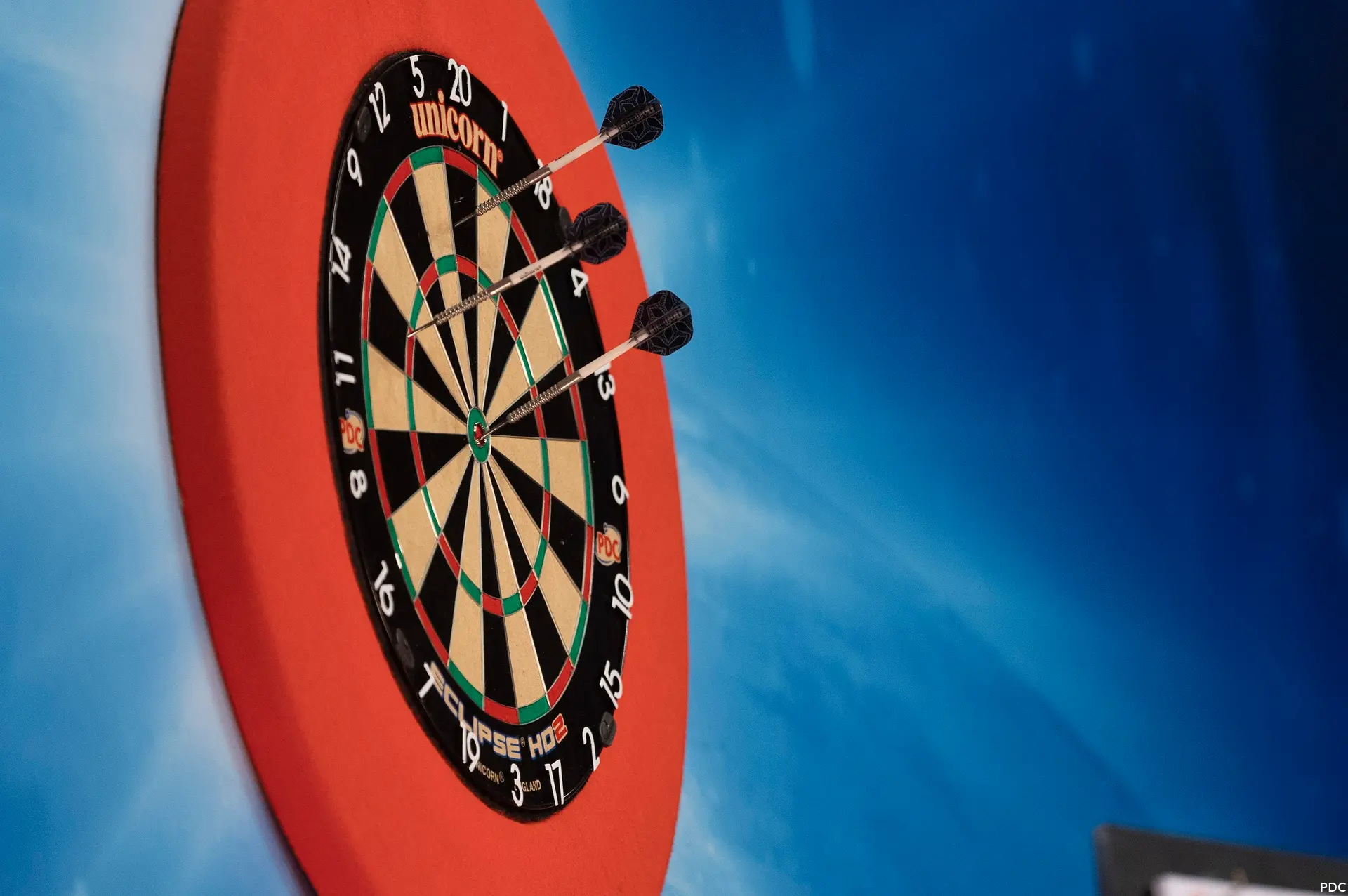
The Professional Darts Corporation (PDC) World Rankings is one of the game's crucial metrics. Also called the Order of Merit, the professional hierarchical system determines who qualifies for major darts tournaments like the World Championship and World Matchplay. Besides the major order of merits, other secondary ranking systems like the European Championship order of merits and the Pro Tour order of merit determine qualification for other competitions.
ADVERTISEMENT
Before heading into the ranking criteria, one cannot deny that darts has become a huge sport now. As a result, it is also attracting a lot of attention from sports bettors globally. For instance, as iGaming expert Kate Richardson mentions in one of her reviews for MightyTips, betting on darts has been growing massively in nations like Hungary, Australia and New Zealand. The situation is the same in other countries across the globe.
However, those who want to join the league of punters who wager on darts must do their homework by studying the game and the markets. Experts also think it will be great if bettors in Hungary go through guides and reviews like https://www.mightytips.com/bookmakers/hungary-betting-sites/ to see the best betting sites in Hungary before they choose any platform.
In this guide, we explore the importance of the different ranking orders in the PDC World Rankings, plus how athletes rise or fall on each order.
PDC World Rankings: How the Main Order of Merit Works
“Darts fans support the quality of the play above anything else, so that makes things a little fairer.” – John Part.
Like John Part posits above, quality of play is an important determinant for getting on the leaderboard of the PDC World rankings. But that’s not all. The PDC rankings also note the amount of prize money each athlete won from ranking tournaments over a two-year period. For every pound a player wins, they earn one point, which explains why ranking points typically go in hundreds of thousands.
For instance, winners at all eight majors pocket at least £100,000 in prize money, while the World Darts Championship winner is set to receive £1m in cash (and 1 million ranking points) come 2026. The amount is twice the prize money won by Luke Litter, who won the competition this year.
ADVERTISEMENT
Besides deciding automatic qualification slots at darts competitions, the Order of Merit decides pairings for the World Cup of Darts. However, non-ranking events like the World Series events and the Premier League don't contribute to player rankings.
Top 16, 32, and 64 Slots at the PDC World Rankings
Any athlete in the top 16 automatically qualifies for the World Matchplay and the World Grand Prix. In the former, the top-ranked 16 athletes qualify as seeds, while the latter seeds the best eight. Top players in the Pro Tour Order of Merit fill up the remaining slots for both tournaments.
Moreover, the top 40 athletes directly qualify for the PDC World Darts Championship, while the best 16 spots automatically qualify for the World Masters and other European Tour events. Meanwhile, rankings on the Pro Tour, Challenge Tour, and Women's Series also contribute to deciding extra qualification slots at some competitions.
All athletes who have held a PDC Tour Card for at least two years must finish inside the top 64 after the World Championship. Otherwise, they will lose their placement as a professional.
ADVERTISEMENT
Secondary Order of Merits and How They Work (Pro Tour, European Championship, and Players Championship Finals)
Unlike the central order of Merit, the Pro Tour rankings rely on a one-year review system. It considers money earned in the 13 European Tour events and the 30 Players Championship events across the season. For instance, money earned from Pro Tour events from the end of the 2024 World Matchplay to the beginning of the 2025 tournament counts towards this year's Blackpool qualification.
The best-ranked 16 athletes in the Pro Tour Order of Merit outside the World's top 16 earn their place in the World Grand Prix and the World Matchplay. Just like in the central Order of Merit, the number increases to 32 for the World Championship.
Meanwhile, rankings for the Players Championship Finals race and the European Championship operate differently from other ranking orders. To qualify for the European Championship, an athlete must finish in the tournament's top 32 slots, based on money earned on the European tour.
Similarly, eligibility for the Players Championship Finals compares money earned across all 30 Players Championship events across the year. All 128 card tour holders qualify to play in these 30 events, while the top 64 athletes book their participation in Minehead for the Finals. The event, scheduled for November 22-24, 2025, will see players split a £600,000 prize pool in an epic showdown.
ADVERTISEMENT
Criticisms of the PDC Ranking System
Meanwhile, over the years, the PDC’s ranking system has faced significant criticisms. Critics query the massive difference between the prize money of major events like the World Championship and other competitions.
Opposing views claim the Order of Merit favors one-time exploits over year-round consistency. However, most fans and athletes seem to be satisfied with the system, and the PDC's management holds no sign of changing the metrics anytime soon.
Conclusion
“With darts it's just one against one, it's blow for blow. The only thing I could compare it to is boxing. It's dead exciting...” – Phil Taylor.
ADVERTISEMENT
Competing in the biggest darts tournaments means is exciting. It pits the best stars in the sport against each other and they battle each other to earn substantial sums of money in prize money and accumulate ranking points.
For fans who may not be aware, we have outlined how the rankings for the places on the PDC World Rankings work. However, like every other process, it is not surprising to know that there are some criticisms regarding the PDC Ranking system. In the end, what matters is that the top pro darts players around the world compete to make the rankings. If the organizers can make the process better for all, it will only make things better.

Samuel GillChief Content Officer
Samuel Gill is the Chief Content Officer (CCO) of DartsNews.com, a role he has held since 2020. He is responsible for editorial governance across the platform, including setting content standards, overseeing accuracy and consistency, and guiding long-term editorial strategy across professional darts coverage. Since joining, he has contributed more than 10,000 articles and editorial pieces, playing a central role in the development and daily operation of the site.
Based in Leicester, Samuel has extensive experience in darts media and has been closely involved in coverage of the professional darts circuit for several years. Within the UK darts community, he is a recognised figure known for his consistent editorial output and ongoing reporting on major tournaments and developments across the PDC calendar.
In his current role, Samuel works closely with editors and writers to ensure content meets clear journalistic standards, with a focus on source verification, editorial consistency, and timely updates when new, confirmed information becomes available.
claps 0visitors 0
Just in


Popular news


Latest comments
- I agree,I can't believe the lack of coverage of this sad loss. Always enjoyed watching him,but I guess now it's all about littler,well it seems that way. Darts has sadly lost a good manrick6717-10-2026
- In the absence of a report regarding the death of Stefan Lord, I'll assist. An excellent player in the late 70s and early 80s, he actually won the now defunct 3rd place match at two World Championships and a couple of the News of the World Championships. A fabulous player and easily the best Swedish player ever. Rest peacefully Stefan.richieburnettrocks16-10-2026
- Joking aside, it is the second most watched sport on sky (more than golf, F1 etc) behind football only, and in participation is second to only football and swimming. It doesn't get the attention or sponsorship of "bigger" sports because it's not as sexy, but it's right up there.BandB13-10-2026
- i love darts but you can't seriously believe it's the second most popular sport in the uk. even top five is pushing it. it may be the fastest growing, though.colt13-10-2026
- I'm a big Clayton fan, but he's got this completely wrong. Qualification criteria exists for a reason - so just as failing to make the top 32/64 for the Euro championships/PT Finals means you miss out, so does not lifting a title for this one.26sForFun12-10-2026
- The players who deliberately slow the game down are usually boring and win very little in the way of silverware. Horrible to watch.MrYnyslas197112-10-2026
- [“The Gentle” then used a sweeping and questionable phrase...] You anglocucks are hilariously finished in every sense of the word.Critical99911-10-2026
- I love Jonny but I disagree. The Grand Slam was always supposed to be "champion of champions" type competition. If the top 16 are guaranteed participation in everything there will be so much less jeopardy involved in qualifying and each major tournament will lose its unique flavour which the PDC has worked hard trying to develop. I enjoy following the qualification races towards the end of the year, and while consistency should have its rewards, the truth is Jonny hasn't reached a major final all year or won a single event on the Pro Tour. Being consistent is one thing, but that alone should have consequences as the sport's elite should not be prepared to accept consistently strong performances, their foremost motivation should be to win and this should be what separates them from the rest, not the consistency of their performances. Jonny is expecting that losing should be enough; it shouldn't be, at least not as far as the Grand Slam is concerned.Deduce635811-10-2026
- Well being honest,it doesn't matter what level you play at, there's always someone who slows it down to suit themselves,and extra swig of water, replacing flights, asking the ref what the score is. It happens wherever. I'm not saying it's professional,but I'm sure we've all seen it beforerick6711-10-2026
- Agree completely. Not sure how a ranking event can have a criteria not based on rankings. And he right on popularity. In the UK second only to football.BandB11-10-2026
Loading