"I turned darts from a sport into a puzzle" - From Fortnite to competing in the World Darts Championship: Alex Spellman's remarkable career switch
PDC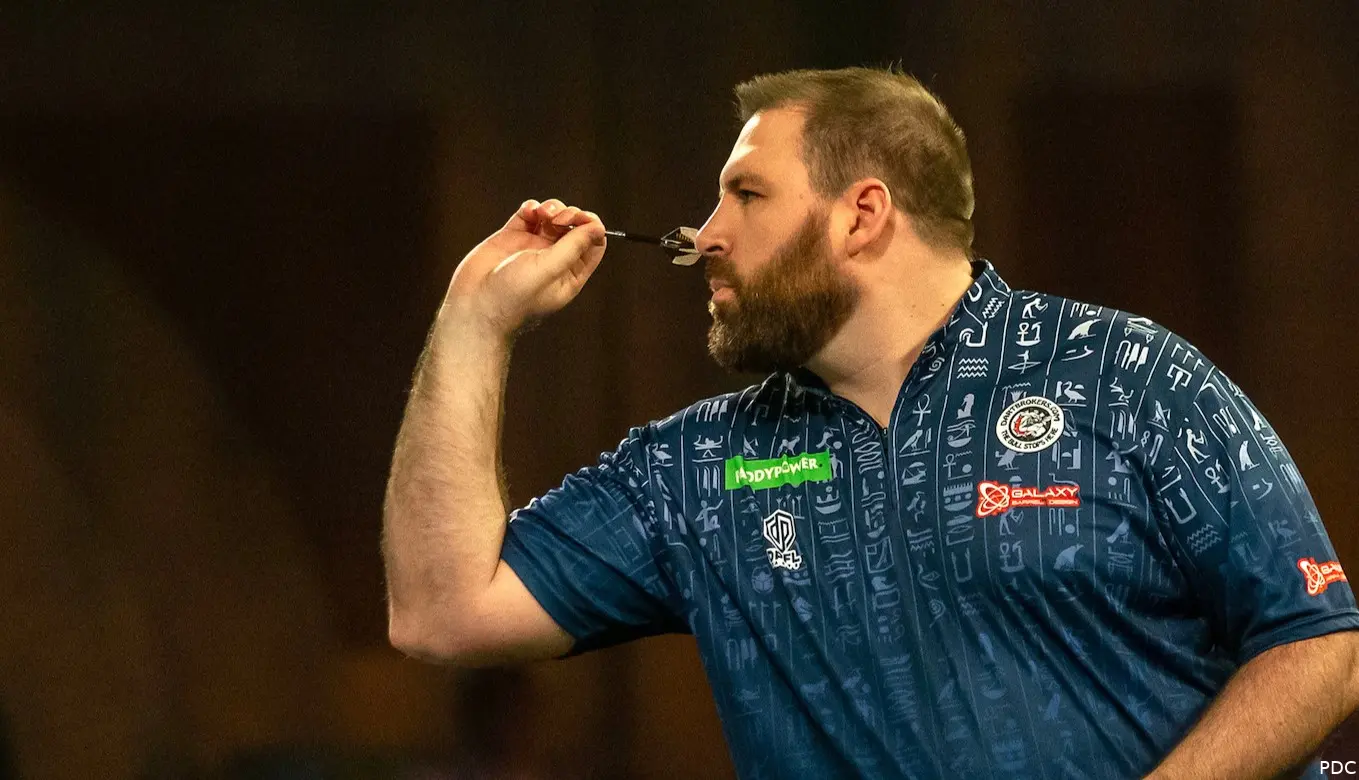
When American star Alex Spellman walked into a bar with his dad and uncle back in 2008, he had no idea that night would change the course of his life. What began as a casual evening out led to a discovery that would define his sporting journey — and eventually take him across the world to the Modus Super Series.
ADVERTISEMENT
“I didn’t really start playing until 2008. I had a board growing up — I think most Americans do — but we’re just throwing at it. We don’t necessarily know the rules or anything like that,” Spellman recalls to MODUS's Tungsten Talk.
“We used to have what’s called blind draw or blind pairs — you just get a random partner. I happened to be in the bar with my dad and uncle one night, and they needed an extra person. I was the only one willing to do it, and I did pretty decent.
"I actually made more money in that two-hour span than I did working eight hours at a grocery store for minimum wage in college! So initially, I stuck with it for the big money — the big $200 I made that night.”
Discovering his ability
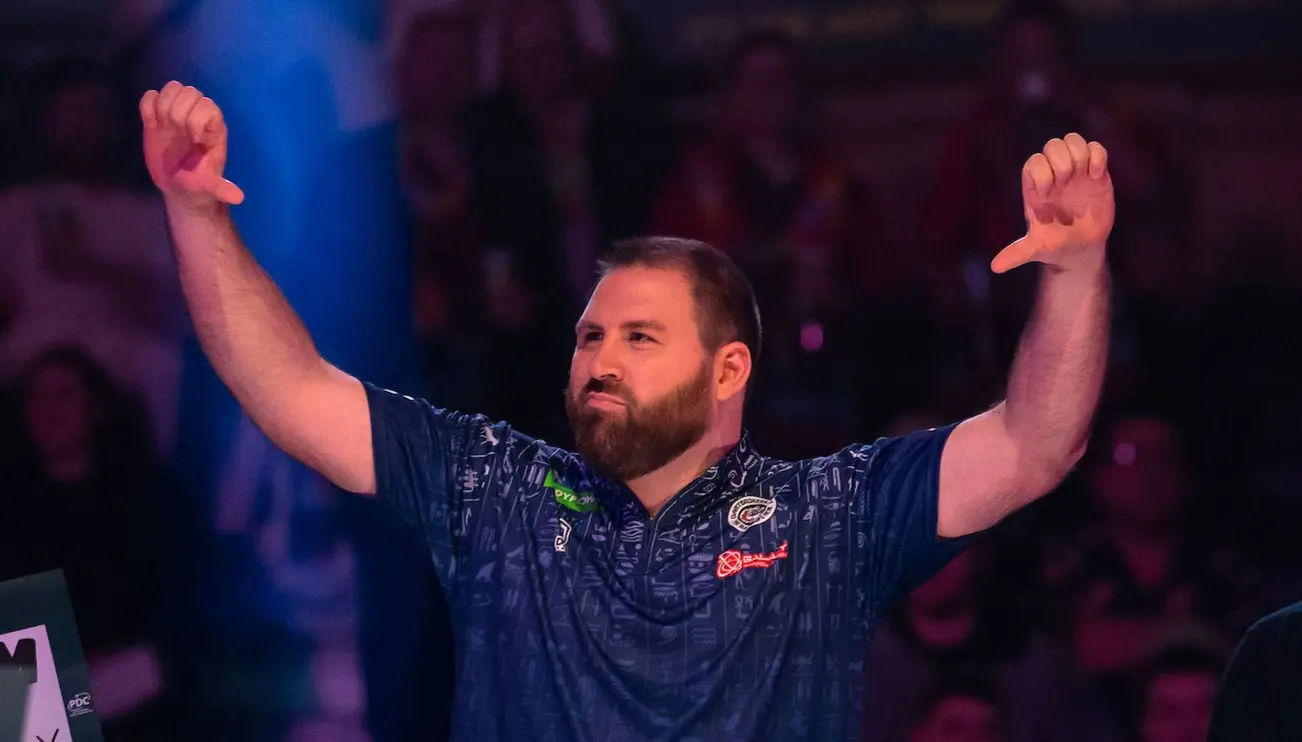
Spellman’s natural ability on the oche revealed itself quickly, even if he didn’t realise how good he was at first.
“Honestly, I had no idea. When they asked if I wanted to play league, I said, ‘Okay, I should probably start in a B league or C league to get my feet wet.’ But they knew more than I did,” he says.
ADVERTISEMENT
“I still remember hitting my first 180 — and I apologise because I wasn’t trying to hit it! We were playing cricket, so I don’t actually remember my first 180 properly. I didn’t think it was a big deal; I thought everyone did it all the time.
It wasn’t until about two years into playing that I went to my first tournament. I just assumed they were all sharks, hitting whatever they wanted. But then I realised most of the room were actually below my level — that’s when I thought, ‘Wait, I can actually do this.’”
A switch between steel and soft tip
Like many American players, Spellman has spent time balancing between steel tip and soft tip darts — two very different worlds.
“It’s a fun break from the monotony of steel tip sometimes. It’s a bit easier to play well because of the larger segments — but that also means everyone plays better, so winning at a high level can actually be more difficult,” he explains.
ADVERTISEMENT
“For me personally, I’ve been getting tested for autism or ADHD, because when I’m playing really well, especially in soft tip, I kind of check out. If you hit nine 20s, then I hit nine 19s, and we just keep trading back and forth. The spectators love it, but I’m thinking, ‘Can you take a stab at my number please? Can we move along?’
It’s fun when I’m in the mood for it, but if I’m not, I just go through the motions. Recently, I pulled out of a lot of leagues because I felt it was making me a worse player — not the game itself, but showing up without my heart in it. That started bleeding into my competitive play.”

Alex Spellman conducting the crowd at MSG.
From IT to Epic Games
Away from the dartboard, Spellman’s professional life took him in a very different direction — into the world of technology and gaming. “I went to college for computer information systems. I worked in IT for a hardware company called Lowe’s — not sure if you have that over here — and I hated everything about it,” he admits.
ADVERTISEMENT
“My wife and I had always talked about making a change, so we bought a house two hours away, which forced me to find a new job. I got lucky and landed a contract role at Epic Games — the producer of Fortnite, Gears of War, and Unreal Tournament. I started as a contractor, became full-time after a year, and I got there about three months before Fortnite was released. I did IT work and some programming — not on the game itself, more on the infrastructure side — but I loved every second of it. I was there for about six years.”
Despite over a decade in the sport, it wasn’t until the COVID-19 lockdowns that Spellman truly fell in love with darts — and began to treat it with a new kind of analytical curiosity.
“It wasn’t until COVID. Before that, I just played because I was competitive, but during lockdown, I started treating the game differently,” he says. "A lot of players are afraid to make changes because of upcoming leagues or tournaments — but with everything shut down, I finally had time. I turned darts from a sport into a puzzle. I wanted to break down my throw and understand it.
"When I coach people now, I tell them I want to make them chefs — able to taste the dish and know they’ve added too much or too little of something. That’s how I started looking at my own game. That’s when I really fell in love with it.”
Spellman’s rise through the CDC transformed him from a talented local player into a major contender on the North American scene.
ADVERTISEMENT
“For the first 10 years I was just winging it. I’d throw an 80 average, then a 50 — no consistency. During COVID, online darts became big, and suddenly I could play the best in the country every night,” he explains.
“That regular competition built belief and confidence. 2023 was amazing — I topped the CDC points list, played at the World Championship, and competed at Madison Square Garden. Even though I came up short there, I’d rather be there and lose than not be there at all.
Now I’ve achieved some of the goals I set, my game’s dipped a bit, so I’m figuring out what’s next.”
American talent on the rise
ADVERTISEMENT
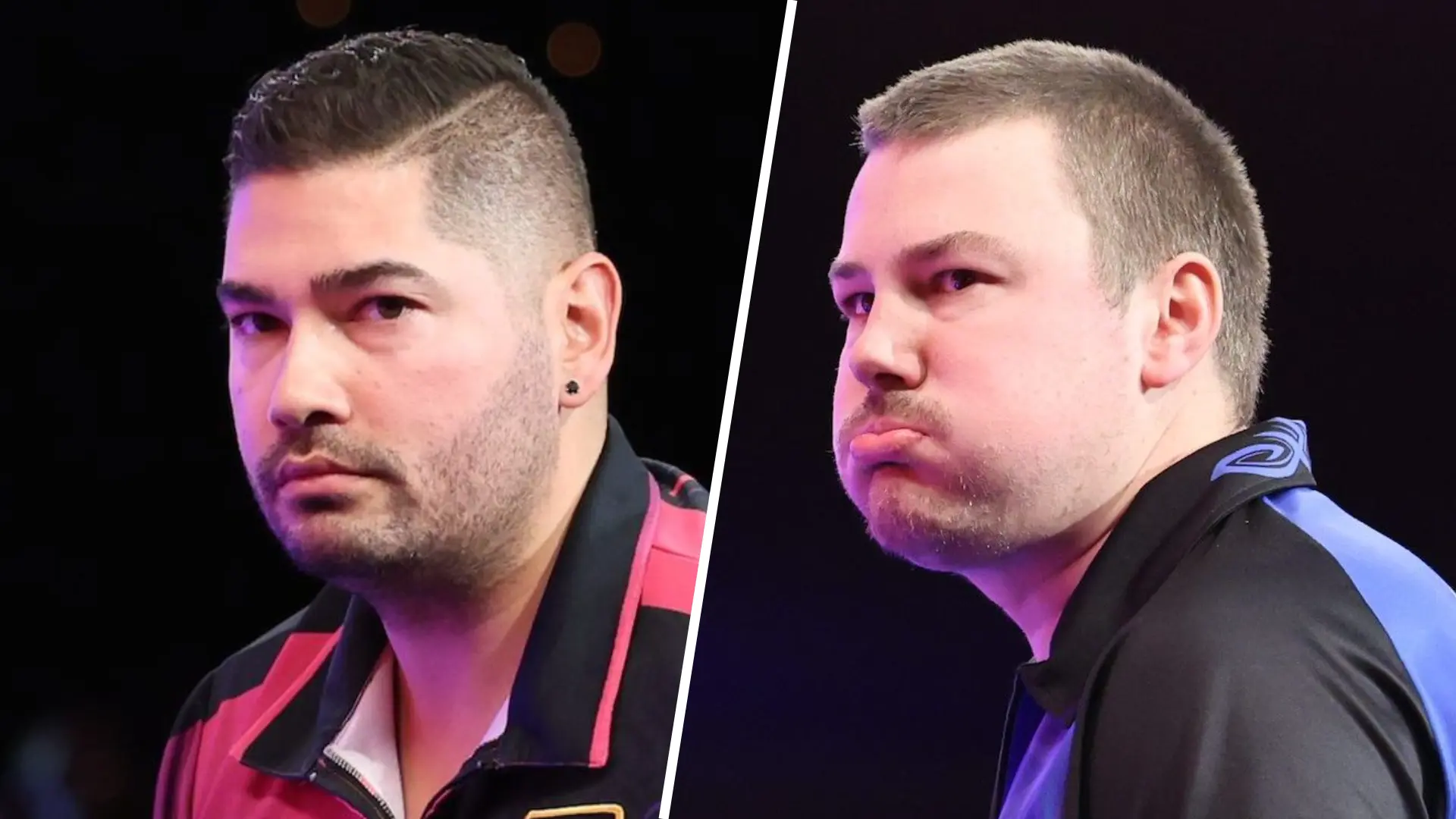
The standard of darts in North America continues to climb, and Spellman believes the depth of talent is stronger than ever. “Definitely growing. There’s a lot of underrated talent — Jason Brandon, for one, I think he’s probably our most underrated player,” he says.
“For a long time it was just Larry Butler and Darren Young representing us, but now there are loads — Jeff Smith, Jim Long, Matt Campbell, myself, Stowe Buntz, David Cameron, Leonard Gates, Danny Lauby, Chris Lim — I could name a dozen or more. We’ve got the players; we just need more opportunities.”
Testing himself at Q-School
That desire for opportunity saw Spellman travel to the UK for PDC Q-School — not just to chase a Tour Card, but to measure himself against the world’s best. “The first year was just about getting experience, to see where I stood. I didn’t perform great, but I learned a lot,” he says.
“Last year, I came mainly for the Challenge Tour — I wanted to come over every now and then without the weekly grind. Travel’s tough. I once flew to Hong Kong — six hours to San Francisco, 15 and a half hours to Hong Kong — and I told my wife, ‘I can’t do this back and forth.’
ADVERTISEMENT
I missed out on my Tour Card, losing to Matthew Dennant 6–4. I came close. I don’t want a Tour Card right now, but if I earned one, I wouldn’t say no — you never know when the chance comes again.”
The Ally Pally experience
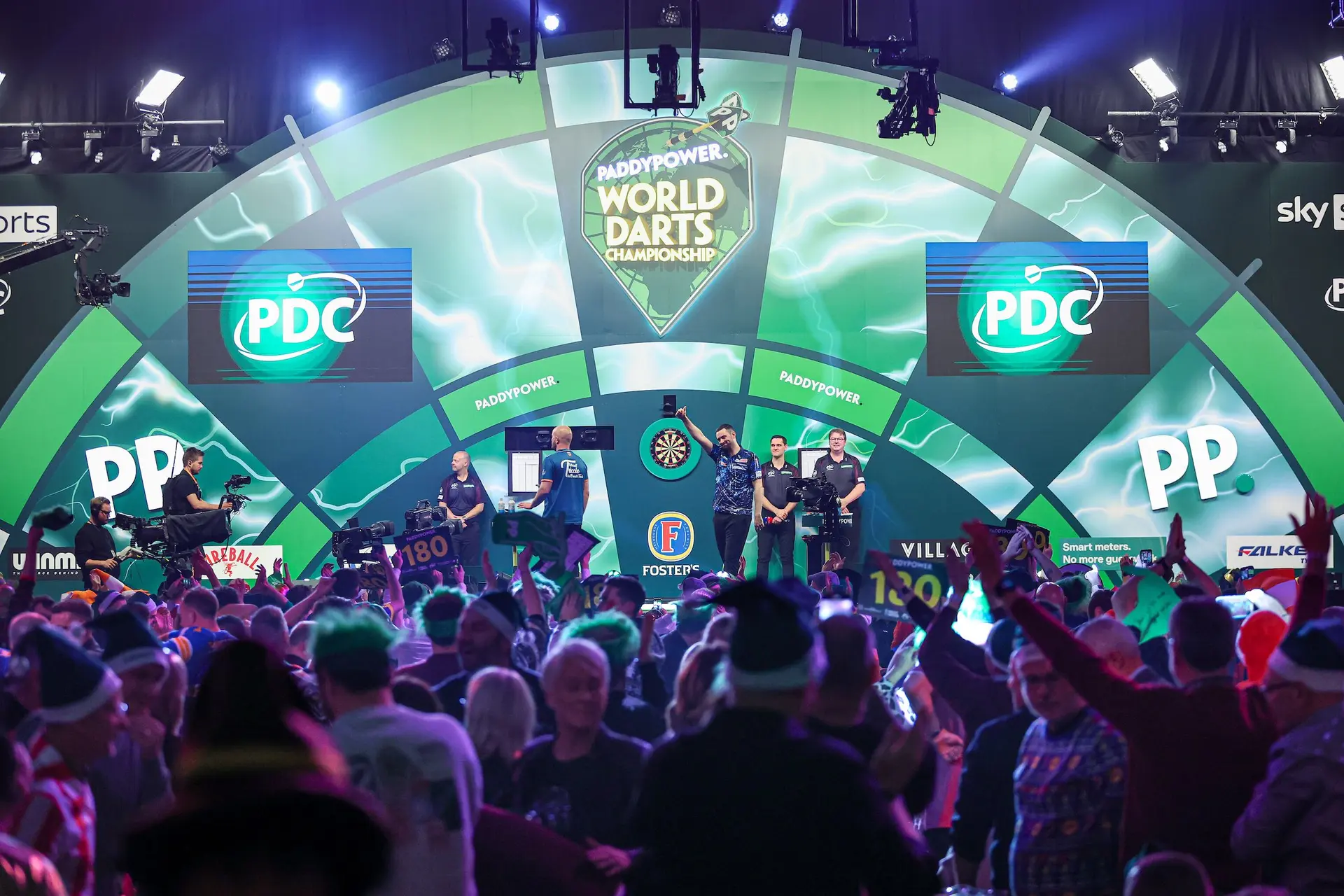
Spellman’s World Championship debut at Alexandra Palace in 2023 was a moment he’ll never forget — even if the result didn’t go his way.
“I just went up there and hoped for the best. I got Ryan Joyce — probably the worst draw possible since he’d just made a final the week before. But weirdly, that helped. I thought, ‘I’m supposed to lose this,’ which settled me down,” he recalls.
“I think I had the highest average ever for an American at Ally Pally, which is the only silver lining, because I still lost 3–1. It didn’t feel too different to MSG — maybe louder, and you can literally feel the wall of noise behind you. The key for me now is keeping that same mindset when I am the favourite.”
ADVERTISEMENT
Spellman’s appearances at the Modus Super Series have become a highlight of his year — a unique format that rewards consistency and adaptation. “They actually asked me recently what my favourite tournament is — I said Modus. You’re not just done after one loss like in a PDC event. If I have a bad day, I can figure out what went wrong and fix it the next,” he says.
“I still struggle a bit on Saturdays — the small crowd throws me off. Big crowds become white noise, but a small one’s tricky. Do I make eye contact? Do I not? It’s awkward!
But overall, I love it. Even when I’m not playing my best, I’m still in the mix, and that means if I pull it together, it’ll all click.”
What comes next?
Now 37, Spellman remains focused on refining his game and his mindset — and helping others grow within the sport he loves. “I want to scale back on what I call ‘day-job darts’ — those smaller tournaments where I’m basically acting as a travel agent, figuring out costs, partners, hotels,” he explains.
“I do coaching during the week, play leagues, and it’s just a lot. I’m doing it by choice right now to see what’s worth my time, but I’d love to be more involved in developing the game itself and focus more on high-end play.
My inconsistencies come from not having enough me-time on the board. I want to be a sort of concierge for other players — helping them with logistics and opportunities. When I found out Jason Brandon was coming over to play doubles with me, I was more excited for him than for myself.”
For Spellman, the road ahead isn’t just about chasing titles — it’s about self-understanding, balance, and mental strength.
“The mental side, for sure,” he says. “It’s exhausting sometimes — mentally and physically. Through 2022 and 2023 I was riding that high, but once you hit your milestones, you start thinking, ‘Now what?’ It’s tough. I’ve been tested for autism — I’m about as close as you can get without a diagnosis — and I’m looking into other things too. But in a weird way, understanding myself more might be what helps me find that missing piece.”
Read also

Samuel GillChief Content Officer
Samuel Gill is the Chief Content Officer (CCO) of DartsNews.com, a role he has held since 2020. He is responsible for editorial governance across the platform, including setting content standards, overseeing accuracy and consistency, and guiding long-term editorial strategy across professional darts coverage. Since joining, he has contributed more than 10,000 articles and editorial pieces, playing a central role in the development and daily operation of the site.
Based in Leicester, Samuel has extensive experience in darts media and has been closely involved in coverage of the professional darts circuit for several years. Within the UK darts community, he is a recognised figure known for his consistent editorial output and ongoing reporting on major tournaments and developments across the PDC calendar.
In his current role, Samuel works closely with editors and writers to ensure content meets clear journalistic standards, with a focus on source verification, editorial consistency, and timely updates when new, confirmed information becomes available.
claps 0visitors 0
Just in


Popular news
Latest comments
- I agree,I can't believe the lack of coverage of this sad loss. Always enjoyed watching him,but I guess now it's all about littler,well it seems that way. Darts has sadly lost a good manrick6717-10-2026
- In the absence of a report regarding the death of Stefan Lord, I'll assist. An excellent player in the late 70s and early 80s, he actually won the now defunct 3rd place match at two World Championships and a couple of the News of the World Championships. A fabulous player and easily the best Swedish player ever. Rest peacefully Stefan.richieburnettrocks16-10-2026
- Joking aside, it is the second most watched sport on sky (more than golf, F1 etc) behind football only, and in participation is second to only football and swimming. It doesn't get the attention or sponsorship of "bigger" sports because it's not as sexy, but it's right up there.BandB13-10-2026
- i love darts but you can't seriously believe it's the second most popular sport in the uk. even top five is pushing it. it may be the fastest growing, though.colt13-10-2026
- I'm a big Clayton fan, but he's got this completely wrong. Qualification criteria exists for a reason - so just as failing to make the top 32/64 for the Euro championships/PT Finals means you miss out, so does not lifting a title for this one.26sForFun12-10-2026
- The players who deliberately slow the game down are usually boring and win very little in the way of silverware. Horrible to watch.MrYnyslas197112-10-2026
- [“The Gentle” then used a sweeping and questionable phrase...] You anglocucks are hilariously finished in every sense of the word.Critical99911-10-2026
- I love Jonny but I disagree. The Grand Slam was always supposed to be "champion of champions" type competition. If the top 16 are guaranteed participation in everything there will be so much less jeopardy involved in qualifying and each major tournament will lose its unique flavour which the PDC has worked hard trying to develop. I enjoy following the qualification races towards the end of the year, and while consistency should have its rewards, the truth is Jonny hasn't reached a major final all year or won a single event on the Pro Tour. Being consistent is one thing, but that alone should have consequences as the sport's elite should not be prepared to accept consistently strong performances, their foremost motivation should be to win and this should be what separates them from the rest, not the consistency of their performances. Jonny is expecting that losing should be enough; it shouldn't be, at least not as far as the Grand Slam is concerned.Deduce635811-10-2026
- Well being honest,it doesn't matter what level you play at, there's always someone who slows it down to suit themselves,and extra swig of water, replacing flights, asking the ref what the score is. It happens wherever. I'm not saying it's professional,but I'm sure we've all seen it beforerick6711-10-2026
- Agree completely. Not sure how a ranking event can have a criteria not based on rankings. And he right on popularity. In the UK second only to football.BandB11-10-2026
Loading