"I was sitting in the car and I was crying" – Martin Schindler opens up about self-doubt and the lowest point of his career
PDC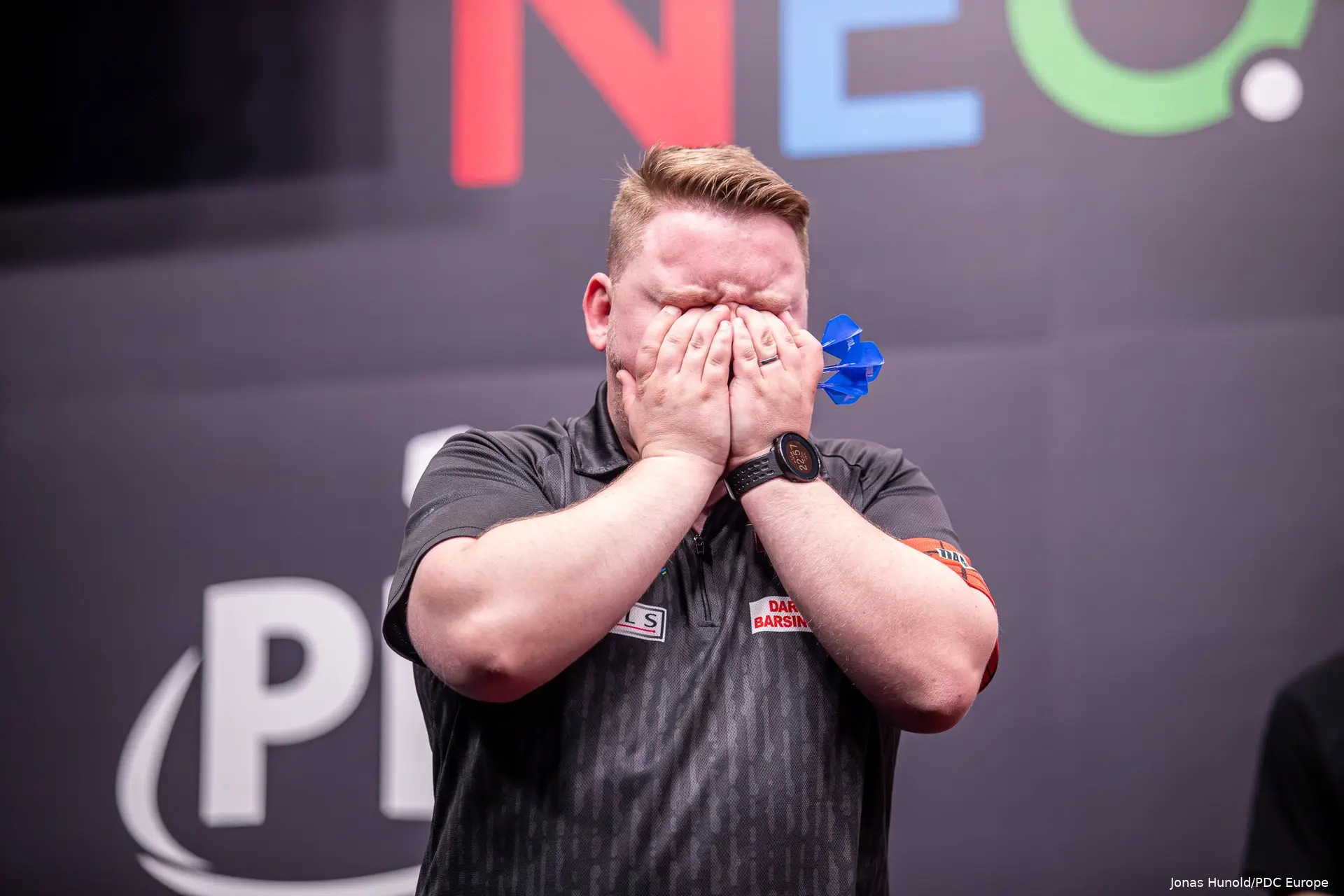
Martin Schindler, Germany’s number one and currently ranked 15th in the world, has firmly established himself among the elite in recent years. But the path there was anything but straightforward. In PDC referee Huw Ware’s podcast Tops & Tales, the 29-year-old offered deep insights into his pro journey — speaking unusually candidly about self-doubt, mental low points, and what may have been the most important phase of his career.
ADVERTISEMENT
The battle with himself
Schindler’s first years on the Pro Tour between 2017 and 2021 were marked by learning — especially on the mental side. After earning a Tour Card for the first time via Q-School in 2017, the setback came at the end of 2020: the loss of his professional license. In hindsight, Schindler calls this phase decisive for his development.
“Yeah, definitely. I needed to learn a lot of things,” Schindler said. “I was fighting with myself through the feeling of, do I belong here or do I not? And I was really fighting with myself back in those days, and yeah, I managed to get myself through that.”
Looking back, he now sees unexpected value in that setback. “Honestly, it was a good help that I lost my tour card at the end of 2020.”
The moment of failure — and release
Losing his Tour Card was a heavy blow. “Obviously, it wasn’t a good feeling,” Schindler admitted. “I was trying till the very last minute to make sure that I’m not going to lose my tour card. But yeah, sometimes you cannot avoid the unavoidable.”
ADVERTISEMENT
Ahead of Q-School 2021, Schindler made a conscious decision to remove pressure from himself entirely. “I said to myself, honestly, when there was Q-School 2021, you will give it a try. And if it works, it works. If it doesn’t, it doesn’t,” he explained. “That’s how I really thought. That’s how I really went into this whole thing.”
That mindset proved pivotal, as Schindler not only regained his Tour Card but laid the foundations for the player he would soon become.
No “now or never”
Despite losing his professional status, Schindler never saw Q-School as a last chance. “I would have never cut out the possibility that you can go back into that,” he said. “I was relaxing myself, saying, if you can’t do it this year, maybe you can do it next year.”
Crucially, he avoided framing the situation as all-or-nothing. “I wasn’t pressurising myself that you have to do it now, because otherwise you won’t have any option,” he explained. “I would have found my way. I would have found any other option.”
ADVERTISEMENT
Winning his Tour Card back proved decisive. “Like I said, I won it back — and still then, everything has happened.”
The dark days of 2020
Schindler described the mental strain of 2020 in stark terms. “In the end of 2020, like I played, won one game, then lost — the whole day just felt horrible,” he recalled. Today, he says, he can cope with those situations far better.
At the time, however, his thoughts were spiralling. “My head was just running — running to Wolverhampton, running to Birmingham, running to London. So my thoughts were just going berserk.”
ADVERTISEMENT
Yet it was precisely during those moments that Schindler believes he grew the most. “These are the days, the moments, I think I’ve grown the most, because I was able to learn from them so much,” he said. “Because when you’re doubting yourself, this is where you find your own improvement. And I needed to learn even that.”

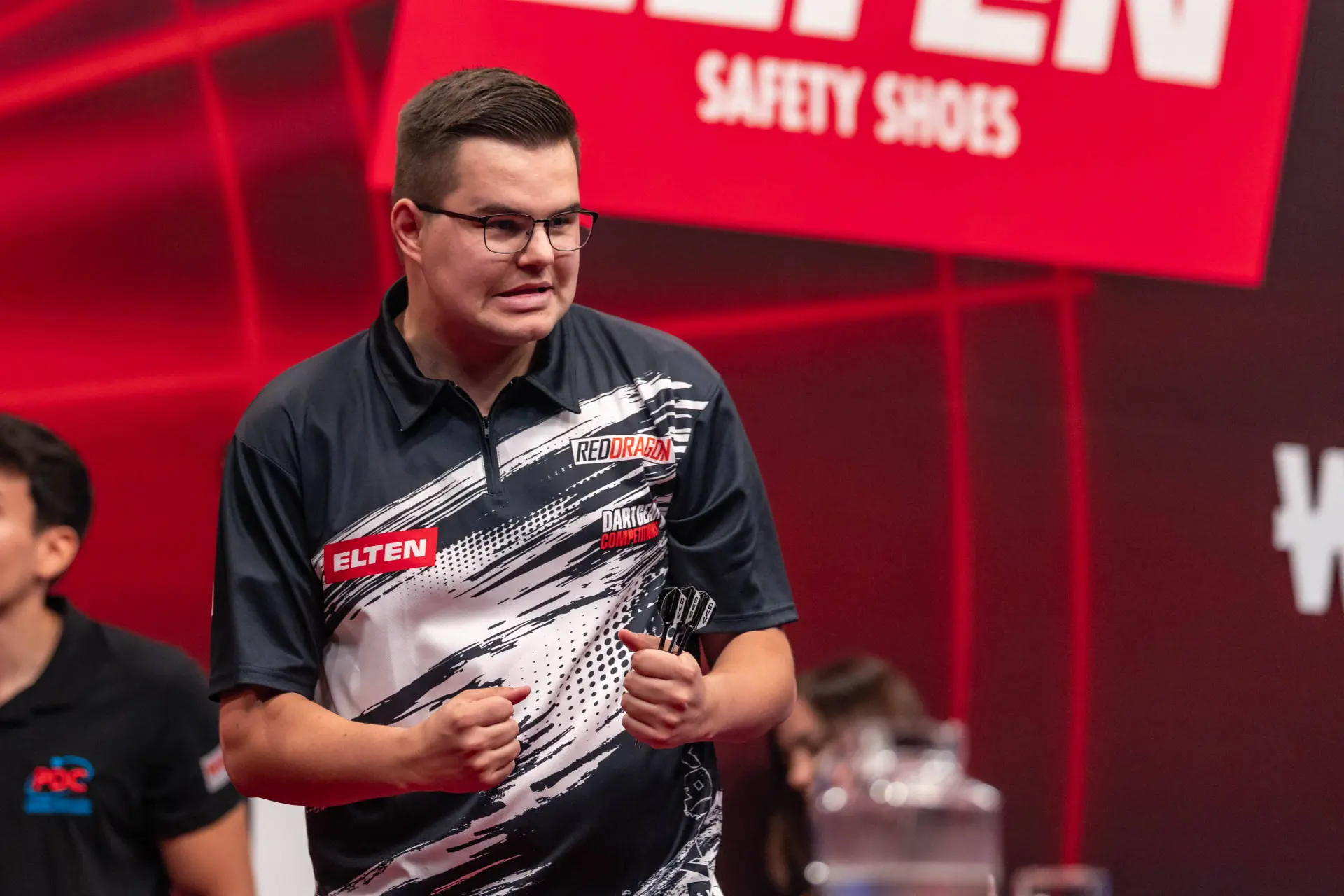
Martin Schindler discusses doubts, setbacks, and the turning point of his career on the “Tops & Tales” podcast
Tears in the car park
Schindler did not shy away from describing just how deeply that period affected him. “Honestly, even to the viewers, I don’t care — I was crying,” he revealed. “I was sitting in the car and I was crying because I wanted to do so much better in the end of 2020 or in the middle of 2020, but I couldn’t. I just couldn’t.”
One match in particular remains vivid in his memory — against Glen Durrant. “He wasn’t playing good. He was playing about 83. I couldn’t stand a chance. I didn’t even be there,” Schindler recalled.
ADVERTISEMENT
Afterwards, the frustration spilled over. “I was at the parking lot outside and I was just sitting in the car, crying, because why couldn’t I play better?” But even that moment became part of his education. “Sometimes you cannot avoid these things and you need to fight through them.”
A matured professional
Looking back, Schindler sees Q-School 2021 as the true turning point. “If there was a tournament which changed things, it definitely was the Q-School of 2021, because I came back so good and I played so good,” he said. “And I proved myself — and that’s the most important.”
Now, four years on, the perspective has changed dramatically. “Definitely this Q-School has changed my life,” Schindler reflected. “So I’m really, really thankful that I’ve lost my tour card.”
Those experiences — the doubt, the tears, and the hard lessons — have shaped the player he is today. And perhaps that explains why Martin Schindler now sits comfortably among the world’s elite, not only as Germany’s number one, but as a top 16 player on the PDC circuit.
ADVERTISEMENT

Samuel GillChief Content Officer
Samuel Gill is the Chief Content Officer (CCO) of DartsNews.com, a role he has held since 2020. He is responsible for editorial governance across the platform, including setting content standards, overseeing accuracy and consistency, and guiding long-term editorial strategy across professional darts coverage. Since joining, he has contributed more than 10,000 articles and editorial pieces, playing a central role in the development and daily operation of the site.
Based in Leicester, Samuel has extensive experience in darts media and has been closely involved in coverage of the professional darts circuit for several years. Within the UK darts community, he is a recognised figure known for his consistent editorial output and ongoing reporting on major tournaments and developments across the PDC calendar.
In his current role, Samuel works closely with editors and writers to ensure content meets clear journalistic standards, with a focus on source verification, editorial consistency, and timely updates when new, confirmed information becomes available.
claps 0visitors 0
Just in
Popular news
Latest comments
- I agree,I can't believe the lack of coverage of this sad loss. Always enjoyed watching him,but I guess now it's all about littler,well it seems that way. Darts has sadly lost a good manrick6717-10-2026
- In the absence of a report regarding the death of Stefan Lord, I'll assist. An excellent player in the late 70s and early 80s, he actually won the now defunct 3rd place match at two World Championships and a couple of the News of the World Championships. A fabulous player and easily the best Swedish player ever. Rest peacefully Stefan.richieburnettrocks16-10-2026
- Joking aside, it is the second most watched sport on sky (more than golf, F1 etc) behind football only, and in participation is second to only football and swimming. It doesn't get the attention or sponsorship of "bigger" sports because it's not as sexy, but it's right up there.BandB13-10-2026
- i love darts but you can't seriously believe it's the second most popular sport in the uk. even top five is pushing it. it may be the fastest growing, though.colt13-10-2026
- I'm a big Clayton fan, but he's got this completely wrong. Qualification criteria exists for a reason - so just as failing to make the top 32/64 for the Euro championships/PT Finals means you miss out, so does not lifting a title for this one.26sForFun12-10-2026
- The players who deliberately slow the game down are usually boring and win very little in the way of silverware. Horrible to watch.MrYnyslas197112-10-2026
- [“The Gentle” then used a sweeping and questionable phrase...] You anglocucks are hilariously finished in every sense of the word.Critical99911-10-2026
- I love Jonny but I disagree. The Grand Slam was always supposed to be "champion of champions" type competition. If the top 16 are guaranteed participation in everything there will be so much less jeopardy involved in qualifying and each major tournament will lose its unique flavour which the PDC has worked hard trying to develop. I enjoy following the qualification races towards the end of the year, and while consistency should have its rewards, the truth is Jonny hasn't reached a major final all year or won a single event on the Pro Tour. Being consistent is one thing, but that alone should have consequences as the sport's elite should not be prepared to accept consistently strong performances, their foremost motivation should be to win and this should be what separates them from the rest, not the consistency of their performances. Jonny is expecting that losing should be enough; it shouldn't be, at least not as far as the Grand Slam is concerned.Deduce635811-10-2026
- Well being honest,it doesn't matter what level you play at, there's always someone who slows it down to suit themselves,and extra swig of water, replacing flights, asking the ref what the score is. It happens wherever. I'm not saying it's professional,but I'm sure we've all seen it beforerick6711-10-2026
- Agree completely. Not sure how a ranking event can have a criteria not based on rankings. And he right on popularity. In the UK second only to football.BandB11-10-2026
Loading