"If you don’t make top 40 on the tour, it means your priorities aren’t right": Van Duijvenbode's honest take on Baetens losing Tour Card
PDC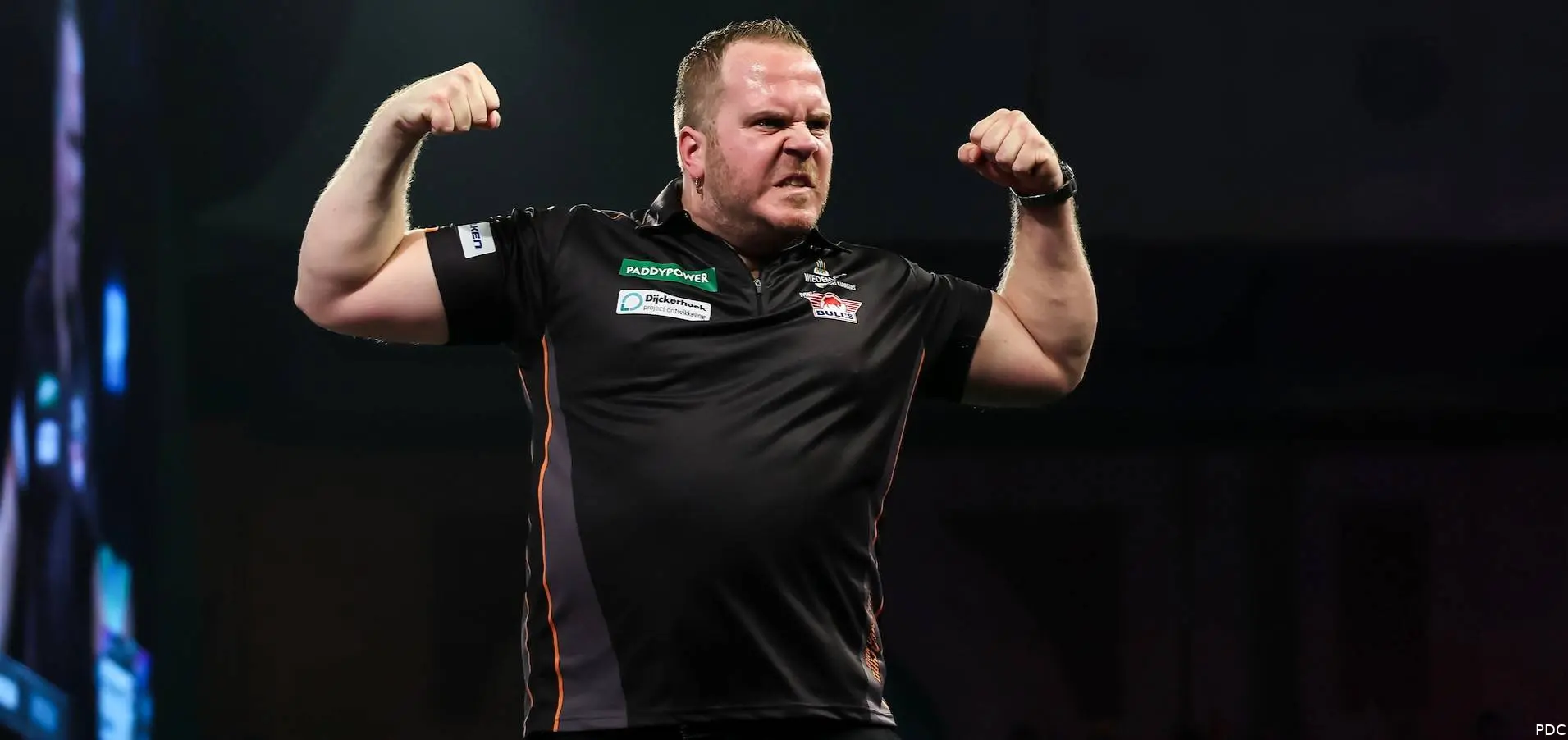
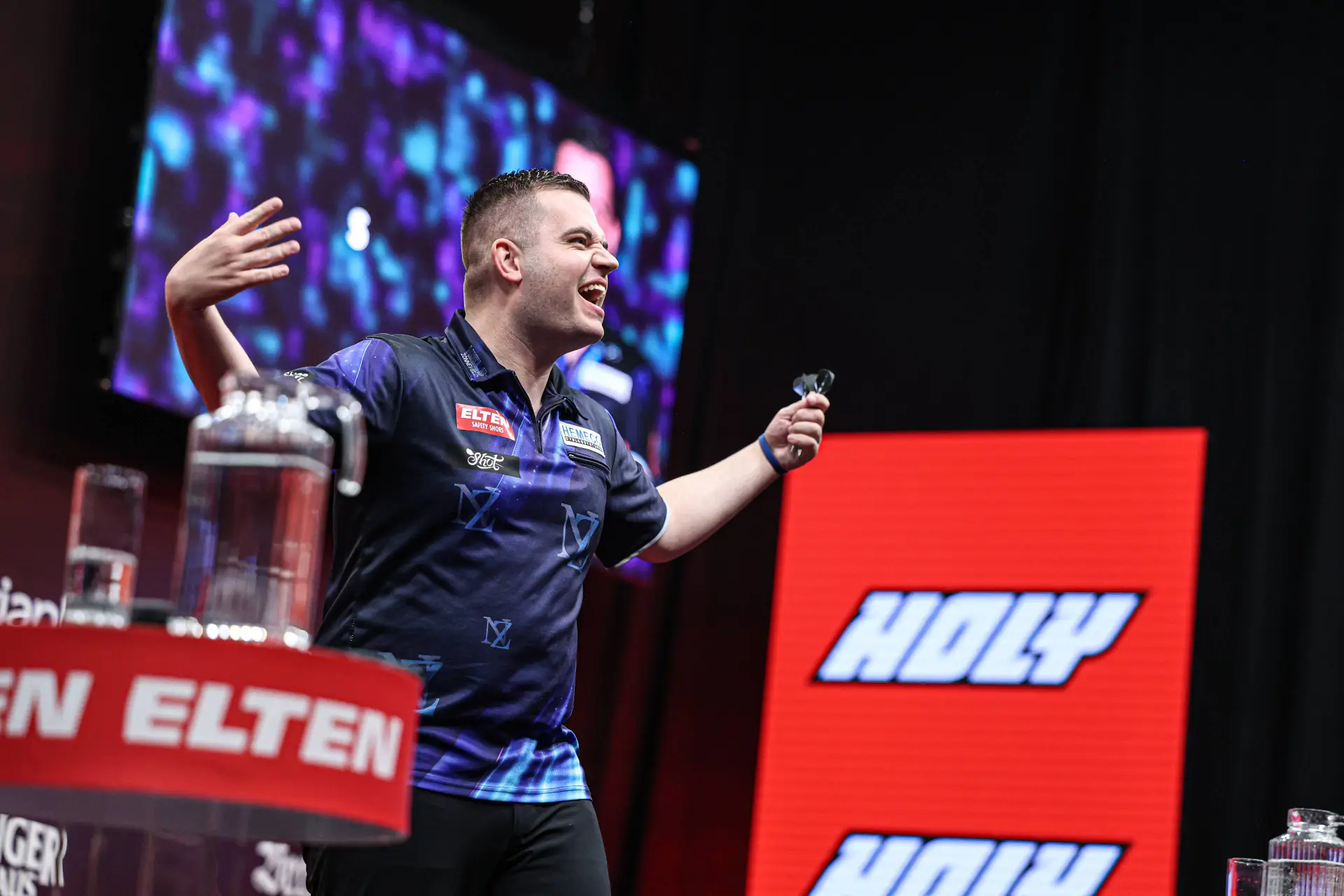
Dirk van Duijvenbode may have produced one of the matches of the 2026 PDC World Darts Championship so far, but the Dutchman was characteristically blunt in his assessment afterwards, insisting belief – rather than brilliance – was what carried him through a gruelling opening-round battle at Alexandra Palace.
ADVERTISEMENT
A near-99 average, a clutch of huge finishes and a sensational 170 checkout under pressure ultimately secured victory, yet van Duijvenbode felt he had made the task far more difficult than it needed to be at the PDC World Darts Championship. “I knew it was going to be hard, but it felt a bit unnecessary that I was 2–1 down,” he said post match. “I averaged 99 despite missing quite a few darts at doubles early on. I’m not really pleased, because in my opinion I shouldn’t have been 2–1 down."
Crucially, van Duijvenbode revealed he was unaware of the numbers during the match, relying instead on a strong conviction that his game was close to clicking. “I didn’t know the averages,” he explained. “All the way through I kept believing. My darts were going well from the way I threw them, but they didn’t all go in. I wasn’t happy – I was believing. I was thinking, if it will go in, I will win.”
That belief was eventually rewarded, as van Duijvenbode recovered from early struggles on the doubles to reel off four 100-plus checkouts when the match was on the line. However, he rejected the idea that there was a single defining moment that swung the contest. “In my opinion there was no turning point,” he said. “It felt great, but it didn’t go great. I just stepped one step left to the oche. Normally I stand to the right, but you need to reset yourself. I went for treble 19's first dart at some point, just to reset myself, and that’s what did it.”
Even in victory, van Duijvenbode’s focus was drawn to the fine margins that could easily have sent him out of the tournament. “It’s pointless to talk about the average, because I think I missed some very important things,” he said. “The 38 in set two, leg two. In leg one I was a bit distracted by a wasp at the beginning – I go 42, 59. Your throw is broken, but I’ve just broken throw for the set.
“Then you have to break throw back and you miss three darts at 38. You turn it all around, make it 2–1, miss one dart, you get one dart, and he takes it out. He was doing good things as well.”
Still, when the pressure peaked, van Duijvenbode delivered the kind of finishes few players in the world can produce. “In the end, it’s satisfying that when you really need it, you take the 100-plus finishes out,” he admitted. “But there’s still a thought where you think it shouldn’t be as hard as it was.”
ADVERTISEMENT
How he stacks up compared to elite
The match also reignited discussion about van Duijvenbode’s ceiling, with comparisons drawn to the sport’s elite performers such as Michael van Gerwen and Luke Humphries, who are capable of reaching extraordinary levels at critical moments. Yet the Dutchman insisted he is not yet back to where he was before a long-term shoulder injury disrupted his momentum.
“Practice-wise, maybe,” he said. “But the biggest thing is confidence. My confidence is not even close to where it was. My game is better though, if I’m honest. I think my game is probably ten percent better than it was at my peak, but my confidence is about twenty percent less. If I sort that out, I’m way better than I was then.”
Despite that assessment, van Duijvenbode was keen to temper expectations, particularly after suffering first-round exits at the World Championship in the previous two years. "I’m looking game to game,” he stressed. “The last two years I lost the first round, and this year I’m just happy I won my first round, because he was at least one of the toughest first-round draws you can get.
“I didn’t even look at the second round because I was really fearing losing again in the first round. My practice was unbelievably hard on myself, because there’s no holding back here – you have to be very good.”
ADVERTISEMENT
While his confidence may not yet be back to previous levels, van Duijvenbode insisted belief remains intact. “The belief is there, 100 percent,” he said. “Not like it was, but it can come back very easily. If I win the next round or the next two rounds, it can be back straight away.”
He also highlighted the realities of the modern tour, where rankings, seedings and draws play a major role in shaping results. “It’s not only a confidence thing, it’s also a draw thing,” he explained. “If you play a top-eight player earlier, you don’t beat them as often. That’s just maths.”
Higher ceiling and off the oche
Now ranked 29th in the world, van Duijvenbode believes his position does not reflect his true level, particularly with a relatively light schedule of ranking points to defend over the coming months. “I think I’m better than that ranking,” he said. “I’m not defending Matchplay, I’m not defending Grand Prix. If I qualify for those events and do well, I can get back into the top 20 or top 16 again. But I have to perform.”
Away from the oche, much of the past year has been devoted to rebuilding his body following the shoulder injury that stalled his rise when he was firmly established inside the world’s top ten.
ADVERTISEMENT
“My focus last year was not getting injured again,” he said. “First focus: don’t get injured again. Second focus: don’t get injured again.
“I’ve been doing a lot of fitness work to make sure all the muscles that weren’t working during the injury are strong. The orthopaedic specialist said it would come back, so this year my focus was making sure that if it comes back, it doesn’t really bother me. Next year I want to put all my time back into reaching my top level again.”
The injury itself proved both physically and mentally draining, compounded by delays in receiving an accurate diagnosis. “At the beginning you’re just trying to find out what the injury actually is,” van Duijvenbode explained. “One guy called himself a shoulder specialist and said I didn’t even have the injury I thought I had. I maybe lost two months just looking for confirmation.
“Everyone says it’s minimum one-and-a-half to two years. I think I did it quicker, because I had days where I left home at seven in the morning and came back at ten at night, just going to specialists and sorting it out.”
ADVERTISEMENT
Eventually, finding the right orthopaedist proved decisive. “If I’d found him earlier, I’d have been done three or four months sooner,” he said. “He had special devices that really fixed it at the end.”
Asked whether victories now feel sweeter after such a difficult period, van Duijvenbode was reflective rather than sentimental.
“In a way, yes,” he said. “People look at the stats and say you lost in the first round two years in a row. It’s not nice, because you know there was a reason. But I don’t live in the past. What’s done is done. I feel very motivated to come back.”
Priorities straight for Baetens
Attention then turned to his opponent, Andy Baetens, who lost his tour card as a result of the defeat. While acknowledging Baetens’ quality, van Duijvenbode was candid in his assessment.
ADVERTISEMENT
“If I’m honest, if you don’t make top 40 on the tour and then perform like this, it means your priorities aren’t right,” he said. “I saw an interview where he said he practised a lot for this game and expected a lot, and he played very well.
“That only means if you can play like this and not do it all year, your priorities aren’t right. Your priority is probably working, and that’s hard. You have to gamble sometimes and give up secure money to practise more.
“If you see how he played tonight, you’d say he should always be top 40 on the tour, maybe even top 40 in the world. So in one way, yes – but in another way, sort your priorities.”
Looking ahead in the draw, van Duijvenbode faces James Hurrell next, but insisted he has not allowed himself to think beyond the immediate challenge.
“In a way I was happy with the draw,” he said. “I knew my opponent was going to hit a 90-plus average, so I couldn’t think about not performing well. The only way I was going to win was by performing well. That’s why I liked the draw. I didn’t look to the second round either.”
ADVERTISEMENT
Finally, van Duijvenbode outlined how he views the World Championship itself, breaking the tournament down into clear stages rather than distant dreams. “The Worlds has three stages,” he explained. “Before Christmas, after Christmas, and after New Year.
“For me, apart from three or four players, making the quarter-final is a very good result. Once you’re there, there are only three games left. That should be the first big goal, because by then you’ve already won four matches. That’s how I look at it.”


Samuel GillChief Content Officer
Samuel Gill is the Chief Content Officer (CCO) of DartsNews.com, a role he has held since 2020. He is responsible for editorial governance across the platform, including setting content standards, overseeing accuracy and consistency, and guiding long-term editorial strategy across professional darts coverage. Since joining, he has contributed more than 10,000 articles and editorial pieces, playing a central role in the development and daily operation of the site.
Based in Leicester, Samuel has extensive experience in darts media and has been closely involved in coverage of the professional darts circuit for several years. Within the UK darts community, he is a recognised figure known for his consistent editorial output and ongoing reporting on major tournaments and developments across the PDC calendar.
In his current role, Samuel works closely with editors and writers to ensure content meets clear journalistic standards, with a focus on source verification, editorial consistency, and timely updates when new, confirmed information becomes available.
claps 0visitors 0
Just in

Popular news
Latest comments
- I agree,I can't believe the lack of coverage of this sad loss. Always enjoyed watching him,but I guess now it's all about littler,well it seems that way. Darts has sadly lost a good manrick6717-10-2026
- In the absence of a report regarding the death of Stefan Lord, I'll assist. An excellent player in the late 70s and early 80s, he actually won the now defunct 3rd place match at two World Championships and a couple of the News of the World Championships. A fabulous player and easily the best Swedish player ever. Rest peacefully Stefan.richieburnettrocks16-10-2026
- Joking aside, it is the second most watched sport on sky (more than golf, F1 etc) behind football only, and in participation is second to only football and swimming. It doesn't get the attention or sponsorship of "bigger" sports because it's not as sexy, but it's right up there.BandB13-10-2026
- i love darts but you can't seriously believe it's the second most popular sport in the uk. even top five is pushing it. it may be the fastest growing, though.colt13-10-2026
- I'm a big Clayton fan, but he's got this completely wrong. Qualification criteria exists for a reason - so just as failing to make the top 32/64 for the Euro championships/PT Finals means you miss out, so does not lifting a title for this one.26sForFun12-10-2026
- The players who deliberately slow the game down are usually boring and win very little in the way of silverware. Horrible to watch.MrYnyslas197112-10-2026
- [“The Gentle” then used a sweeping and questionable phrase...] You anglocucks are hilariously finished in every sense of the word.Critical99911-10-2026
- I love Jonny but I disagree. The Grand Slam was always supposed to be "champion of champions" type competition. If the top 16 are guaranteed participation in everything there will be so much less jeopardy involved in qualifying and each major tournament will lose its unique flavour which the PDC has worked hard trying to develop. I enjoy following the qualification races towards the end of the year, and while consistency should have its rewards, the truth is Jonny hasn't reached a major final all year or won a single event on the Pro Tour. Being consistent is one thing, but that alone should have consequences as the sport's elite should not be prepared to accept consistently strong performances, their foremost motivation should be to win and this should be what separates them from the rest, not the consistency of their performances. Jonny is expecting that losing should be enough; it shouldn't be, at least not as far as the Grand Slam is concerned.Deduce635811-10-2026
- Well being honest,it doesn't matter what level you play at, there's always someone who slows it down to suit themselves,and extra swig of water, replacing flights, asking the ref what the score is. It happens wherever. I'm not saying it's professional,but I'm sure we've all seen it beforerick6711-10-2026
- Agree completely. Not sure how a ranking event can have a criteria not based on rankings. And he right on popularity. In the UK second only to football.BandB11-10-2026
Loading