"It felt like I was wasting my parents’ money" - Gian van Veen recalls how dartitis struggles almost ended promising career prematurely
PDC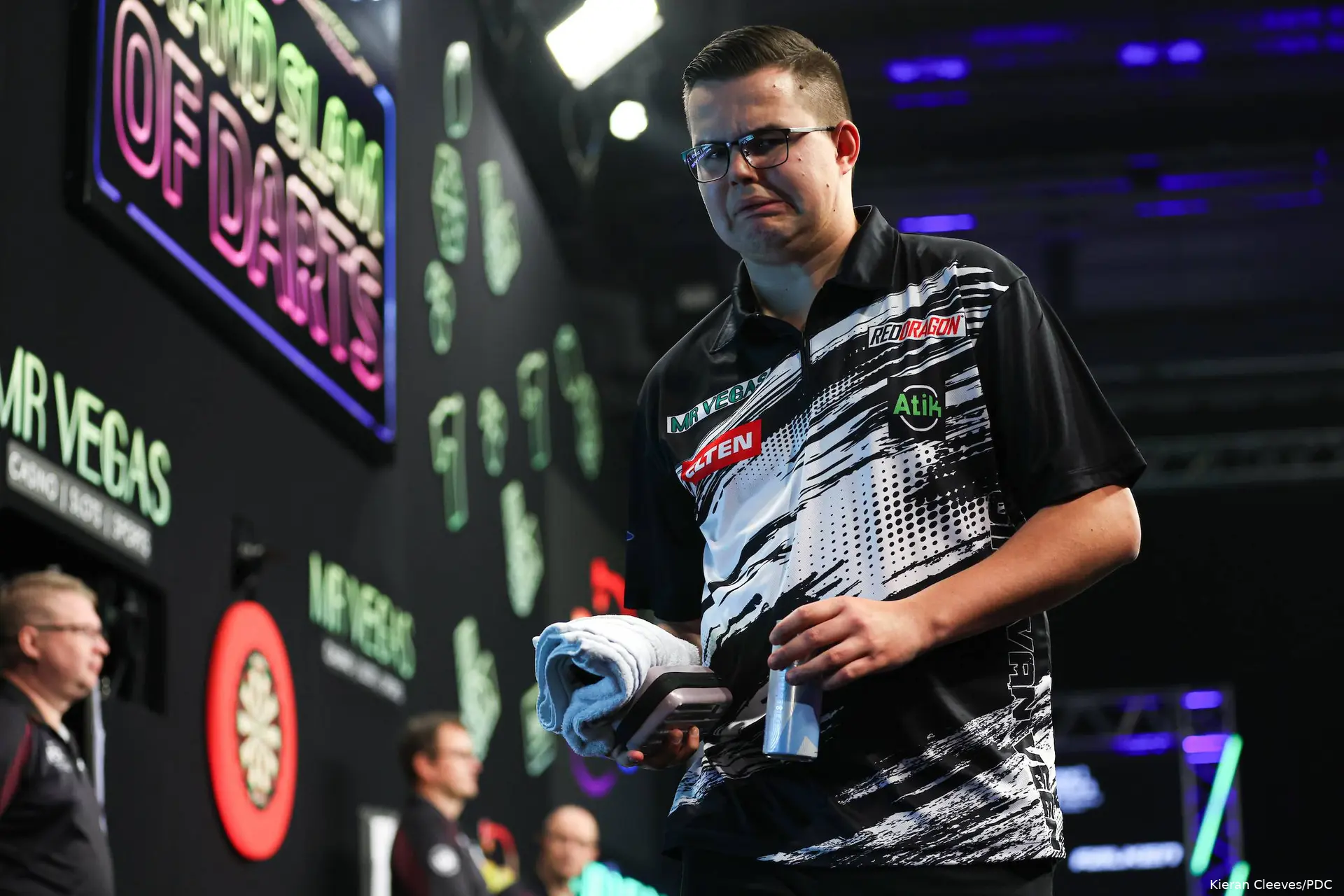
The rise of Gian van Veen is one of the most striking developments in international darts over the past year. The 23-year-old Dutchman won his first major title, climbed into the world’s top ten, and is now openly touted as the player who could succeed Michael van Gerwen in the coming years. Remarkably, that breakthrough came from a darter who was tormented by dartitis for years and even considered quitting.
ADVERTISEMENT
Although he is now seen as one of the biggest talents behind Luke Littler, Van Veen was barely visible as a youth player. No selections, no haul of trophies, no early hype. The cause lay mainly in his head.
His dartitis took extreme forms. What began as healthy pre-match nerves suddenly turned into a complete block one day. “I was practicing in my bedroom and suddenly couldn’t let go of the dart,” he tells in an in-depth interview with NU.nl. The physical reaction stemmed from a deep-rooted sense of guilt. His parents had paid for all the tournaments and travel for years. “Meanwhile it felt like I was wasting my parents’ money, because I kept coming home with zero euros.”
What once started as something casual in the canteen of VV Zuilichem slowly turned into performance pressure. His carefree approach disappeared. “I was playing for my parents, not for myself. After misses I thought: there goes their money again.”

It led to a period in which he barely made progress. His level plunged to a 65 average, gaming seemed more interesting than practice, and after six consecutive tournaments without prize money he drew his conclusion: “I thought: I’ll just stay an amateur.”
It was precisely in that phase that his career got a second life. During the COVID years the PDC organized online competitions, allowing players to compete from home. It turned out to be the perfect context for Van Veen. No crowd, no travel costs, no pressure.
In his bedroom, with a webcam as the only witness, he beat, among others, former World Championship finalist Simon Whitlock. The wins brought confidence. “It felt like a relief not having to think about my parents’ expenses. Night after night I was throwing past midnight, at the board mounted on the wall of their bedroom.”
ADVERTISEMENT
His parents heard the darts thudding through the house, but let him carry on. He smiles: “I think I just wasn’t a great talent mentally. I needed those matches at home to realize I could do it.”

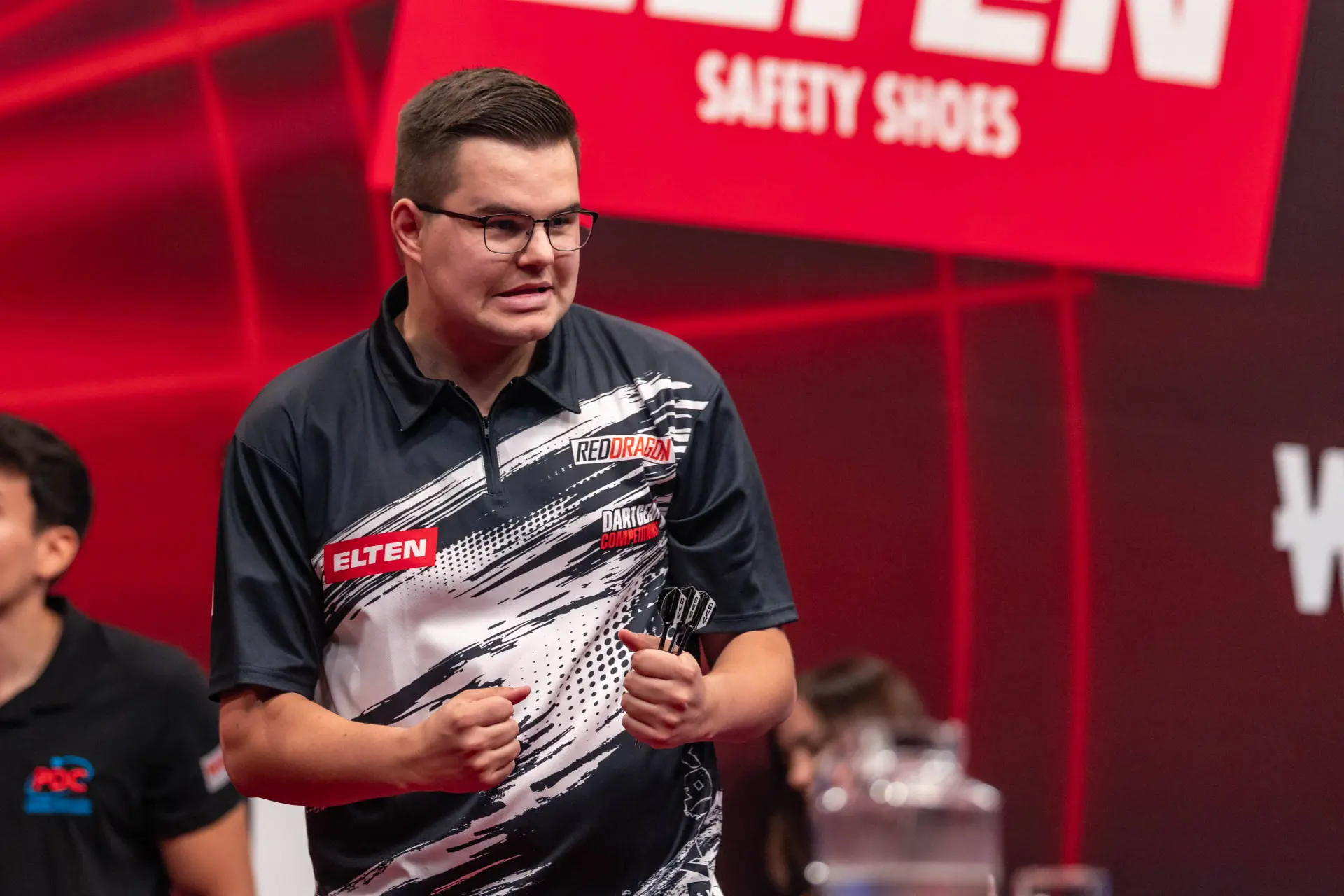
Gian van Veen belongs to the world’s top 10 after winning the European Championship title
Between aeronautical engineering and elite sport: overthinking can work against you
Van Veen earned a bachelor’s degree in aeronautical engineering before choosing the darts life for good. That analytical background sometimes helps him, but just as often works against him. “Intelligence can get in your way too. In darts it’s best not to think and just throw. A lot of other players are better at that.”
Even now the old pattern pops up from time to time. In the European Championship final against Luke Humphries, before his decisive double he first loosened his arm as a precaution. Laughing: “That way I knew for sure it would go in.”
ADVERTISEMENT
Accusations over his slow routines used to hurt him. “A few years ago at a tournament in Barnsley I was accused of cheating because I took so long. I cried my eyes out.” He has moved past that phase now. “I don’t care anymore what people think of me.”
A mortgage below the limit, to throw with freedom
To banish performance pressure from his life, Van Veen deliberately took out a low mortgage with his girlfriend. “Then I don’t have to perform to be able to pay for the house.” It gives him the freedom he used to lack.
That free mindset fits his ambitions. Bookmakers now rate him higher than Van Gerwen and see him as the logical heir to the throne. He takes a level-headed view. “I’m not afraid of Michael,” he says. “But he has won more than a hundred PDC titles and I have two. I need to win a world title anyway to get anywhere near him.”
ADVERTISEMENT
The fact that he has never won a World Championship match means little, he says. One good tournament could take him straight into the world’s top five. Even so, his attitude remains relaxed: “I’m not putting pressure on myself. I haven’t forgotten where I come from.”
Kieran WoodDarts Journalist
Kieran Wood is a sports journalist based in Wales and has been active in journalism since 2022. He contributes to DartsNews.com, where he covers professional darts through news, match reports, analysis, and live coverage across the PDC calendar and major tournaments.
A key part of his work is on-site reporting from leading events. Kieran has covered the PDC World Darts Championship in person, reporting daily from the venue and providing first-hand insight from the tournament. During his coverage, he has conducted interviews with leading players including Luke Littler, Luke Humphries, and Gerwyn Price.
He is also one of the leading voices of the English-language Dartsnews Podcast, contributing regular analysis and discussion on developments across the professional darts circuit.
In his reporting, Kieran places strong emphasis on careful sourcing, editorial accuracy, and updating articles when new, verified information becomes available.
claps 0visitors 0
Just in

Popular news


Latest comments
- I agree,I can't believe the lack of coverage of this sad loss. Always enjoyed watching him,but I guess now it's all about littler,well it seems that way. Darts has sadly lost a good manrick6717-10-2026
- In the absence of a report regarding the death of Stefan Lord, I'll assist. An excellent player in the late 70s and early 80s, he actually won the now defunct 3rd place match at two World Championships and a couple of the News of the World Championships. A fabulous player and easily the best Swedish player ever. Rest peacefully Stefan.richieburnettrocks16-10-2026
- Joking aside, it is the second most watched sport on sky (more than golf, F1 etc) behind football only, and in participation is second to only football and swimming. It doesn't get the attention or sponsorship of "bigger" sports because it's not as sexy, but it's right up there.BandB13-10-2026
- i love darts but you can't seriously believe it's the second most popular sport in the uk. even top five is pushing it. it may be the fastest growing, though.colt13-10-2026
- I'm a big Clayton fan, but he's got this completely wrong. Qualification criteria exists for a reason - so just as failing to make the top 32/64 for the Euro championships/PT Finals means you miss out, so does not lifting a title for this one.26sForFun12-10-2026
- The players who deliberately slow the game down are usually boring and win very little in the way of silverware. Horrible to watch.MrYnyslas197112-10-2026
- [“The Gentle” then used a sweeping and questionable phrase...] You anglocucks are hilariously finished in every sense of the word.Critical99911-10-2026
- I love Jonny but I disagree. The Grand Slam was always supposed to be "champion of champions" type competition. If the top 16 are guaranteed participation in everything there will be so much less jeopardy involved in qualifying and each major tournament will lose its unique flavour which the PDC has worked hard trying to develop. I enjoy following the qualification races towards the end of the year, and while consistency should have its rewards, the truth is Jonny hasn't reached a major final all year or won a single event on the Pro Tour. Being consistent is one thing, but that alone should have consequences as the sport's elite should not be prepared to accept consistently strong performances, their foremost motivation should be to win and this should be what separates them from the rest, not the consistency of their performances. Jonny is expecting that losing should be enough; it shouldn't be, at least not as far as the Grand Slam is concerned.Deduce635811-10-2026
- Well being honest,it doesn't matter what level you play at, there's always someone who slows it down to suit themselves,and extra swig of water, replacing flights, asking the ref what the score is. It happens wherever. I'm not saying it's professional,but I'm sure we've all seen it beforerick6711-10-2026
- Agree completely. Not sure how a ranking event can have a criteria not based on rankings. And he right on popularity. In the UK second only to football.BandB11-10-2026
Loading