"The format doesn't matter – he's so far ahead of everyone bar Luke Humphries" - Wayne Mardle raves about World Championship favourite Luke Littler
PDC
Luke Littler could not have asked for a cleaner start to his PDC World Darts Championship title defence. On opening night at Alexandra Palace, the reigning champion eased through a 3-0 win over Darius Labanauskas, keeping his campaign moving before the tournament had even had time to settle.
ADVERTISEMENT
And ahead of the event, Wayne Mardle sounded convinced that Littler has moved beyond the usual early-round danger zone that comes with a longer format and a longer fortnight.
Speaking to Online Darts, Mardle argued that the old storyline about catching Littler early has stopped applying. “I’ve been saying that and this has only come about the last four or five tournaments,” he said. “Do you remember when the narrative was, especially with Luke Littler, ‘Get him early, because you won’t get him late because of the format’?”
Mardle’s view now is blunt. “I’m now starting to believe the format doesn’t matter, really. I just think that he’s so far ahead of everyone barring Luke Humphries.”
That is not a prediction built on romance or hype. It is a read on what Mardle believes Littler is doing to opponents over the opening phase of matches, even when the distance is not huge. “I just think that he’s got everyone where he wants them right now,” he said. “And if Humphries plays well, no one can match those two scoring. They just can’t.”

Why Mardle thinks Littler is now format-proof
Mardle framed this World Championship as a tournament where the obvious names can still be vulnerable in one-off moments, but where beating Littler or Humphries is only half the job.
ADVERTISEMENT
“It’s hard to say that someone’s going to rattle through the pair of them,” he said. “They might get beat individually and the one that beats them gets beat. And in the end whoever beats them ends up getting beat and we come up with a random winner.”
It is a warning that the bracket can open up even if the best player loses, because the level required to take out a favourite can be hard to reproduce again two days later.
Mardle also returned to what he sees as the separating factor in Littler’s game when the noise rises and the finishing line starts to appear. “Only Phil Taylor and Michael van Gerwen in my opinion have handled pressure as well as what I think Luke is doing now,” he said. “And that’s not comparing the three of them, that’s putting them on a higher pedestal than anyone else. He doesn’t buckle. He does not buckle under pressure. That’s a rarity.”
Mardle did not want to be pulled into the tired argument about legacies and trophy counts. He pushed back on that directly, while still pointing to traits he sees in the modern top two. “No. I don’t compare. Comparison is the thief of joy. Remember that,” he said. “I don’t like doing that, but I can compare their games. I’m not going to compare what they’re going to win, of course. It’s just not me.”
ADVERTISEMENT
What he is prepared to do is talk about how the game looks now and why it feels different. “But what Luke is doing and Luke Humphries to a point, the scoring phase of their games is right there with them,” he said.
Mardle described the contrast in styles he has watched across eras, not as a judgement, but as a way to explain why Littler and Humphries can make matches feel like they are speeding up. “Taylor’s was different. It was slower. It was more methodical,” he said. “Michael would literally go 180, 180, 105, 36 out. Littler and Humphries are doing similar to that, in that speed. So it just looks different, but just as effective.”
For Mardle, that pace matters because it increases the pressure on the player who is chasing. “It was a case of [unclear] was always chasing,” he said of a recent match he referenced. “And that’s not a massively long format.”
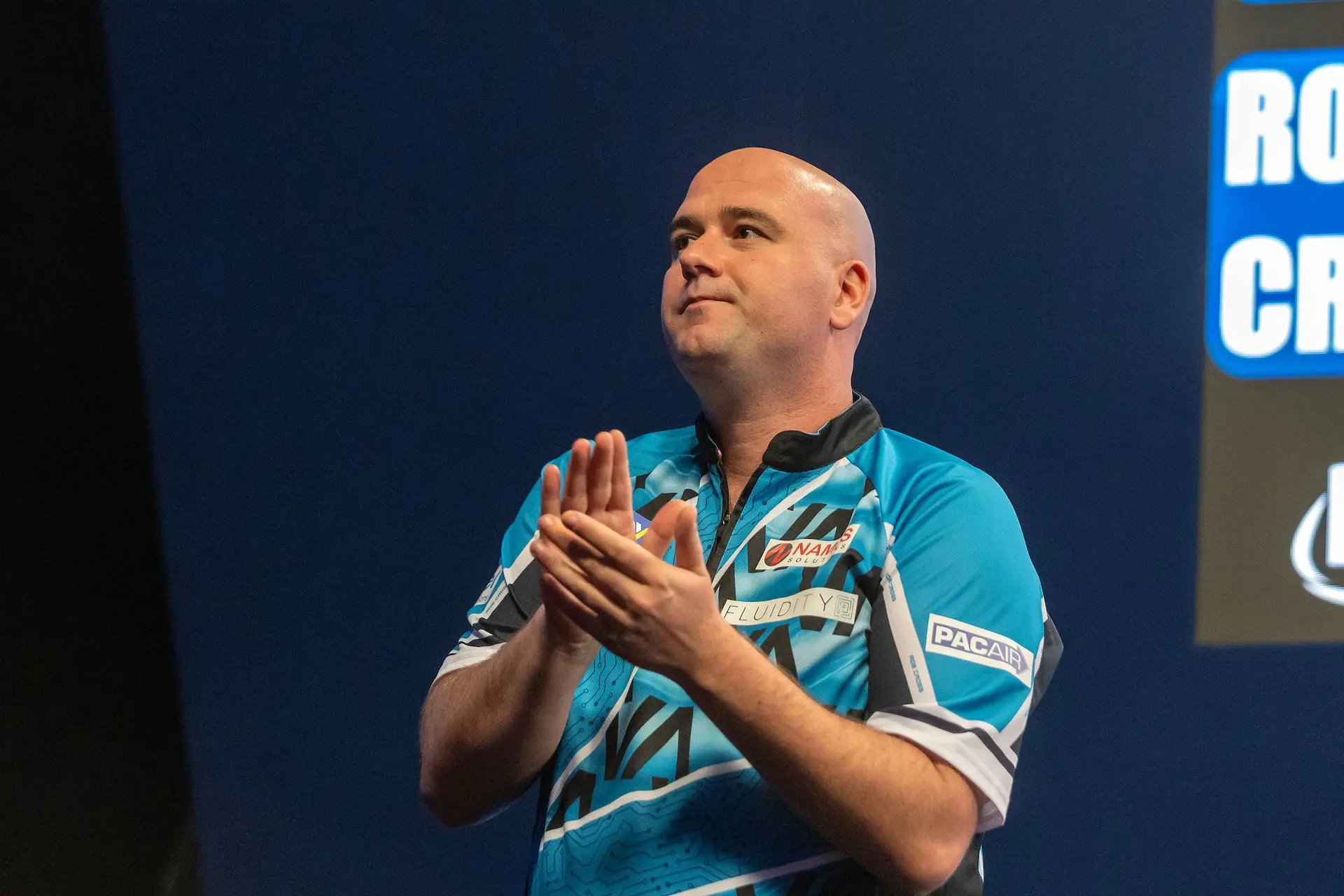
Mardle’s warning about the rest of the field
ADVERTISEMENT
Even in an interview dominated by the two Lukes, Mardle was keen to point out what gets lost when one name absorbs the entire spotlight.
“Yes. Yes, we have,” he said when asked if the sport has forgotten Humphries’ level. Then he widened it. “And I tell you what also we’ve forgotten about. Michael van Gerwen as well.”
Mardle’s point was not that van Gerwen is back to his peak, or that he should be installed as the main threat. It was that the rush to declare him finished does not line up with the reality of how hard he remains to beat. “He’s still very, very difficult to beat,” Mardle said. “And whoever beats him does not play poorly. Everyone thinks Michael van Gerwen’s gone. What on earth? How mad are you? I just don’t get it.”
He then listed other names he believes get overlooked because their style is not fashionable. “Danny Noppert will always go under the radar because he’s not a sexy dart player. James Wade has never been a sexy dart player. Gerwyn Price is not as brash as he used to be, so people are forgetting him a bit.”
“These are winners,” he added. “These are winners. They will continue to win.”
ADVERTISEMENT
Mardle also stressed that Littler’s impact on the sport should not erase everyone else’s role in keeping the game moving. “And look, whilst he has grown the game, it’s the others and everyone else that grows the game,” he said. “Luke Littler is just taking all the plaudits at the moment because he is winning more than most. He just is.”
Read also

“It has to be a Luke-and-Luke final”
When the conversation turned back to the draw and the outright call, Mardle did not dress it up. “In my opinion, there was a short list anyway of about six or seven players,” he said. “It has to be a Luke-and-Luke final.”
He acknowledged the reaction that always follows that kind of pick, and he did not care. “Whilst people think it’s boring, ‘Oh, you’ve picked the favourites’, I think they’re the best players,” he said. “Under pressure, they are the most likely to.”
ADVERTISEMENT
Even when they are not at their best, he still backed them to beat the kind of level that can look threatening in other quarters. “And if they both play poorly, they can still beat a Michael van Gerwen that’s playing decent,” Mardle said. “They can still beat a Gerwyn Price that’s playing decent.”
The final line was the simplest summary of the gap he believes exists right now. “If they play well, I don’t think anyone can see them getting beat until they play each other in a final.”
Littler’s 3-0 win over Labanauskas has already put him into the next stage with minimal fuss. If Mardle is right, the real test of the title defence may not be the format, the prize money or even the weight of history.
It may simply be whether anyone can force a different ending before a Luke meets a Luke on the sport’s biggest stage.

ADVERTISEMENT

Kieran WoodDarts Journalist
Kieran Wood is a sports journalist based in Wales and has been active in journalism since 2022. He contributes to DartsNews.com, where he covers professional darts through news, match reports, analysis, and live coverage across the PDC calendar and major tournaments.
A key part of his work is on-site reporting from leading events. Kieran has covered the PDC World Darts Championship in person, reporting daily from the venue and providing first-hand insight from the tournament. During his coverage, he has conducted interviews with leading players including Luke Littler, Luke Humphries, and Gerwyn Price.
He is also one of the leading voices of the English-language Dartsnews Podcast, contributing regular analysis and discussion on developments across the professional darts circuit.
In his reporting, Kieran places strong emphasis on careful sourcing, editorial accuracy, and updating articles when new, verified information becomes available.
claps 0visitors 0
Just in



Popular news


Latest comments
- I agree,I can't believe the lack of coverage of this sad loss. Always enjoyed watching him,but I guess now it's all about littler,well it seems that way. Darts has sadly lost a good manrick6717-10-2026
- In the absence of a report regarding the death of Stefan Lord, I'll assist. An excellent player in the late 70s and early 80s, he actually won the now defunct 3rd place match at two World Championships and a couple of the News of the World Championships. A fabulous player and easily the best Swedish player ever. Rest peacefully Stefan.richieburnettrocks16-10-2026
- Joking aside, it is the second most watched sport on sky (more than golf, F1 etc) behind football only, and in participation is second to only football and swimming. It doesn't get the attention or sponsorship of "bigger" sports because it's not as sexy, but it's right up there.BandB13-10-2026
- i love darts but you can't seriously believe it's the second most popular sport in the uk. even top five is pushing it. it may be the fastest growing, though.colt13-10-2026
- I'm a big Clayton fan, but he's got this completely wrong. Qualification criteria exists for a reason - so just as failing to make the top 32/64 for the Euro championships/PT Finals means you miss out, so does not lifting a title for this one.26sForFun12-10-2026
- The players who deliberately slow the game down are usually boring and win very little in the way of silverware. Horrible to watch.MrYnyslas197112-10-2026
- [“The Gentle” then used a sweeping and questionable phrase...] You anglocucks are hilariously finished in every sense of the word.Critical99911-10-2026
- I love Jonny but I disagree. The Grand Slam was always supposed to be "champion of champions" type competition. If the top 16 are guaranteed participation in everything there will be so much less jeopardy involved in qualifying and each major tournament will lose its unique flavour which the PDC has worked hard trying to develop. I enjoy following the qualification races towards the end of the year, and while consistency should have its rewards, the truth is Jonny hasn't reached a major final all year or won a single event on the Pro Tour. Being consistent is one thing, but that alone should have consequences as the sport's elite should not be prepared to accept consistently strong performances, their foremost motivation should be to win and this should be what separates them from the rest, not the consistency of their performances. Jonny is expecting that losing should be enough; it shouldn't be, at least not as far as the Grand Slam is concerned.Deduce635811-10-2026
- Well being honest,it doesn't matter what level you play at, there's always someone who slows it down to suit themselves,and extra swig of water, replacing flights, asking the ref what the score is. It happens wherever. I'm not saying it's professional,but I'm sure we've all seen it beforerick6711-10-2026
- Agree completely. Not sure how a ranking event can have a criteria not based on rankings. And he right on popularity. In the UK second only to football.BandB11-10-2026
Loading