“What we did in Saudi Arabia is different, but we’re not going to copy it everywhere” – 'WWE walk-ons' won’t become the norm as PDC turn to other sports for inspiration
PDC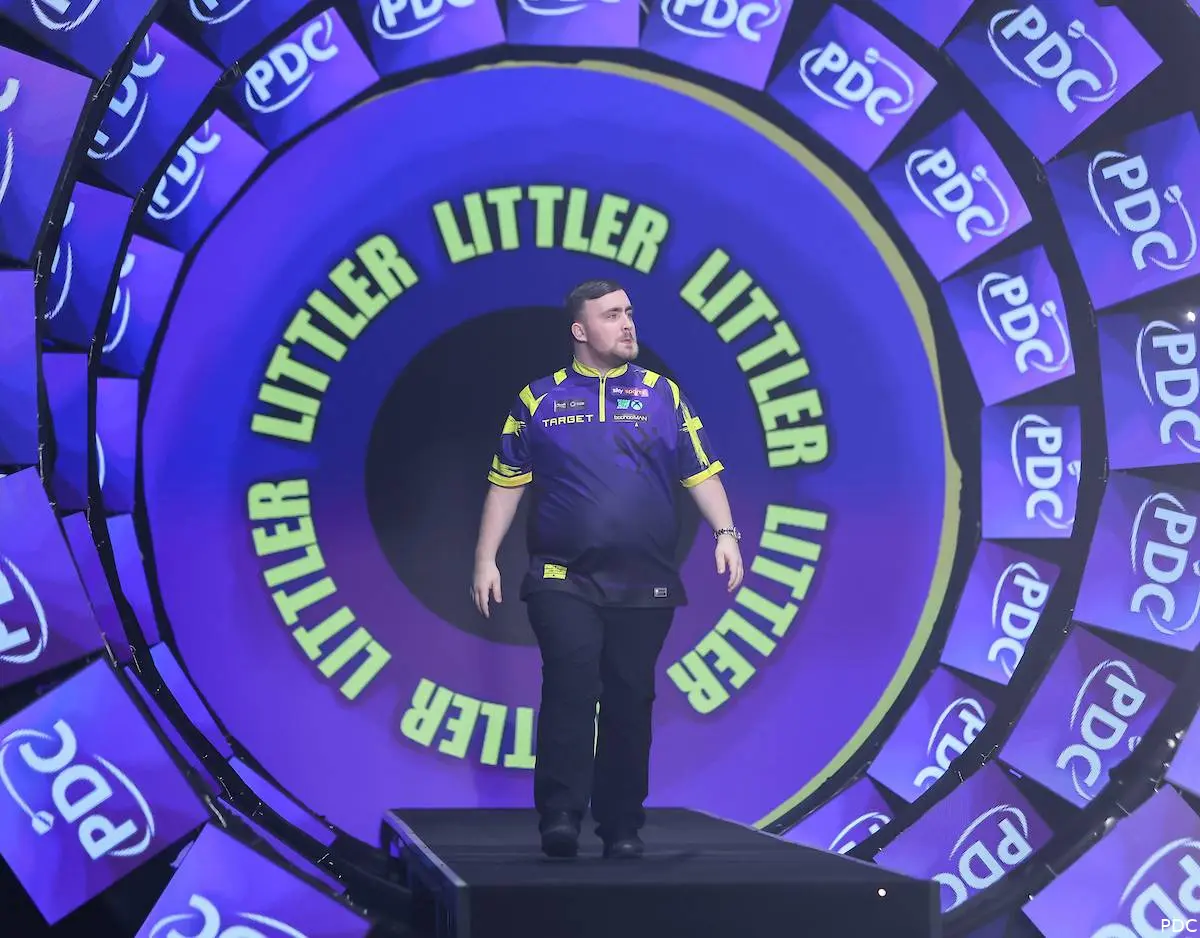
During the Saudi Arabia Darts Masters 2026 in Riyadh, Online Darts spoke at length with Jamie Banks, Head of Broadcast at the PDC. The conversation focused on change, innovation and, above all, why darts on television must look different in the coming years.
ADVERTISEMENT
A new era has begun with the broadcasting deal with ITV. Not just in terms of rights, but especially in content. “It’s a really exciting time for everyone involved in the sport,” says Banks. “The new deal has kicked in and it means we’ve got a bit more control over the product and the production."
Evolve or stand still
According to Banks, standing still is not an option. "We’re genuinely trying to evolve the product, move things on, not stand still, and improve the way people enjoy the sport on TV. That ambition is visible in almost every aspect of the new broadcasts: from the make-up of the presenting team to graphics, analysis and even walk-ons.
One of the first striking choices was appointing Pete Graves as presenter, known from Sky Sports. A name that was not at the top of the list initially. "He wasn’t necessarily on the radar for a long time, but he got pushed towards us. I had a conversation with him and immediately thought, “Actually, this is the guy.”
We wanted people with experience in the sport, but his knowledge really impressed me, and so did his desire to help us improve the product."
That decision also made it possible to deploy Gabriella Partington on the World Series. "That gives us two things: someone with loads of broadcasting experience and a strong understanding of the sport, and someone who’s still learning and getting a foot in the door.
She’s been around darts for a long time, but this gives her a chance to grow and build with us."
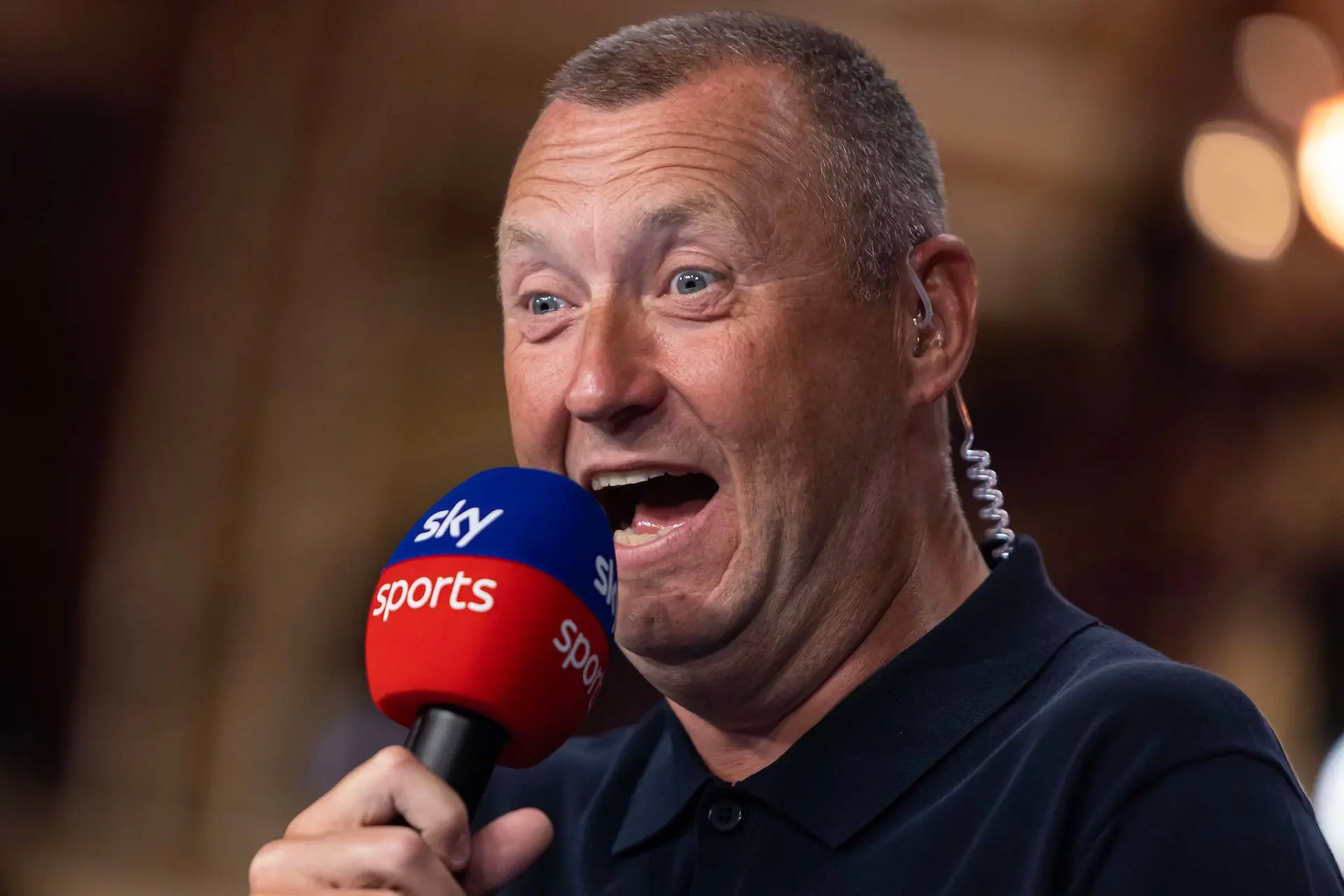
The most talked-about move is without doubt Wayne Mardle’s switch to ITV. “That conversation was really fun,” says Banks. "He’s fully on board and genuinely looking forward to getting involved." For Banks, bringing in Wayne Mardle is more than a personnel change as they look to level the playing field between Sky Sports and ITV. "Everyone loves Wayne, and it’s a great opportunity for us to use him across different events."
ADVERTISEMENT
Banks understands the varied reactions. "We’ve seen the comments, and I completely understand that people will have differing opinions — that’s just the nature of it." He likens it to football: It’s like supporting a football team. You might think the manager should stay, I might think he should go. It doesn’t mean one of us cares more." What he hopes for most is understanding. "Even if they don’t like a decision, I hope they can step back and see the bigger picture and say, 'I get why they’ve done that.'"
For darts fans, another dream beckons: Chris Mason and Wayne Mardle at the same desk. “That idea really excites me,” says Banks without hesitation. "They’re two of the best broadcasters in the sport. They have very different styles, but that doesn’t mean they can’t work together."
Banks believes it’s time to move away from old labels. "We now have the freedom to say, 'That person is best for this role,' and bring everyone together to create a team people can really enjoy."
New voices, fresh perspectives
New names are joining the commentary team as well. Mark Wilson and Ian Danter are making their debut at the highest TV level. On Wilson, Banks is clear: "We’ve worked with him for a couple of years and straight away I thought he had something. His knowledge of the sport has grown massively, and as a broadcaster he’s superb." He even calls Danter 'a real steal.' "He’s a brilliant broadcaster with plenty of experience. He’s done darts on talkSPORT, and while TV is different to radio, he’s absolutely superb."
ADVERTISEMENT
The same goes for Dan Dawson. “It wasn’t even a debate,” Banks laughs. “He’s one of the best broadcasters I’ve ever worked with and knows more about the sport than anybody else.” At the same time, the PDC is wary of overexposure. “We don’t want a ‘Dan Dawson Show’. Variety keeps it fresh.”
With former players like Glen Durrant, the PDC wants to add more depth. “It’s really important. The sport changes, we all know that. Durrant has been involved in the game recently and also has broadcasting experience, so he was a pretty easy decision.”
That fits a broader ambition: better analysis. “In the past we mostly talked about matches,” Banks says. “Now we want to show what’s happening.” Luke Littler’s rise has changed the audience. “We have a younger demographic, a new crowd. That calls for explanation and context.”
The new graphics, introduced at tournaments in Bahrain and Saudi Arabia, sparked debate. Banks remains calm. “I personally approved them because I think they’re good. They provide a different look and are aimed at a broader audience.” He knows social media is no yardstick. “If you read comments all day, you get nowhere. Change takes time. Give it a chance.”
ADVERTISEMENT

Littler won the very first edition of the Saudi Arabia Darts Masters.
Inspiration from other sports
For further innovation, the PDC is deliberately looking beyond darts. “We’re taking elements from other sports. Formula 1 is very consistent in its look and feel. Cricket, and even The Hundred, show how graphics can evolve.”
WWE is also an inspiration, especially for walk-ons. “What we did here in Saudi Arabia is different, but we won’t copy it everywhere. We also have to consider the audience in the arena.” At events like the PDC World Matchplay, Banks sees opportunities. “With lighting and cameras, you can do a lot without losing the sport’s identity.”
Read also
ADVERTISEMENT
Banks stresses that the new direction is not a reckoning with the past. “ITV has done fantastic work over the past twenty years. We’re not tearing anything down. We’re building on that success, but want to make it better.”
Finally, he addresses the fans. "The key thing is that we’re listening — to staff, talent, and fans. We’re going to make mistakes and there will be differing opinions.
All I ask is that people understand we’re trying to create a more rounded experience for everyone. Keep voicing opinions — I’m just fortunate that mine end up on the TV."
Lucas MichaelDarts Journalist
Lucas Michael is a darts journalist and reporter based in Cambridge, UK, and has been part of the DartsNews team since 2025. He covers professional darts through reports, analysis, round-ups, and live coverage, with a focus on clear context and accurate reporting across the PDC calendar.
A key part of his work is liveblogging major tournaments throughout the year, providing real-time updates, match coverage, and contextual reporting across the professional circuit. He also reports regularly from events on site and has covered the PDC World Darts Championship from the venue, delivering first-hand insight throughout the tournament.
Within the newsroom, Lucas works closely with the editorial team and supports coverage alongside Chief Content Officer Samuel Gill and reporter Kieran Wood.
Lucas holds a BA (Hons) in Sports Journalism. In his work, he places strong emphasis on careful sourcing, editorial accuracy, and updating content promptly when new, verified information becomes available.
claps 0visitors 0
Just in

Popular news
Latest comments
- I agree,I can't believe the lack of coverage of this sad loss. Always enjoyed watching him,but I guess now it's all about littler,well it seems that way. Darts has sadly lost a good manrick6717-10-2026
- In the absence of a report regarding the death of Stefan Lord, I'll assist. An excellent player in the late 70s and early 80s, he actually won the now defunct 3rd place match at two World Championships and a couple of the News of the World Championships. A fabulous player and easily the best Swedish player ever. Rest peacefully Stefan.richieburnettrocks16-10-2026
- Joking aside, it is the second most watched sport on sky (more than golf, F1 etc) behind football only, and in participation is second to only football and swimming. It doesn't get the attention or sponsorship of "bigger" sports because it's not as sexy, but it's right up there.BandB13-10-2026
- i love darts but you can't seriously believe it's the second most popular sport in the uk. even top five is pushing it. it may be the fastest growing, though.colt13-10-2026
- I'm a big Clayton fan, but he's got this completely wrong. Qualification criteria exists for a reason - so just as failing to make the top 32/64 for the Euro championships/PT Finals means you miss out, so does not lifting a title for this one.26sForFun12-10-2026
- The players who deliberately slow the game down are usually boring and win very little in the way of silverware. Horrible to watch.MrYnyslas197112-10-2026
- [“The Gentle” then used a sweeping and questionable phrase...] You anglocucks are hilariously finished in every sense of the word.Critical99911-10-2026
- I love Jonny but I disagree. The Grand Slam was always supposed to be "champion of champions" type competition. If the top 16 are guaranteed participation in everything there will be so much less jeopardy involved in qualifying and each major tournament will lose its unique flavour which the PDC has worked hard trying to develop. I enjoy following the qualification races towards the end of the year, and while consistency should have its rewards, the truth is Jonny hasn't reached a major final all year or won a single event on the Pro Tour. Being consistent is one thing, but that alone should have consequences as the sport's elite should not be prepared to accept consistently strong performances, their foremost motivation should be to win and this should be what separates them from the rest, not the consistency of their performances. Jonny is expecting that losing should be enough; it shouldn't be, at least not as far as the Grand Slam is concerned.Deduce635811-10-2026
- Well being honest,it doesn't matter what level you play at, there's always someone who slows it down to suit themselves,and extra swig of water, replacing flights, asking the ref what the score is. It happens wherever. I'm not saying it's professional,but I'm sure we've all seen it beforerick6711-10-2026
- Agree completely. Not sure how a ranking event can have a criteria not based on rankings. And he right on popularity. In the UK second only to football.BandB11-10-2026
Loading