“We’re only just getting started, and there’s so much more to come” – JDC chairman Steve Brown predicts the next world champion will come from Asia
JDC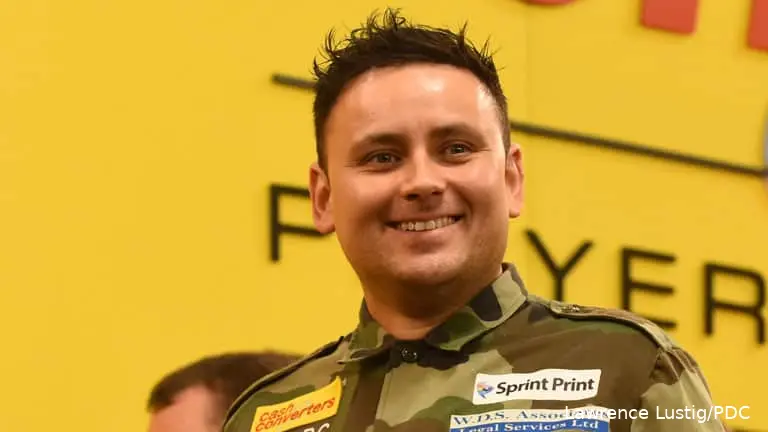
From Bahrain to Mongolia and from Milton Keynes to Virginia Beach: for JDC chairman and former PDC player Steve Brown, youth darts knows no borders anymore. Speaking to Tungsten Tales, Brown outlines an ambitious international agenda centered on education, accessibility, and collaboration. “We see ourselves as the custodians of youth darts,” he says. “And we are absolutely determined to do it right.”
ADVERTISEMENT
Brown speaks from Bahrain, where the JDC has been active for over a year. The region is no random choice. According to the chairman, interest in the Middle East is growing rapidly.
“There’s a real vested interest now,” he explains. “More and more countries are getting involved. This is our first stop — we’ll briefly head to Saudi Arabia and then on to Dubai later this week. There’s plenty of interest out here, and Bahrain has really kicked on since we first came here just over a year ago.”
What stands out is the scale at which the sport is being rolled out. “We’ve had thousands and thousands of kids introduced to darts, and we’re here now to start discussing the next steps — the next layer of this project.”
Start with the youth: “Children are the adults of the future”
While some organisations, according to Brown, still focus on the elite without a foundation, the JDC deliberately opts for an ecosystem. “You have to start at the beginning,” he states. “Adults don’t feed the future; children are the adults of the future. So you first build a youth structure.”
In countries where darts is traditionally seen as a pub pastime, the JDC consciously takes a different angle. "In some countries, darts is still seen as a bar sport, not a serious one. So we’re introducing it through education and schools first. Kids go home and tell their parents, 'We played darts today, but it was a great maths lesson.'"

ADVERTISEMENT
The educational component is crucial, according to Brown. "It’s not just about introducing the sport — it’s about gaining respect for it. In many ways, we’re educating the parents as much as the kids."
Although the adult darts scene in Bahrain is smaller than in the United Kingdom, Brown sees a healthy base. “It’s different, but there is a real darts community here. There are a lot of expats, but also Bahrainis, and they all play together in the same leagues and competitions."
If there is one country that illustrates the potential of the JDC model, it is Mongolia. According to Brown, the country came onto his radar three to four years ago when a young player suddenly appeared in Gibraltar.
“They announced themselves pretty abruptly," he laughs. "Since then, they’ve been a breath of fresh air. Every event they attend, they bring smiles, but they also play darts the right way."
What surprised the JDC was the scale of the sport in Mongolia. "We didn’t realise just how big darts was in Mongolia. It’s a massive sport there. Behind Turgul, there’s a huge amount of talent coming through — especially young girls. There’s a real wealth of ability."
ADVERTISEMENT
Tergel Khurelkhuu as Mongolia’s standard-bearer
The Mongolian prospect Tergel Khurelkhuu is now regarded as one of the leading juniors in the world. Brown is full of praise for his style. “His technique is superb, but just as important is his temperament.” But Brown finds the mental aspect just as important. “Turgul’s temperament makes him very hard to read, and that puts him in great stead. At the higher levels, players notice everything — little habits, little weaknesses.”
He recalls his own PDC days and cites a concrete example: “Take Paul Nicholson, for example — whenever he was under pressure, he’d get a red patch on the back of his head. At elite level, players spot those things.”

Still, Brown stresses patience. “He has two more years with us. I’m a big advocate of young players not moving up to the seniors too soon. You’re only a junior once. Stay in that category as long as possible and win everything you can there.”
ADVERTISEMENT
Another crown jewel on the JDC circuit is the annual event in Gibraltar. What began with 16 teams has now more than doubled. “When we started there, we had 16 teams," says Brown. "We’ve more than doubled that now. New countries keep coming on board, starting academies, and participation levels have gone through the roof."
The ambition was clear from day one: Gibraltar had to become the pilgrimage site of youth darts. "We wanted Gibraltar to become the Mecca of junior darts — somewhere every junior player wants to go on a pilgrimage. That’s happened. Gibraltar is now synonymous with junior darts, and we’re incredibly proud of that." The location helps. “It’s safe, well-run, and while it’s not the easiest place to get to, it’s absolutely worth it.”
The JDC Academies have now been around for fifteen years and remain the backbone of the system. Brown sees daily how important that structure is. "Starting anything new is intimidating — a gym, a club, a school. What we’ve done well is give kids something to aim for from day one."

Kaya Baysal recently won the JDC World Masters by beating 15-year-old top prospect Mitchell Lawrie in the final.
That happens through color gradations and fixed routines. “You don’t need to be top-level straight away — you just need to believe in the process. It’s about self-development, not beating the next kid." According to Brown, it’s not about beating the opponent. “It’s about self-development. That’s the core.”
ADVERTISEMENT
That model has already produced several pros, including Keane Barry. "Players like Keane Barry came through that route as well. It’s a safe, friendly environment and a great place to start."
One of the biggest events of the past year was the JDC World Masters in Milton Keynes. Hundreds of participants qualified through the academy system. “It will probably be the biggest junior event on the calendar in terms of entrants,” Brown expects.

Where the tournament was exclusive to Winmau academies last year, that is changing now. "We’re delighted to announce that next year, any JDC academy member — regardless of manufacturer backing — will have the opportunity to qualify."
According to Brown, that is the result of intensive talks and cooperation, including with the World Darts Federation and England Darts. "We’ve worked hard with partners like the WDF and EDO to level the playing field. The JDC academy system is now open to absolutely everybody."
ADVERTISEMENT
The relationship with other governing bodies wasn’t always a given. Brown admits that in the early years the JDC was sometimes seen as a “newcomer.” “Maybe we were seen as the bad guys. But we were mainly focused on our own path.”
Social media contributed to misunderstandings, he says. "Once we actually sat down together, we realised we had far more in common than differences. Social media can create misperceptions." Concretely, that means shared venues, joint events, and even support for international travel. "We’ll now share venues, sponsor travel to WDF events, and work together. It’s a great sign for the future."
Global expansion in 2026
The international agenda for 2026 is impressive. Brown mentions, among others, Virginia Beach, where a WDF tournament awaits, and further plans in North America. “We have major announcements in the pipeline there,” he says. “In addition, we’re working in India and China. There’s a huge amount happening internationally.”
The team behind the JDC is growing with it. “We’ve become much more efficient. It’s a big organisation now.” But above all, a sense of responsibility remains the guiding force. “We feel responsible for youth darts worldwide. That’s no small task.”
ADVERTISEMENT
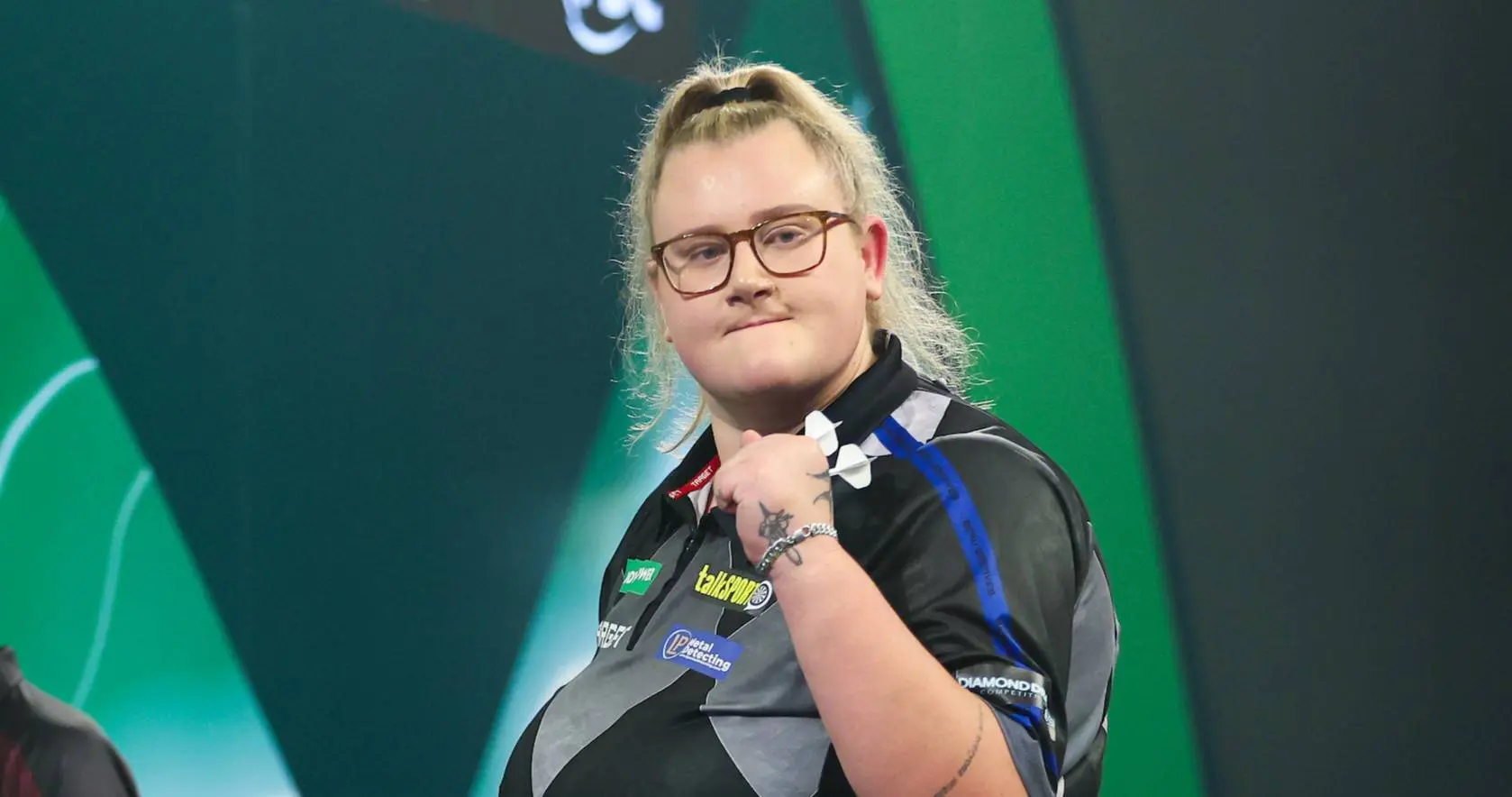
If Brown has to predict where the next JDC world champion will come from, he points to Asia. “Probably Asia,” he says. “Possibly Asia. If Turgul fulfils his potential, he’s got two years left with us."
According to Brown, what we’re seeing now is just the tip of the iceberg. “There are markets where the game is already being played, but where we don’t know anything yet. Just like here. The potential is enormous.”
Finally, Brown returns to a core message for young talents. "I always say — don’t rush into adult darts. You’re only a kid once. Stay in the junior game, win as much as you can there, and enjoy it."
It typifies the JDC philosophy: development first, then results. And if Steve Brown has his way, that foundation will grow just as fast in the Middle East, Asia, and North America as in Europe over the coming years. “We’re only just getting started,” he concludes. “And there’s so much more to come.”
ADVERTISEMENT

Lucas MichaelDarts Journalist
Lucas Michael is a darts journalist and reporter based in Cambridge, UK, and has been part of the DartsNews team since 2025. He covers professional darts through reports, analysis, round-ups, and live coverage, with a focus on clear context and accurate reporting across the PDC calendar.
A key part of his work is liveblogging major tournaments throughout the year, providing real-time updates, match coverage, and contextual reporting across the professional circuit. He also reports regularly from events on site and has covered the PDC World Darts Championship from the venue, delivering first-hand insight throughout the tournament.
Within the newsroom, Lucas works closely with the editorial team and supports coverage alongside Chief Content Officer Samuel Gill and reporter Kieran Wood.
Lucas holds a BA (Hons) in Sports Journalism. In his work, he places strong emphasis on careful sourcing, editorial accuracy, and updating content promptly when new, verified information becomes available.
claps 0visitors 0
Just in


Popular news

Latest comments
- I agree,I can't believe the lack of coverage of this sad loss. Always enjoyed watching him,but I guess now it's all about littler,well it seems that way. Darts has sadly lost a good manrick6717-10-2026
- In the absence of a report regarding the death of Stefan Lord, I'll assist. An excellent player in the late 70s and early 80s, he actually won the now defunct 3rd place match at two World Championships and a couple of the News of the World Championships. A fabulous player and easily the best Swedish player ever. Rest peacefully Stefan.richieburnettrocks16-10-2026
- Joking aside, it is the second most watched sport on sky (more than golf, F1 etc) behind football only, and in participation is second to only football and swimming. It doesn't get the attention or sponsorship of "bigger" sports because it's not as sexy, but it's right up there.BandB13-10-2026
- i love darts but you can't seriously believe it's the second most popular sport in the uk. even top five is pushing it. it may be the fastest growing, though.colt13-10-2026
- I'm a big Clayton fan, but he's got this completely wrong. Qualification criteria exists for a reason - so just as failing to make the top 32/64 for the Euro championships/PT Finals means you miss out, so does not lifting a title for this one.26sForFun12-10-2026
- The players who deliberately slow the game down are usually boring and win very little in the way of silverware. Horrible to watch.MrYnyslas197112-10-2026
- [“The Gentle” then used a sweeping and questionable phrase...] You anglocucks are hilariously finished in every sense of the word.Critical99911-10-2026
- I love Jonny but I disagree. The Grand Slam was always supposed to be "champion of champions" type competition. If the top 16 are guaranteed participation in everything there will be so much less jeopardy involved in qualifying and each major tournament will lose its unique flavour which the PDC has worked hard trying to develop. I enjoy following the qualification races towards the end of the year, and while consistency should have its rewards, the truth is Jonny hasn't reached a major final all year or won a single event on the Pro Tour. Being consistent is one thing, but that alone should have consequences as the sport's elite should not be prepared to accept consistently strong performances, their foremost motivation should be to win and this should be what separates them from the rest, not the consistency of their performances. Jonny is expecting that losing should be enough; it shouldn't be, at least not as far as the Grand Slam is concerned.Deduce635811-10-2026
- Well being honest,it doesn't matter what level you play at, there's always someone who slows it down to suit themselves,and extra swig of water, replacing flights, asking the ref what the score is. It happens wherever. I'm not saying it's professional,but I'm sure we've all seen it beforerick6711-10-2026
- Agree completely. Not sure how a ranking event can have a criteria not based on rankings. And he right on popularity. In the UK second only to football.BandB11-10-2026
Loading