“16 months of absolute misery, you don’t think it’s ever going to end” - Kevin Painter opens up about a period with dartitis, anxiety, sleepless nights and stress
PDC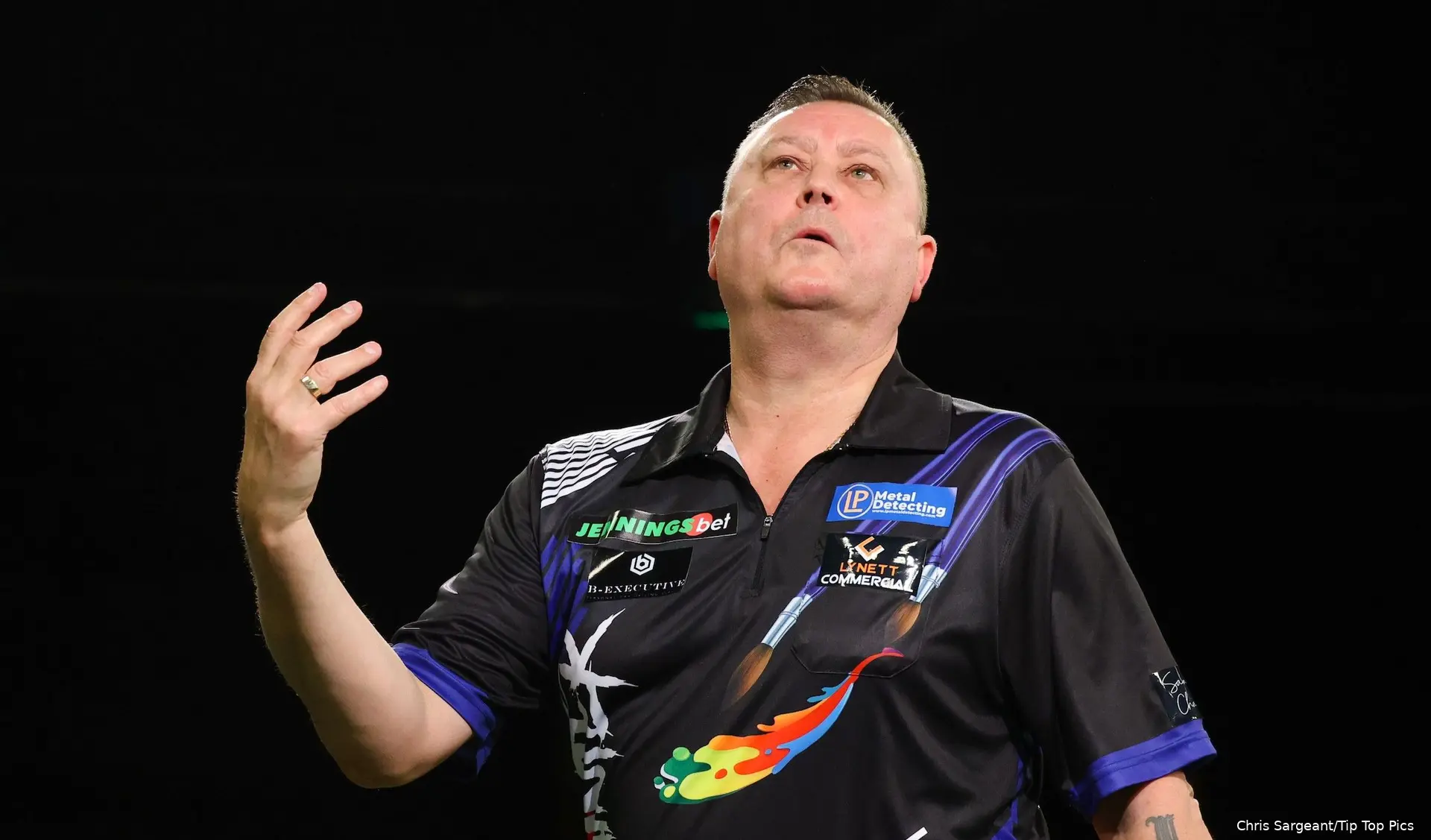
In conversation with Tungsten Tales, former Premier League player Kevin Painter has candidly reflected on a period he himself describes as “sixteen months of misery.” Dartitis. Fear. Sleepless nights. And slowly, light at the end of the tunnel again.
ADVERTISEMENT
The appearance of Kevin Painter’s name on the Q-School entry list raised a few eyebrows. The now 57-year-old Englishman has long since earned his stripes. But anyone who thought he was making one last push for a PDC Tour Card was mistaken.
“I didn’t go to Q-School to get a Tour Card,” Painter says matter-of-factly. “Those days are gone for me. I went so I could get some practice and then be able to play on the Challenge Tour and get more match time."
Q-School in Milton Keynes is known for its grueling days, long sessions, and ruthless competition. Young talents dreaming of a pro career, established names trying to reclaim their spot. Painter knew beforehand he would only play two days. “there are some great players in there trying to get a card, and you get a lot of young lads who want to be professional dart players. As I say, I always knew I was only going for a couple of days anyway."
“It had nothing to do with darts”
Those match hours were sorely needed. Painter struggled with dartitis for a year and a half, a phenomenon notorious in the darts world that can end careers. "As I say, 16 months of absolute misery," he said. "You don’t think it’s ever going to end — you hope it will."
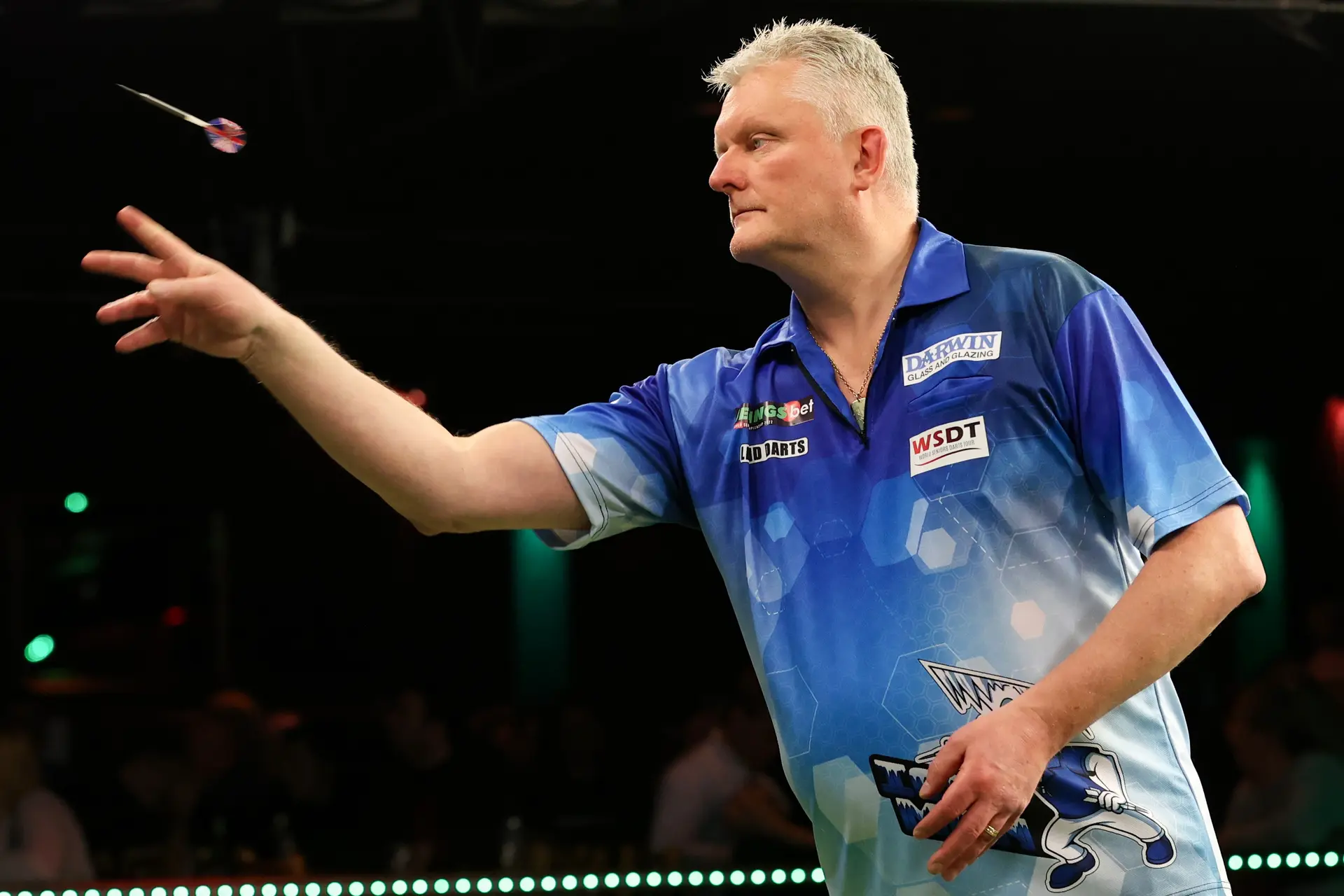
Remarkably, Painter doesn’t point to technique or motor skills as the cause. Quite the opposite. "It’s nothing to do with darts themselves,” he emphasises. “It’s all about anxiety and not sleeping properly. If you can get a good night’s sleep every night, you’re emptying what they call the “bucket of trash” from that day, and from previous days and months. I wasn’t sleeping properly, which made me anxious, and in the end it becomes a nervous thing."
ADVERTISEMENT
He underwent therapy sessions that focused not on the throw, but on his mental state. "If I wasn’t a dart player, it might have manifested itself in another way — panic attacks, for example. The therapist said it’s just a symptom of anxiety and stress."
The turnaround didn’t happen overnight, but there was a specific moment when things began to improve. “At a certain point I changed my throw a little. More rhythm, less thinking. And that seemed to work.”
He reckons dartitis has cleared by 90 to 95 percent. “I still get a slight hesitation sometimes, but it’s nothing compared to how it was. It’s just nice to be able to throw again.”
Still, it doesn’t mean he instantly hits his old level now. Painter has to learn to play with a slightly different style and timing. “It’s basically a new challenge. I have to retrain myself in a different way of playing.”

ADVERTISEMENT
For a player who competed at the highest level for more than twenty years, that’s no small step. Painter played countless TV tournaments and stood in the biggest arenas in the world. That’s precisely why his dartitis came as a surprise.
“It’s strange,” he admits. “ played at the top of the game for 20-odd years and handled some proper pressure moments. I think the stress and anxiety probably came after coming off the tour — not playing as well as I used to, but still thinking I could. That probably built up too much, and then suddenly, bang, it came on."
Memories of the Premier League
Last Thursday marked the start of the new Premier League Darts campaign, one of the most prestigious and lucrative tournaments outside the World Championship. Painter knows what it feels like to be part of that elite group. In 2012, he was in the line-up himself.
“Fantastic,” he recalls. “I loved every minute of it. It’s totally different. You don’t really know what to expect the first time you’re in it. Playing in front of massive crowds was exciting, and yeah — I just enjoyed every minute."
ADVERTISEMENT
While the arenas were already well filled back then, the current editions attract more than 10,000 spectators weekly. The concept has changed: no more classic league, but a mini-tournament each night.
“It’s OK now. It was getting a bit boring before,” Painter says frankly. “This keeps everyone fighting every week. In a straight league, if you’re cut adrift, your mentality changes. Now there’s always something to play for.”
He believes finding the perfect format is difficult. “There’s probably no perfect format, but at the minute, I think it works OK.”
Debutants under the microscope
This season, Josh Rock and Gian van Veen, among others, make their Premier League debuts. Painter sees plenty of potential in both. “They’re both very good players and I can see big futures for them.”
ADVERTISEMENT
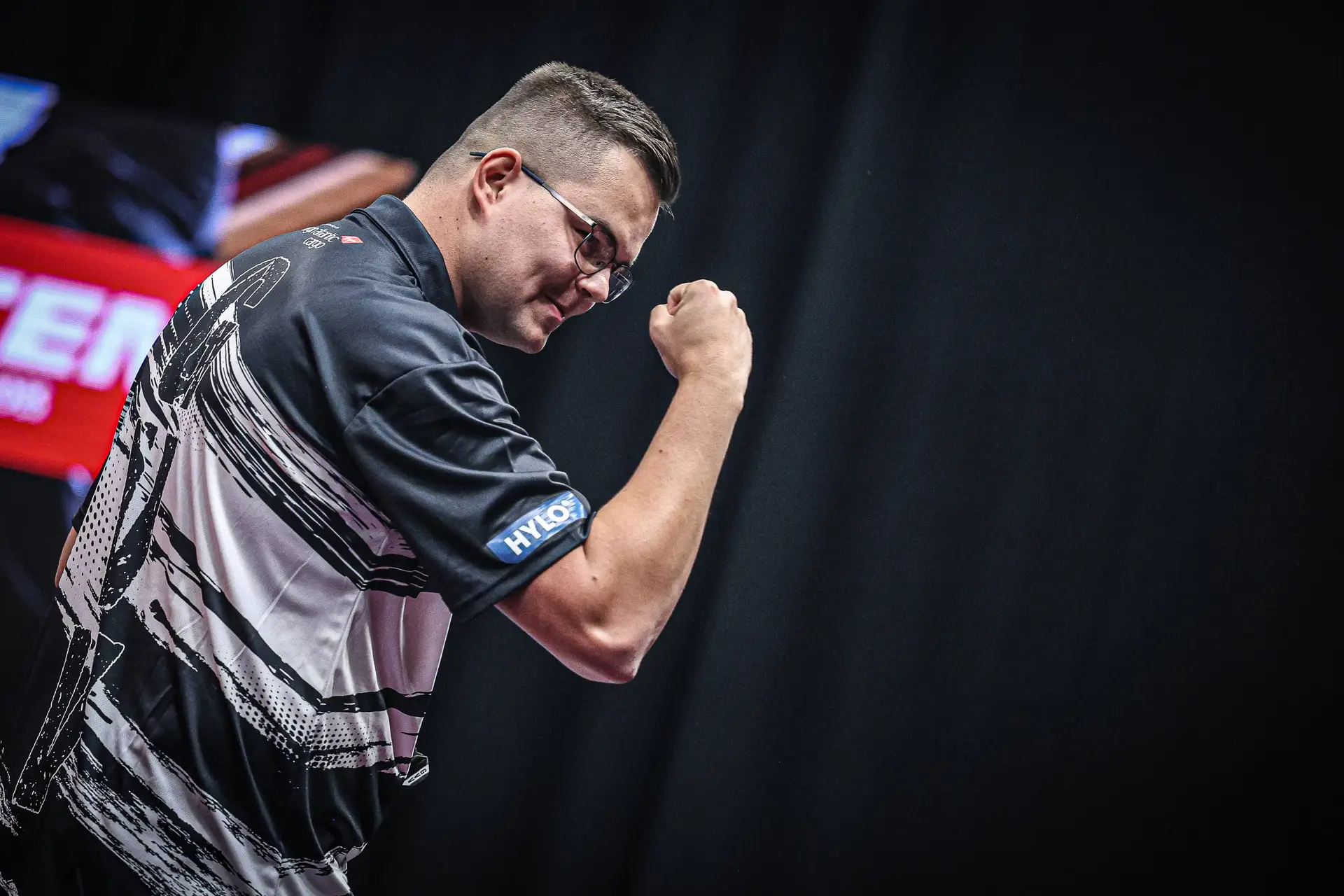
He is particularly complimentary about Van Veen. “He’s got the whole package — temperament, intelligence, and he keeps himself to himself. There’s no lairiness on stage, and I can see him winning plenty of TV events."
Painter is reluctant to hand out explicit advice. “People always say: enjoy it. But if you’re up there and you’re losing, you don’t enjoy it. You just can’t. What you can do is enjoy the whole three or four-month period. That’s special.”
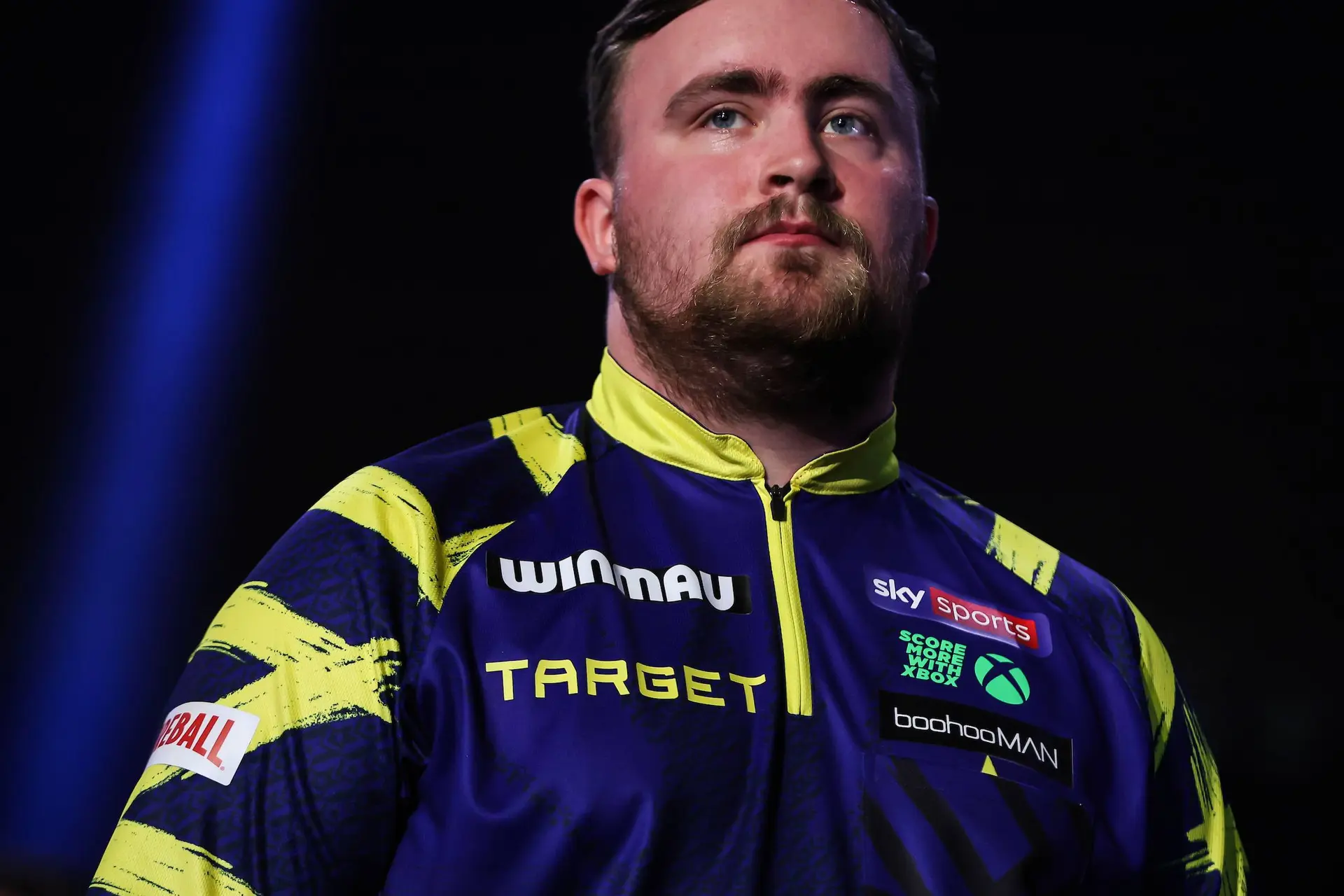
Asked who he sees as the favourite for the title, he offers a widely mentioned answer. Luke Littler will be the man to beat in his view, but he doesn’t rule out a battle with Van Veen. "Littler is going to be the favourite. I think it could be between him and Gian van Veen. If Gian takes to it, he’s got a real chance. We’ve seen players struggle in the Premier League before, but I expect it to be between those two."
What stands out in the conversation is the lack of bitterness. Painter speaks realistically about his own situation and respectfully about the current generation. Even when it comes to players who just missed out on Premier League selection, such as Nathan Aspinall and Danny Noppert, he remains measured.
ADVERTISEMENT
“It’s difficult. You’ve got so many great players and only eight spots. Both of them could argue they deserved to be in, and maybe one or two players who are in might quietly think they got away with it and need to make the most of it."

Lucas MichaelDarts Journalist
Lucas Michael is a darts journalist and reporter based in Cambridge, UK, and has been part of the DartsNews team since 2025. He covers professional darts through reports, analysis, round-ups, and live coverage, with a focus on clear context and accurate reporting across the PDC calendar.
A key part of his work is liveblogging major tournaments throughout the year, providing real-time updates, match coverage, and contextual reporting across the professional circuit. He also reports regularly from events on site and has covered the PDC World Darts Championship from the venue, delivering first-hand insight throughout the tournament.
Within the newsroom, Lucas works closely with the editorial team and supports coverage alongside Chief Content Officer Samuel Gill and reporter Kieran Wood.
Lucas holds a BA (Hons) in Sports Journalism. In his work, he places strong emphasis on careful sourcing, editorial accuracy, and updating content promptly when new, verified information becomes available.
claps 0visitors 0
Just in


Popular news

Latest comments
- I agree,I can't believe the lack of coverage of this sad loss. Always enjoyed watching him,but I guess now it's all about littler,well it seems that way. Darts has sadly lost a good manrick6717-10-2026
- In the absence of a report regarding the death of Stefan Lord, I'll assist. An excellent player in the late 70s and early 80s, he actually won the now defunct 3rd place match at two World Championships and a couple of the News of the World Championships. A fabulous player and easily the best Swedish player ever. Rest peacefully Stefan.richieburnettrocks16-10-2026
- Joking aside, it is the second most watched sport on sky (more than golf, F1 etc) behind football only, and in participation is second to only football and swimming. It doesn't get the attention or sponsorship of "bigger" sports because it's not as sexy, but it's right up there.BandB13-10-2026
- i love darts but you can't seriously believe it's the second most popular sport in the uk. even top five is pushing it. it may be the fastest growing, though.colt13-10-2026
- I'm a big Clayton fan, but he's got this completely wrong. Qualification criteria exists for a reason - so just as failing to make the top 32/64 for the Euro championships/PT Finals means you miss out, so does not lifting a title for this one.26sForFun12-10-2026
- The players who deliberately slow the game down are usually boring and win very little in the way of silverware. Horrible to watch.MrYnyslas197112-10-2026
- [“The Gentle” then used a sweeping and questionable phrase...] You anglocucks are hilariously finished in every sense of the word.Critical99911-10-2026
- I love Jonny but I disagree. The Grand Slam was always supposed to be "champion of champions" type competition. If the top 16 are guaranteed participation in everything there will be so much less jeopardy involved in qualifying and each major tournament will lose its unique flavour which the PDC has worked hard trying to develop. I enjoy following the qualification races towards the end of the year, and while consistency should have its rewards, the truth is Jonny hasn't reached a major final all year or won a single event on the Pro Tour. Being consistent is one thing, but that alone should have consequences as the sport's elite should not be prepared to accept consistently strong performances, their foremost motivation should be to win and this should be what separates them from the rest, not the consistency of their performances. Jonny is expecting that losing should be enough; it shouldn't be, at least not as far as the Grand Slam is concerned.Deduce635811-10-2026
- Well being honest,it doesn't matter what level you play at, there's always someone who slows it down to suit themselves,and extra swig of water, replacing flights, asking the ref what the score is. It happens wherever. I'm not saying it's professional,but I'm sure we've all seen it beforerick6711-10-2026
- Agree completely. Not sure how a ranking event can have a criteria not based on rankings. And he right on popularity. In the UK second only to football.BandB11-10-2026
Loading