"If somebody had asked me that six years ago, I'd have probably laughed them off" – Luke Woodhouse sets his sights on maiden PDC ranking title
PDC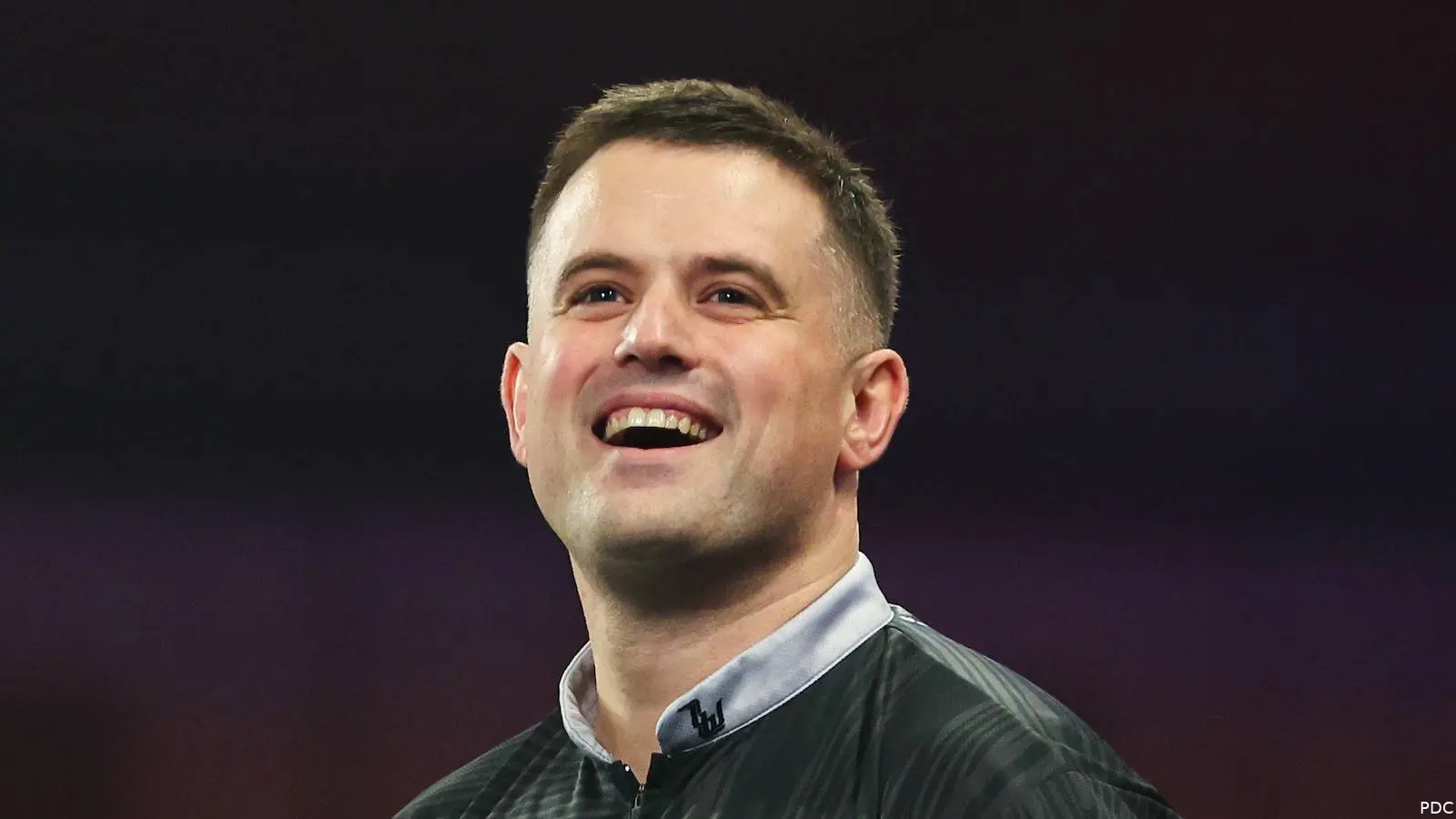
Luke Woodhouse has worked his way up in recent years to become a steady top-32 player. A quick glance at his career might suggest his breakthrough came late, but a closer look reveals a player who built his path step by step, with ups and downs along the way.
ADVERTISEMENT
In a candid conversation on referee Huw Ware’s Tops & Tales podcast, Woodhouse reflects on his long road to the top, the mental battles of life on the Pro Tour, and why belief has been the biggest factor in his rise. It is the story of a player who never took the fastest route — but arguably the most sustainable one.
Long road between Challenge Tour success and a PDC Tour Card
One thing stands out immediately: Woodhouse won a Challenge Tour event back in 2013, yet had to wait until 2018 to secure his PDC Tour Card via Q-School. Five years is a long time, especially for someone who had already shown he could win.
Looking back, Woodhouse admits his focus wasn’t fully on darts during that period.
“Not really. I still played and I still tried to play in all the Challenge Tours and stuff like that. But at the time I was still playing football and cricket and I was trying to do a bit of everything and not 100 per cent focus on darts.”
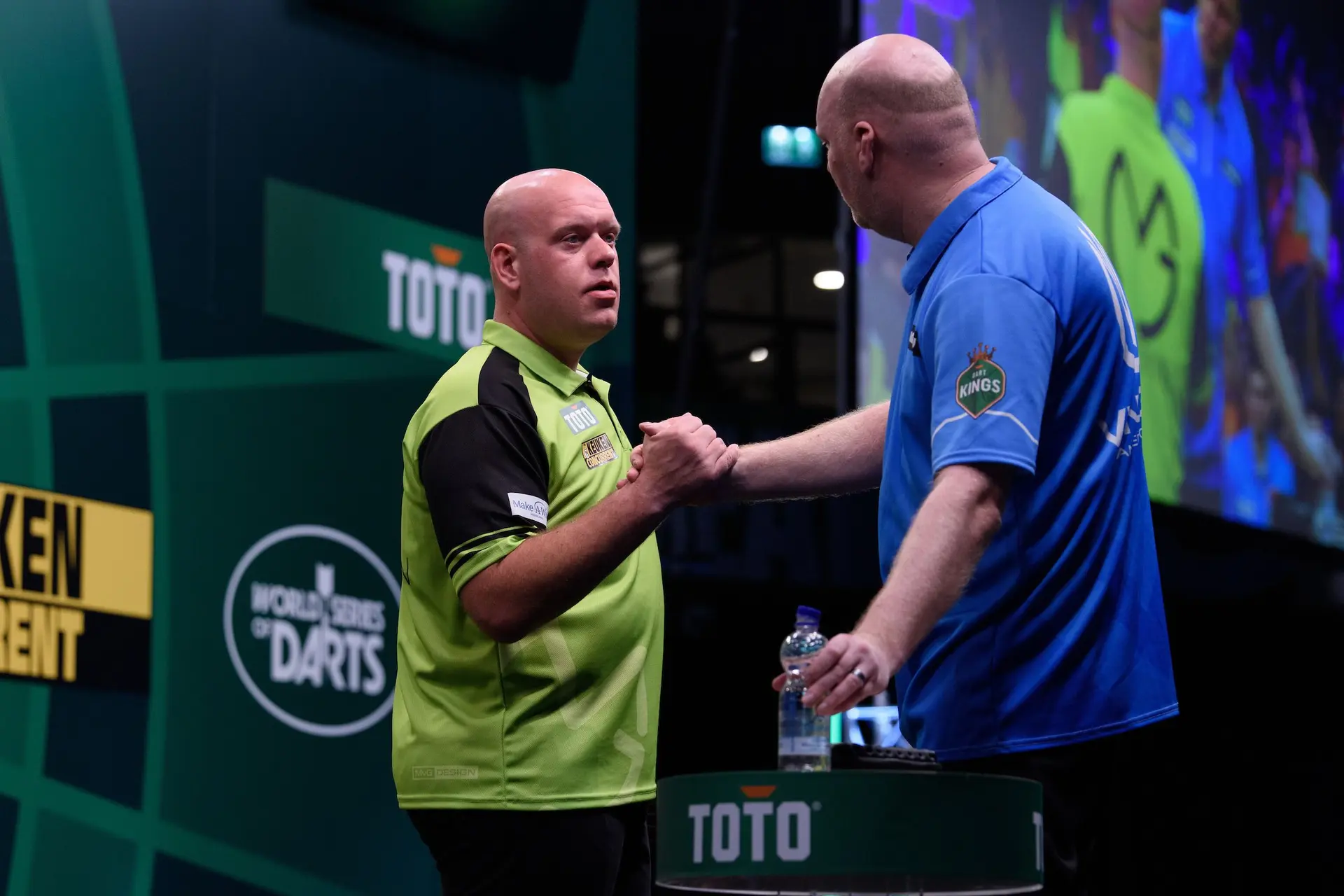
A key turning point came in 2017. On the European Tour, Woodhouse lost to an emerging Rob Cross — the same year Cross won his tour card and went on to lift the 2018 World Championship.
“I remember watching the game back and my action was really low and sort of down. I remember going back and thinking, if you really want to improve, you’ve got to get your action higher and work on your technique.”
That defeat triggered a deeper realisation.
“It was that moment as well where I thought, to get better and to get more consistent, I’ve got to make some changes.”
ADVERTISEMENT
Targeted work on his throw
From that point on, Woodhouse committed to refining his technique — fewer variables, a higher elbow, and a more repeatable action. The improvement has been visible, and intentional.
“I think my improvement has been down to a lot of me working on my technique and my actual game, rather than just not being able to kick on once I won that Challenge Tour years ago.”
Unlike players who burst straight into the top 16, Woodhouse has built his career in gradual instalments. That has given him a different perspective on the Pro Tour.
“In the early days, I used to get sort of starstruck,” he admits. “You go into the room and Van Gerwen’s there, Gary Anderson’s there, and my favourite player to watch was Adrian Lewis. You look at the draw and think, ‘I’ve got Gary Anderson first round,’ and you’re hoping you can just give a good account of yourself.”
That mindset has changed completely.
“Now I’m looking at it going, it doesn’t matter who I draw. If I play well, I can win. I’m there to show what I can do, not to be put off by playing a big name.”
ADVERTISEMENT
“I constantly checked the rankings”
Life on the Pro Tour brings relentless pressure, particularly for players fighting to qualify for majors or retain their tour card. Woodhouse remembers how consuming that pressure could be.
“You’d constantly look all year knowing how many spots you were outside qualifying for the World Championships. Then you know you’ve got six Pro Tours left, and every time you lose first round you’re thinking, ‘I’ve only got four more.’”
That way of thinking often added unnecessary weight.
“So you’re putting yourself under some unneeded pressure. You go to a Pro Tour, you lose first round, you get no money on your ranking, and it can snowball.”
Despite that, Woodhouse says he avoided truly deep lows, helped by strong support around him.
“I’ve been very lucky that I’ve been with the same management team, Darting Promotions, since I’ve been a professional. My wife’s very supportive and I’ve got a very supportive family. If I have got a bit frustrated or low, I’ve got people to pick me up.”

ADVERTISEMENT
Depth of quality in modern darts
On the standard of today’s game, Woodhouse partly agrees with Gary Anderson’s recent comments.
“I’m not sure the actual top standard has got any better,” he says. “I just think there’s more people that can do that now.”
The depth, he believes, is the real difference.
“Anyone in the top 32 now — maybe even top 40 or 50 — can throw 100-plus averages.”
He points to the World Championship run of Justin Hood as evidence.
“Nobody would have imagined the run he had. It just shows that anybody can play like that now.”
Mental strength and belief
ADVERTISEMENT
For Woodhouse, the biggest gains have come mentally.
“I think it is more a mental thing. Belief is a massive part of the game. I’d say mentality is probably 60 to 70 per cent of it.”
Everyone can throw, he says — the difference lies elsewhere.
“It is your belief and the way you approach the game. You’re going to lose a lot more games than you win.”
Advice from former player Pete Stilgo has stayed with him throughout his career.
“He said, ‘Don’t let your highs get you too high and don’t let your lows get you too low. Try and stay level-headed as much as possible.’”
Learning to lose well
Fans have also noticed a change in Woodhouse’s body language. The visible frustration and head-shaking that once followed missed darts has largely disappeared.
“My wife used to say all the time, ‘You need to stop shaking your head.’ She said I was costing myself games through negative thinking and negative body demeanour.”
ADVERTISEMENT
Since addressing that, results have followed.
“Especially in the last 18 months, it’s made a big difference. Since I’ve calmed down and not got too irate at myself, my performances have improved.”

Luke Woodhouse is the current world number 21
His advice to young players is simple but powerful.
“You’ve got to learn to lose well. You’re going to lose so many more games than you win — it’s just a fact.”
The key is perspective.
“Try and take good experiences and positive feedback from every game you play, even if you lose. Always work on the positives.”
Now established inside the world’s top 32 and feeling like a true PDC professional, Woodhouse knows his path has been unconventional — but it has made him stronger. The slow build, the setbacks, and the belief earned along the way may yet take him further still.
ADVERTISEMENT
"If I can get somewhere in and around the top 16 in the world, if somebody had asked me that six years ago, I'd have probably laughed them off going, no, it never happened." he said on his next goal with a ProTour in his sights.

Samuel GillChief Content Officer
Samuel Gill is the Chief Content Officer (CCO) of DartsNews.com, a role he has held since 2020. He is responsible for editorial governance across the platform, including setting content standards, overseeing accuracy and consistency, and guiding long-term editorial strategy across professional darts coverage. Since joining, he has contributed more than 10,000 articles and editorial pieces, playing a central role in the development and daily operation of the site.
Based in Leicester, Samuel has extensive experience in darts media and has been closely involved in coverage of the professional darts circuit for several years. Within the UK darts community, he is a recognised figure known for his consistent editorial output and ongoing reporting on major tournaments and developments across the PDC calendar.
In his current role, Samuel works closely with editors and writers to ensure content meets clear journalistic standards, with a focus on source verification, editorial consistency, and timely updates when new, confirmed information becomes available.
claps 1visitors 1
Just in



Popular news

Latest comments
- I agree,I can't believe the lack of coverage of this sad loss. Always enjoyed watching him,but I guess now it's all about littler,well it seems that way. Darts has sadly lost a good manrick6717-10-2026
- In the absence of a report regarding the death of Stefan Lord, I'll assist. An excellent player in the late 70s and early 80s, he actually won the now defunct 3rd place match at two World Championships and a couple of the News of the World Championships. A fabulous player and easily the best Swedish player ever. Rest peacefully Stefan.richieburnettrocks16-10-2026
- Joking aside, it is the second most watched sport on sky (more than golf, F1 etc) behind football only, and in participation is second to only football and swimming. It doesn't get the attention or sponsorship of "bigger" sports because it's not as sexy, but it's right up there.BandB13-10-2026
- i love darts but you can't seriously believe it's the second most popular sport in the uk. even top five is pushing it. it may be the fastest growing, though.colt13-10-2026
- I'm a big Clayton fan, but he's got this completely wrong. Qualification criteria exists for a reason - so just as failing to make the top 32/64 for the Euro championships/PT Finals means you miss out, so does not lifting a title for this one.26sForFun12-10-2026
- The players who deliberately slow the game down are usually boring and win very little in the way of silverware. Horrible to watch.MrYnyslas197112-10-2026
- [“The Gentle” then used a sweeping and questionable phrase...] You anglocucks are hilariously finished in every sense of the word.Critical99911-10-2026
- I love Jonny but I disagree. The Grand Slam was always supposed to be "champion of champions" type competition. If the top 16 are guaranteed participation in everything there will be so much less jeopardy involved in qualifying and each major tournament will lose its unique flavour which the PDC has worked hard trying to develop. I enjoy following the qualification races towards the end of the year, and while consistency should have its rewards, the truth is Jonny hasn't reached a major final all year or won a single event on the Pro Tour. Being consistent is one thing, but that alone should have consequences as the sport's elite should not be prepared to accept consistently strong performances, their foremost motivation should be to win and this should be what separates them from the rest, not the consistency of their performances. Jonny is expecting that losing should be enough; it shouldn't be, at least not as far as the Grand Slam is concerned.Deduce635811-10-2026
- Well being honest,it doesn't matter what level you play at, there's always someone who slows it down to suit themselves,and extra swig of water, replacing flights, asking the ref what the score is. It happens wherever. I'm not saying it's professional,but I'm sure we've all seen it beforerick6711-10-2026
- Agree completely. Not sure how a ranking event can have a criteria not based on rankings. And he right on popularity. In the UK second only to football.BandB11-10-2026
Loading